Babs Smith Studio Practice
Babs Smith Multidisciplinary Artist
Documenting Studio Practice – Ebor Studio Littleborough Rochdale
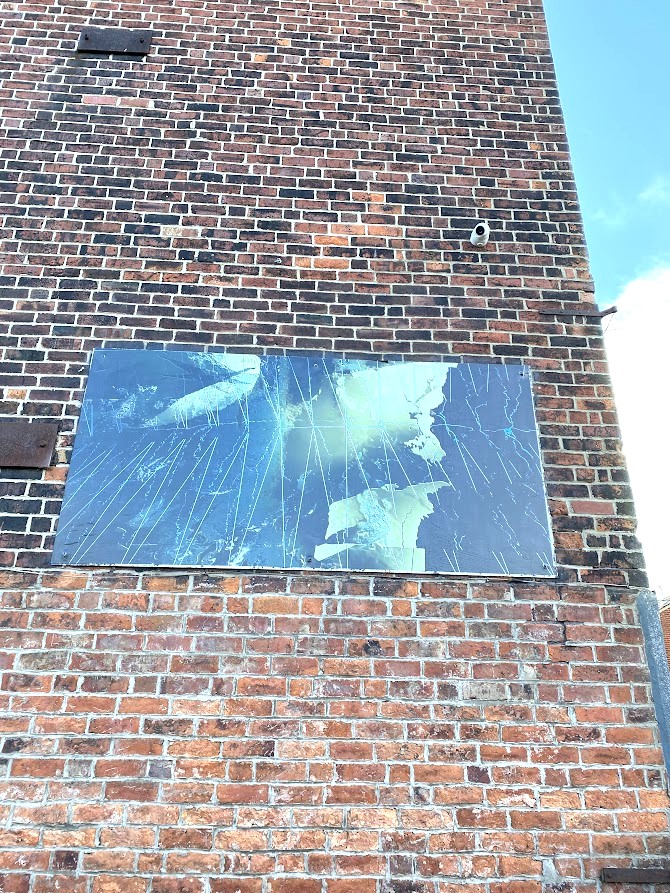
CRITICAL THRESHOLD
Ebor Studio Gallery Frank
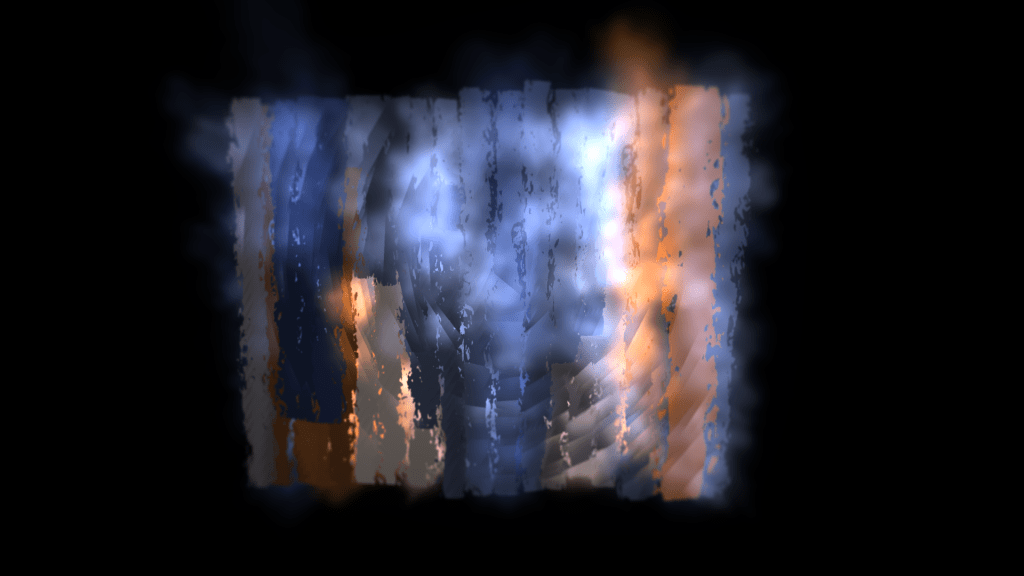
October 2022 Interactive Billboard Image Made in Colory VR
presented in Artivive AR Sound by Holly Phelps @IORA
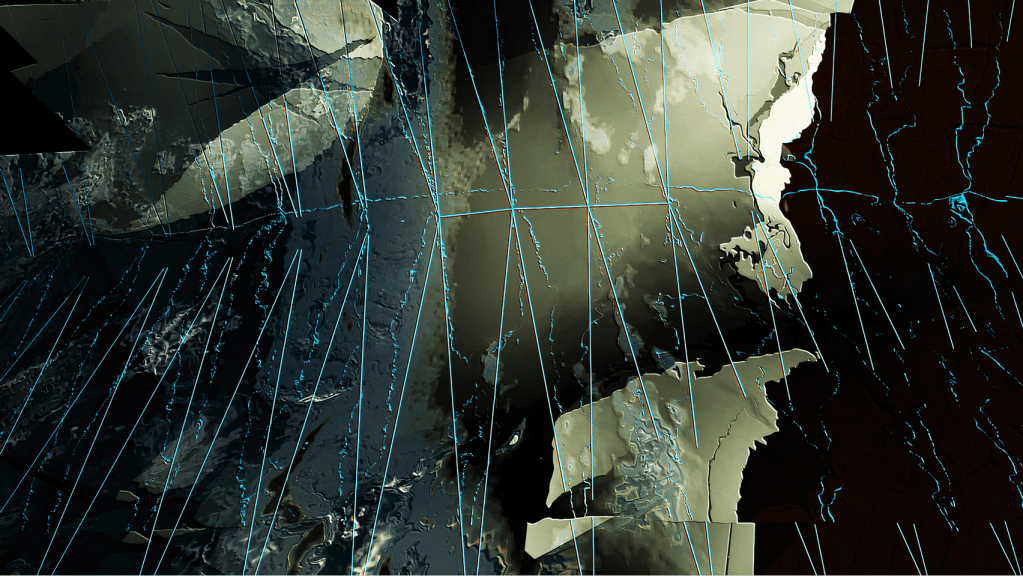
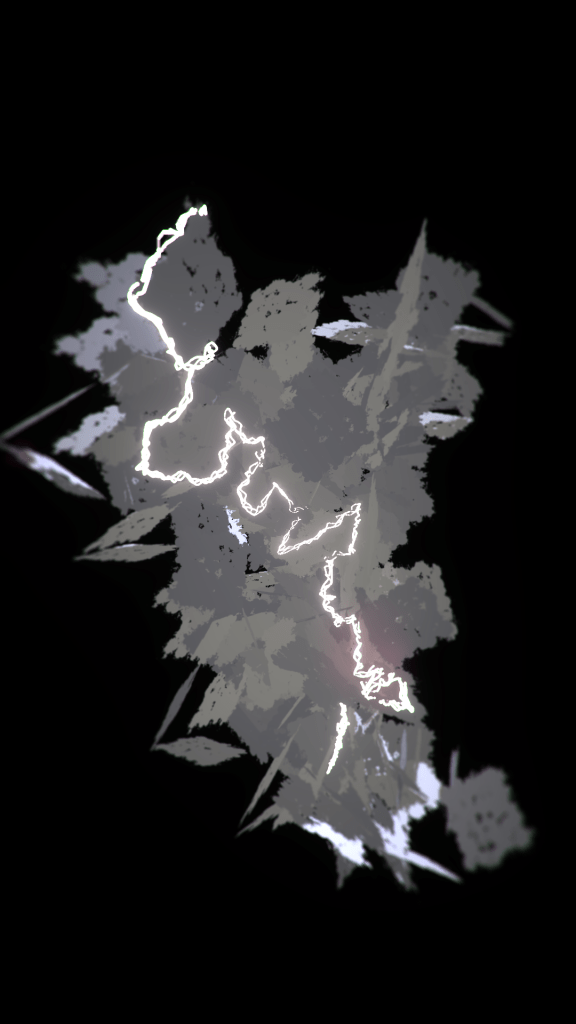
CRITICAL THRESHOLD is an interactive piece with sound exhibited in real life and Augmented Reality on the Ebor Studio building as part of an ongoing Billboard Project funded by ACE. The work refers to the tipping point in climate change that we are now experiencing, a monumental shift, demonstrating lost edges and our irrecoverable path back to safety.
In aiming to engage the viewer on a deeper level than just a two-dimensional artwork, I sought to evoke a visceral response by introducing abstract components that represent various elements linked to climate change and transport them into an otherworldly realm. What is of particular importance to me is that this piece can stand alone as a piece of art, even when experienced outside of augmented reality.
Holly Phelps’ soundscape reverberated in response to the visual and thematic complexity of the AR artwork. With its allusions to apocalypse, this somber piece crafted a deeply stirring atmosphere that conveyed the gravity of its subject matter.
Working in a virtual reality environment established during lockdown on an Oculus Rift, I use full body movements to create abstract images which I then resolve through apps such as Photo Mirage and ColoryVR animation.
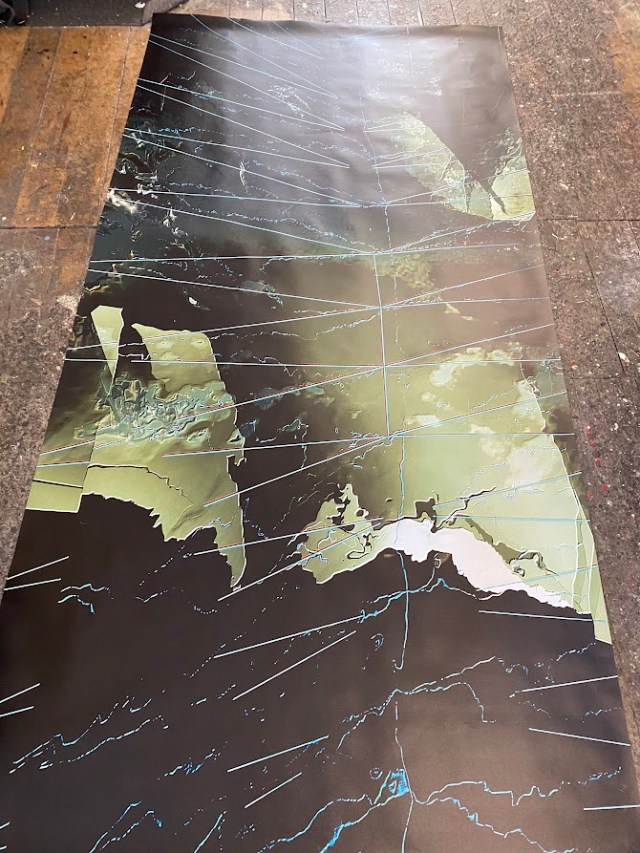
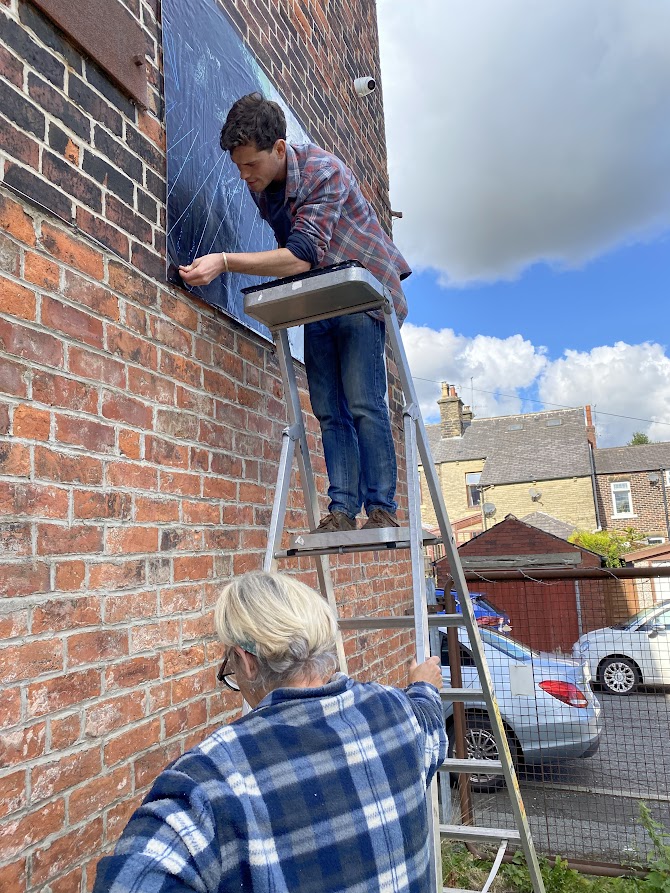
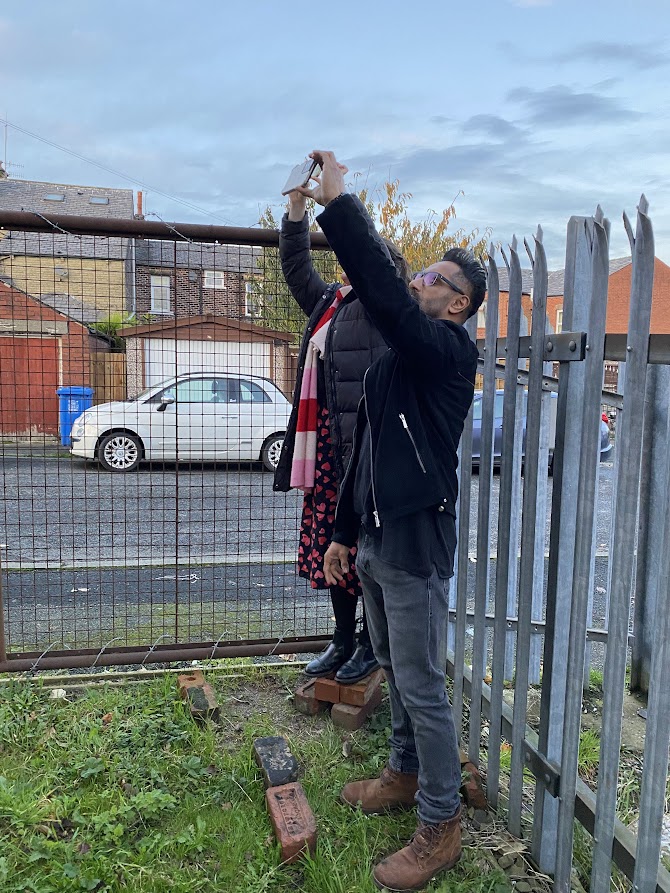
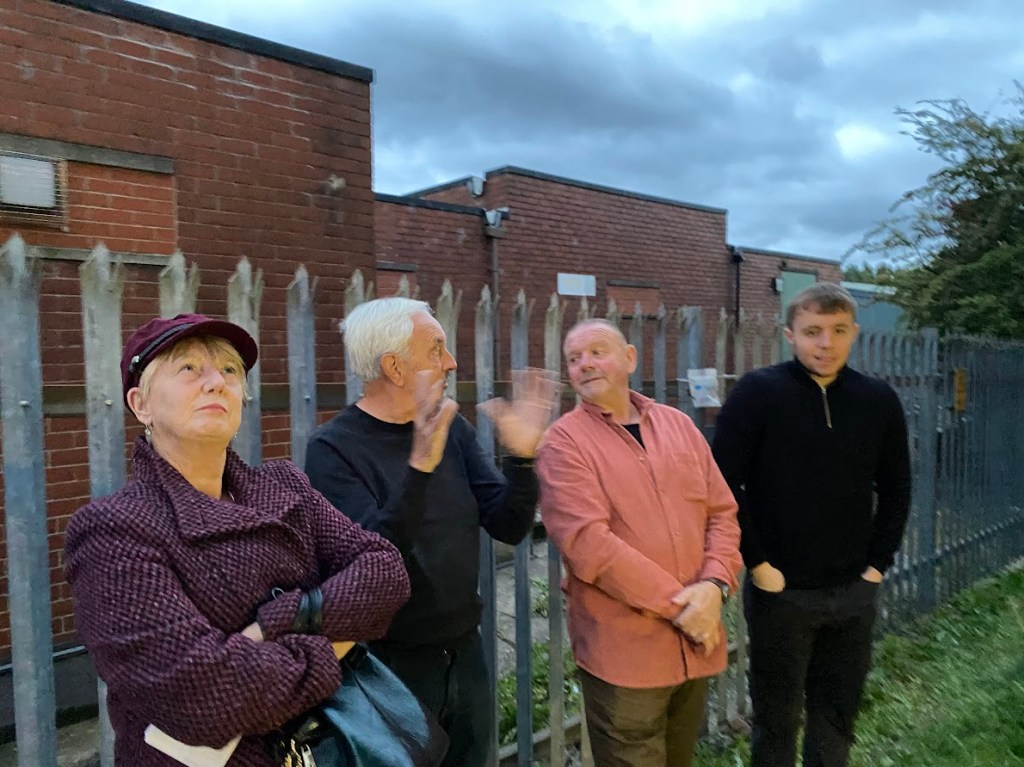
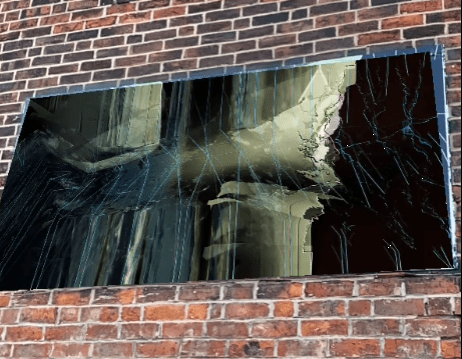
The original image had to be improved (from VR) to be printed on the billboard and seeing it on the floor of the studio was amazing, it revealed all of the marks and shapes that I had experienced virtually with the headset. The billboard degrades in the weather over the period of the exhibition, however the interaction was still visible until it was removed.
As I engaged with artists, students and the public experiencing the work, it became clear just how varied our conceptions of environmental issues are and the myriad of ways we feel the effects of our choices.
By engaging in these meaningful dialogues without being led by fear-based media narratives, we formed a neutral platform where we could openly contemplate and share our ideas.
Research into this subject and my own deep desire to explore dialogue viscerally led me to the work of curator and author Nicolas Bourriaud who says in his recent essay: Planet B Climate Change and the New Sublime “we have the collective feeling that we are immersed in a reality whose parameters have become uncontrollable and overwhelming”. The essay considers the artists use of the new sublime in art within the subject of the Anthropocene and Capitolocene (a way of organising nature) “The sublime as a romantic concept can mutate when it is grafted into a new context.”
On reflection the concept of small 30 – 45 second interactions is very appealing, the average human span of concentration is only 8 seconds but I feel once the app is downloaded and the imagination sparked I am afforded this time and some people watched it more than once. The total number of interactions was 150 with some being demonstrated to more than one person.
I have begun a series of 5 of these individual works entitled: A Crisis of the Human Scale this will facilitate other subjects within the Anthropocene and exposure in different sites. The subjects: changing weather patterns, population density and the increasing scarcity of space, and the disorientation of snow in the summer or melting ice caps. Triggers for the work can be in many forms, this has opened up new possibilities especially around architecture and sculpture. Also the flexibility of the image allows it to reach many people in the form of a poster or digitally as well as the main installation which is an advantage especially when applying for funding. Working with musicians is always a joy and very exciting. I hope to work with 5 different musicians and sound artists and I will develop new animation skills as I resolve my ideas and tackle the challenges of individual locations.
Rochdale On Line quote about CRITICAL THRESHOLD: “This portal to the artist is momentary but deep and often results in conversations on this critical subject, which can be overwhelming and incomprehensible.”
Links:
Rochdale On Line: https://www.rochdaleonline.co.uk/news-features/2/news-headlines/148810/climate-change-talking-point-art-exhibit-installed-at-littleborough%E2%80%99s-ebor-studio
@artivive https://artivive.com/
Nicolas Bourriaud, Planet B Climate Change and the New Sublime, Published on the occasion of an eponymous exhibition taking place at Palazzo Bollani, Venice, from April 20th to November 27th, 2022 by Les Presses Du Reel.
https://www.lespressesdureel.com/EN/ouvrage.php?id=9423
Disappearance and transformation.….
Seven Studios each chose eight artists to participate in this, the second iteration of The Exchange (2). Our brief was to ‘start a conversation’ with no prescribed outcome but with the aim of developing relationships with artists and studios across the UK. This is a record of some of my response to date, Helen’s work can be seen here: https://www.instagram.com/h.a.pics/
Helen and I hit the ground running on our first virtual meeting, chatting about a past experience which she is currently working through in her practice. The experience of giving up a child as a young mum, not being able to hold and bond with that child for which any mother could not help but feel a deep sadness, I had a lump in my throat and a great respect for her talking openly about the work she is making. This is her story, her journey, and so we agreed from this starting point to find common ground in our practice and influences, points of reference and new directions which would spark a conversation that could be explored within our individual practices.
Triggers, invasion of thoughts – Memory and flashes of self in the past – Glitch Rip Tear…
My practice explores both online and off line processes to discover what it is I am moved by in a subject. Using mirroring and glitching, I first abstracted the images of HA as she worked in clay viscerally and emotionally, ‘from my first understanding of the process. I felt your pain and saw the acts in the photos as two separated forms in one action, making an effort to reunite‘. This and the influence of Jasper Johns process, exploring the same subject in many mediums and the use of mirroring was a starting point. The subject is a whole body and mind traumatic event and yet a life lived in the shadow of it has created a dualism? One part still and the other seemingly moving necessarily through time, carrying a time bomb/cocoon.
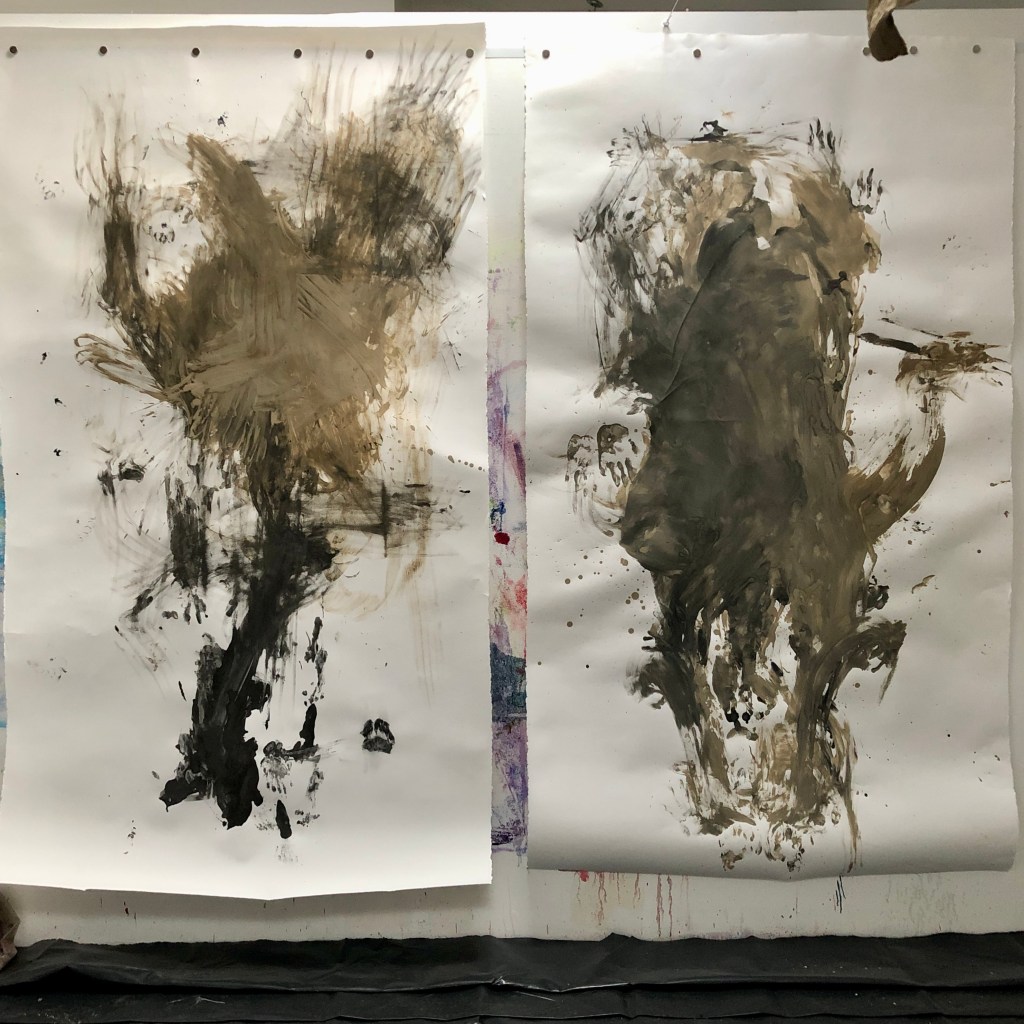
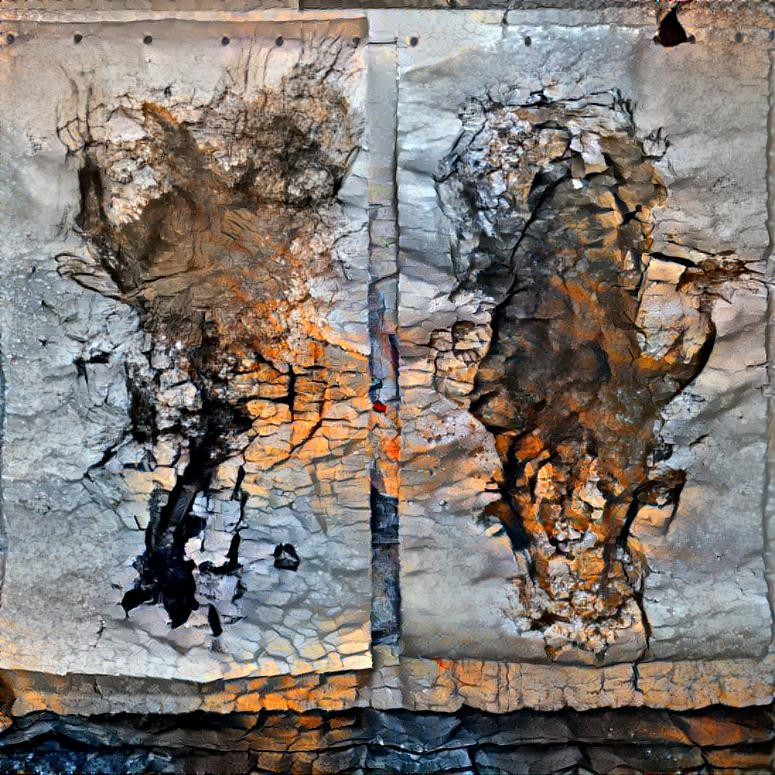
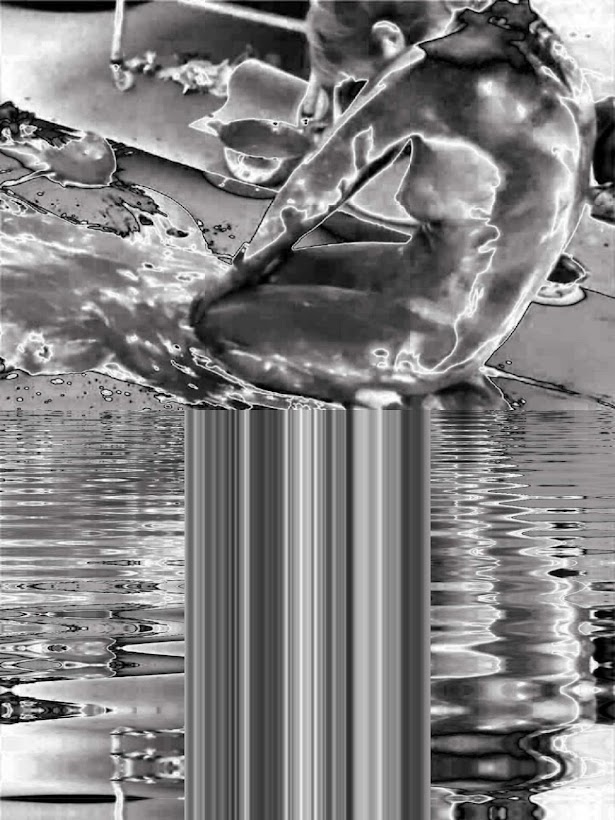
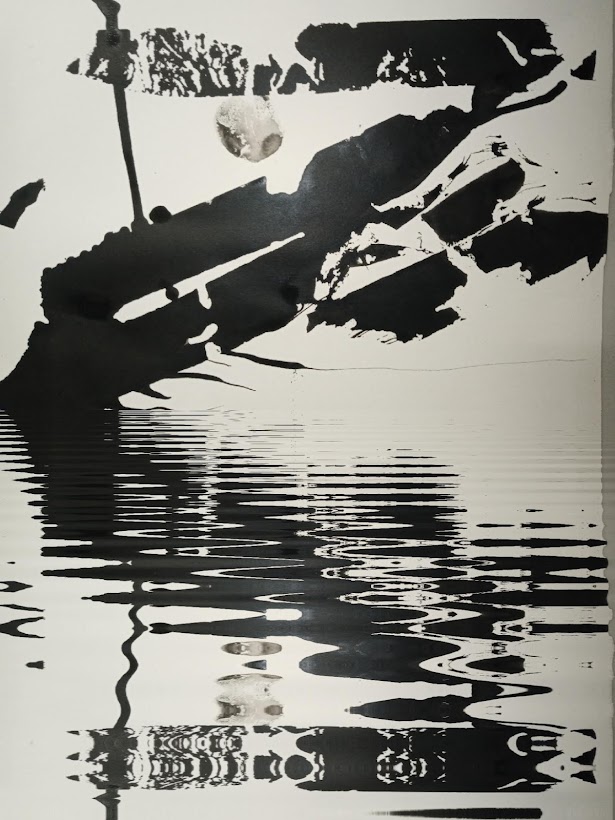
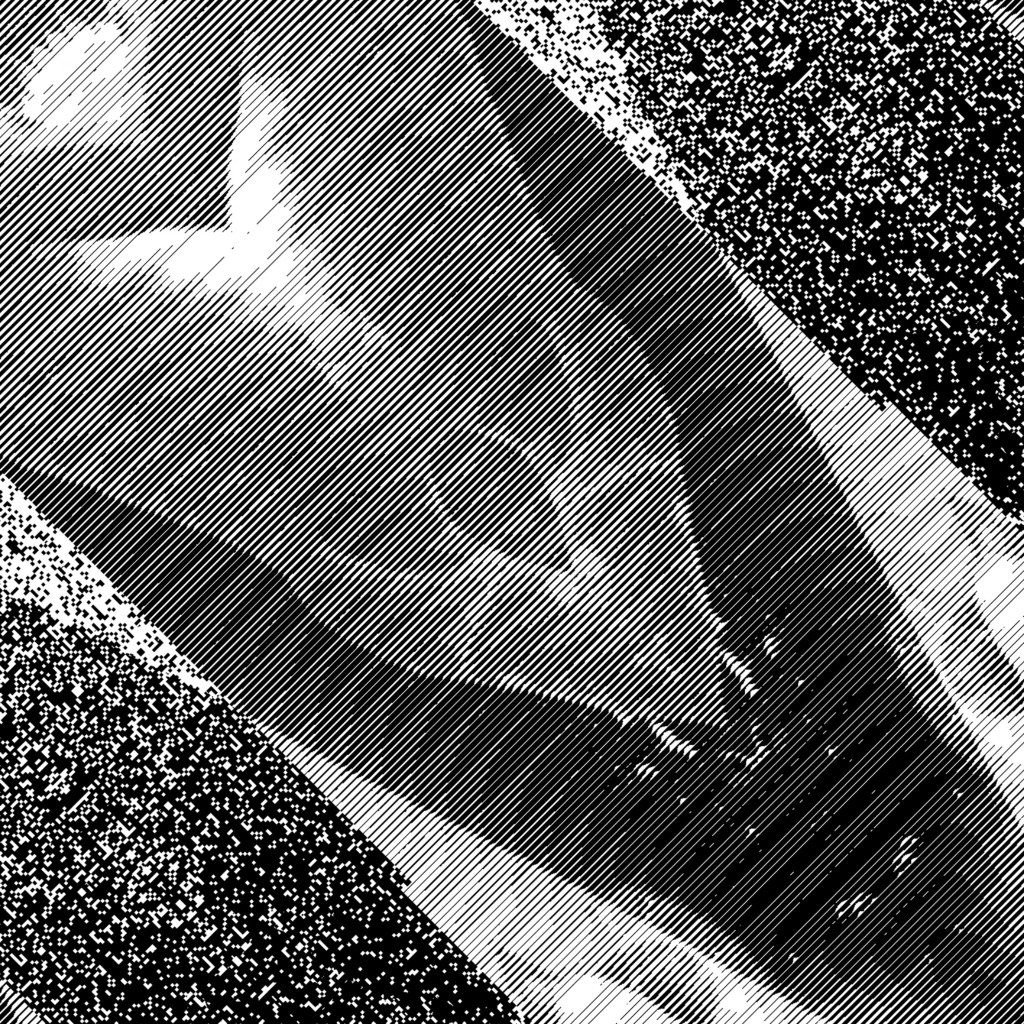
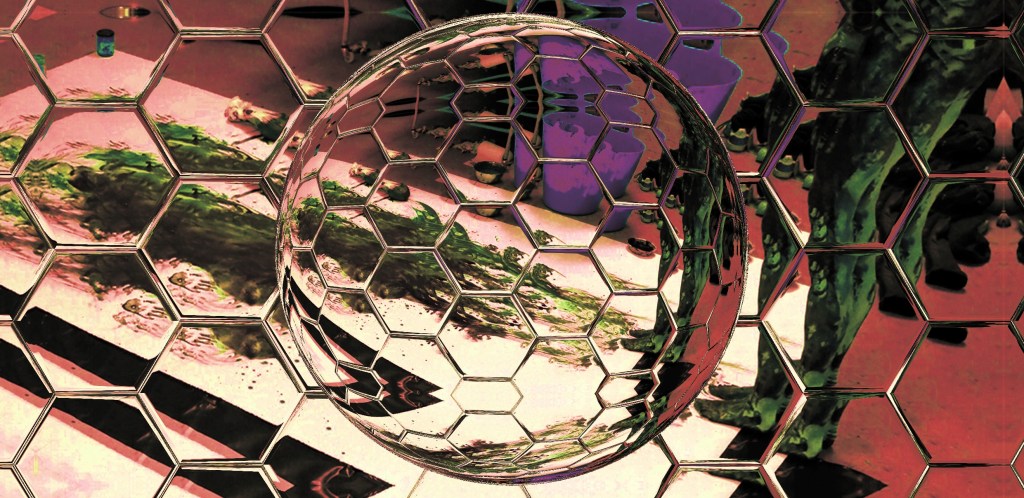
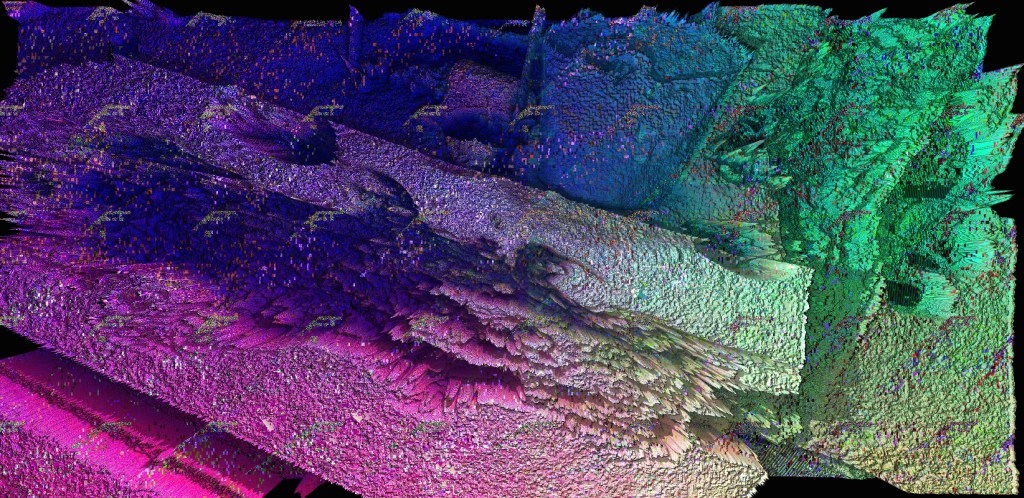
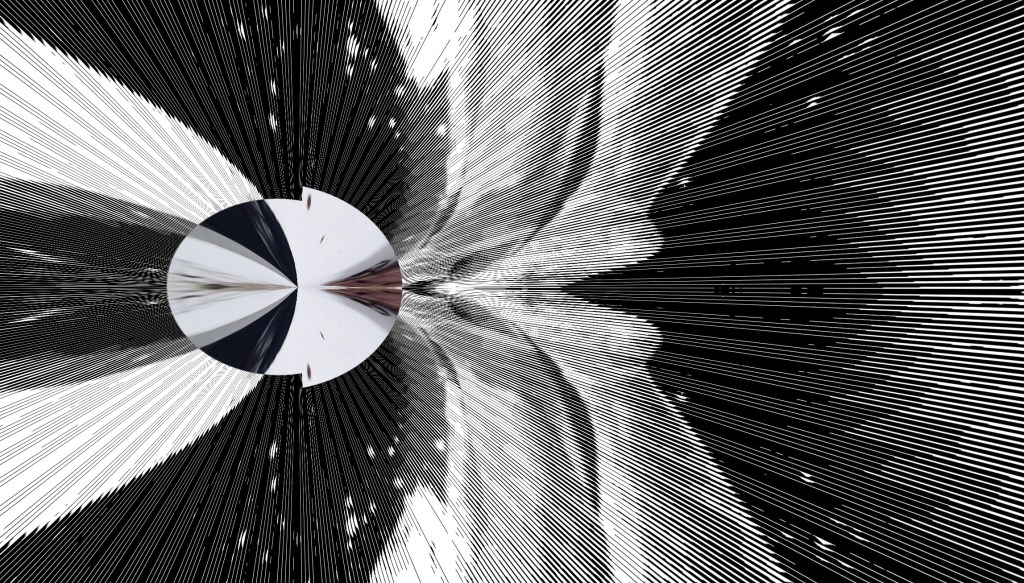
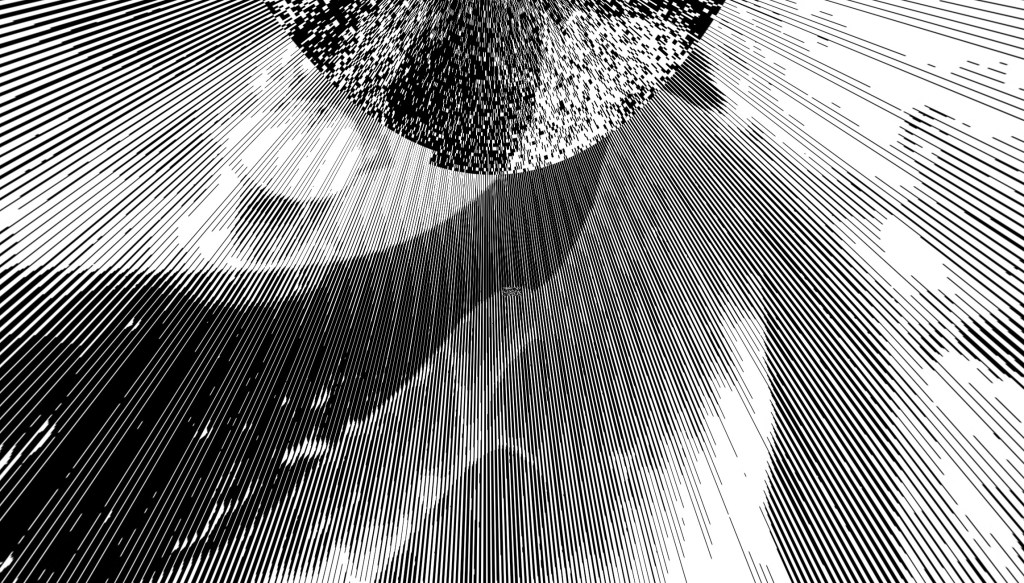
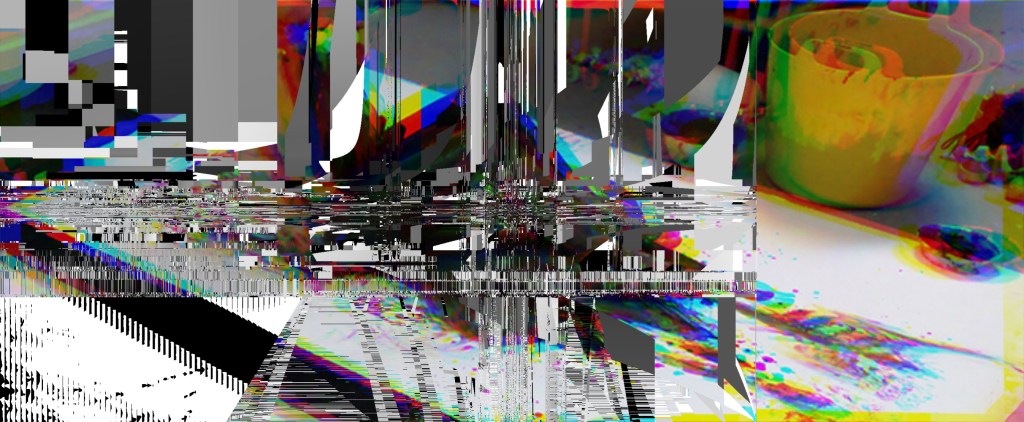


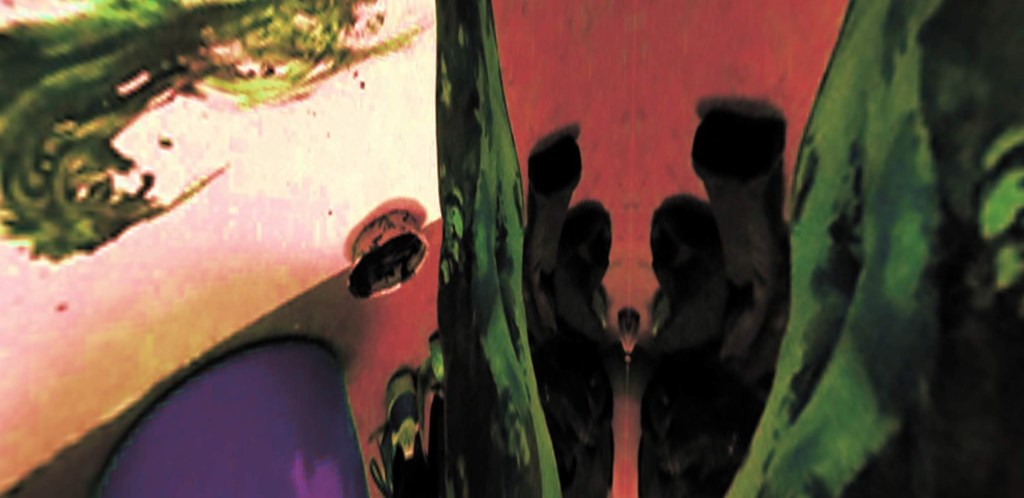
Ref Jasper Johns and Rorschach test, Johns worked across different mediums, pushing the imagery to almost total abstraction
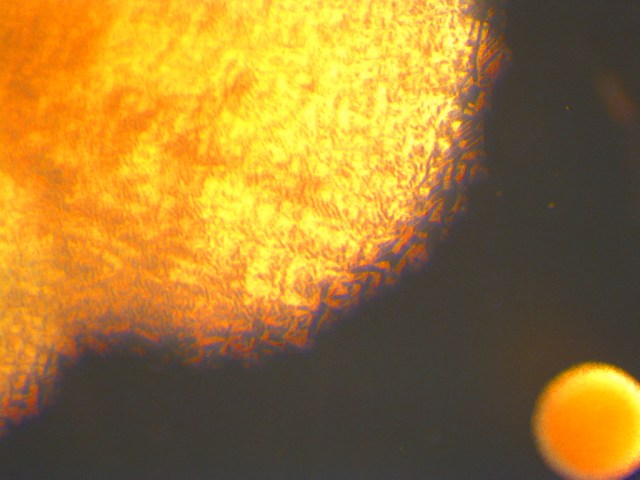
In an effort to bridge the distance between our studios geographically, Helen sent me some of the clay collected from the site in South Wales which she was working with, although it had dried by the time it reached me, I was able to look more closely at tiny fragments that made up the clay, by adding a little water and putting it under a microscope, other worlds began to appear which I could continue to work with on line in apps and software to move change and repeat the abstract forms.
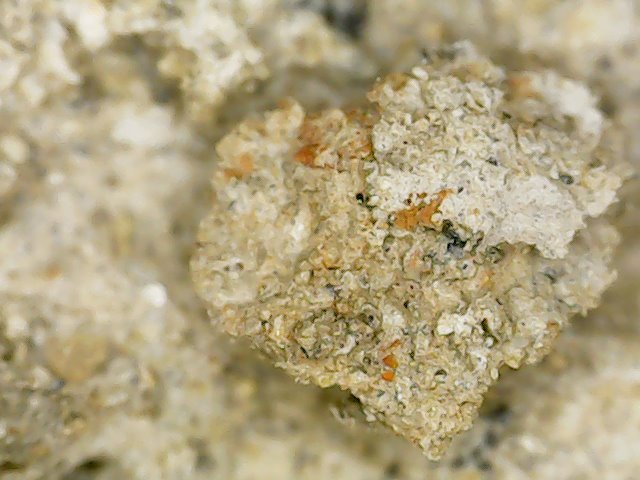
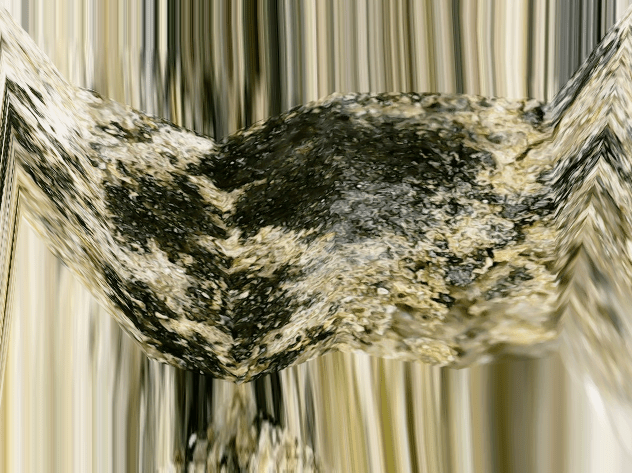

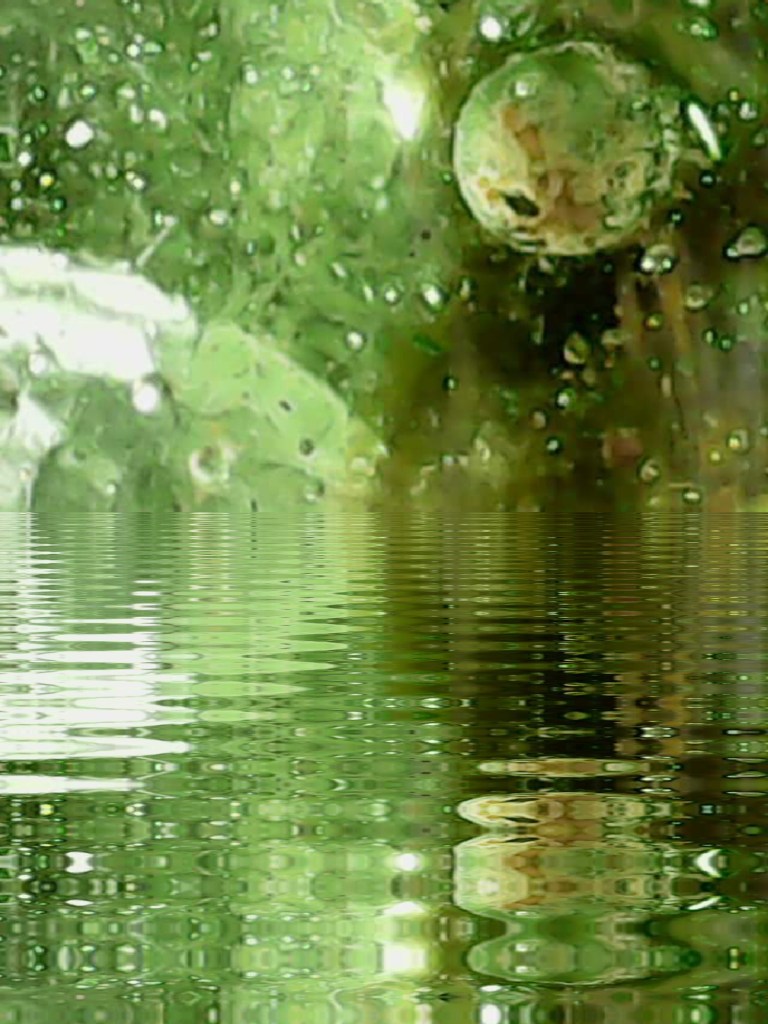

My response (below) was to make a notebook using different textures of paper and reproduce the images I was working on in the form of watermarks. This drew back and reduced the images making space for thoughts about each as contemplations on the work that HA was making.
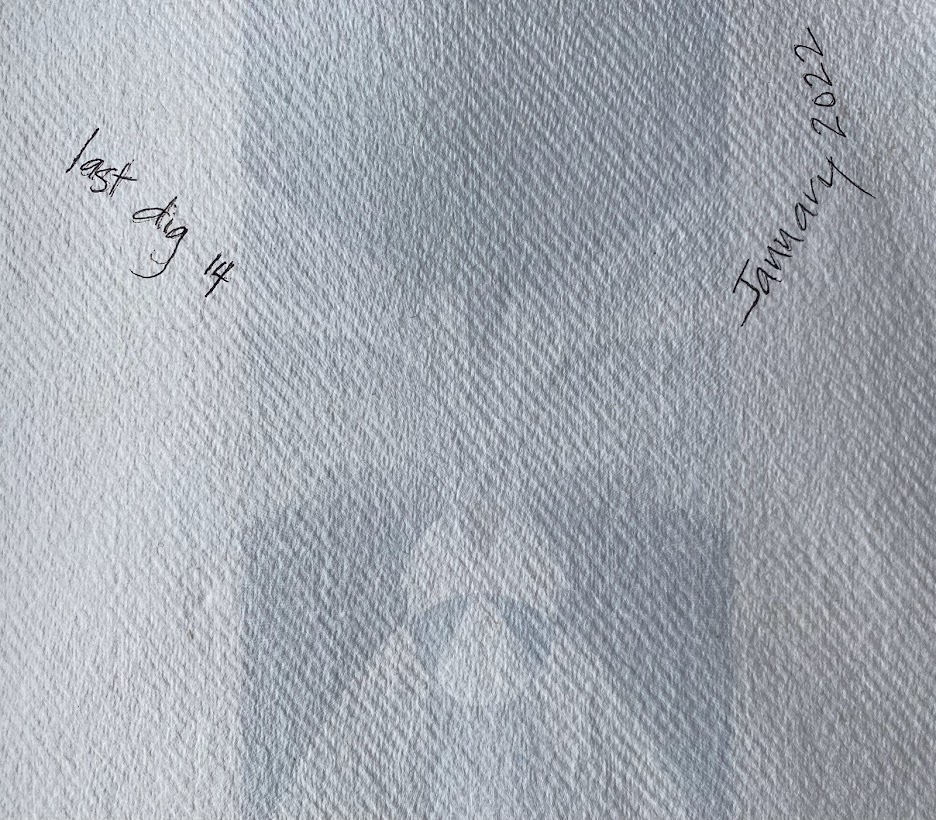
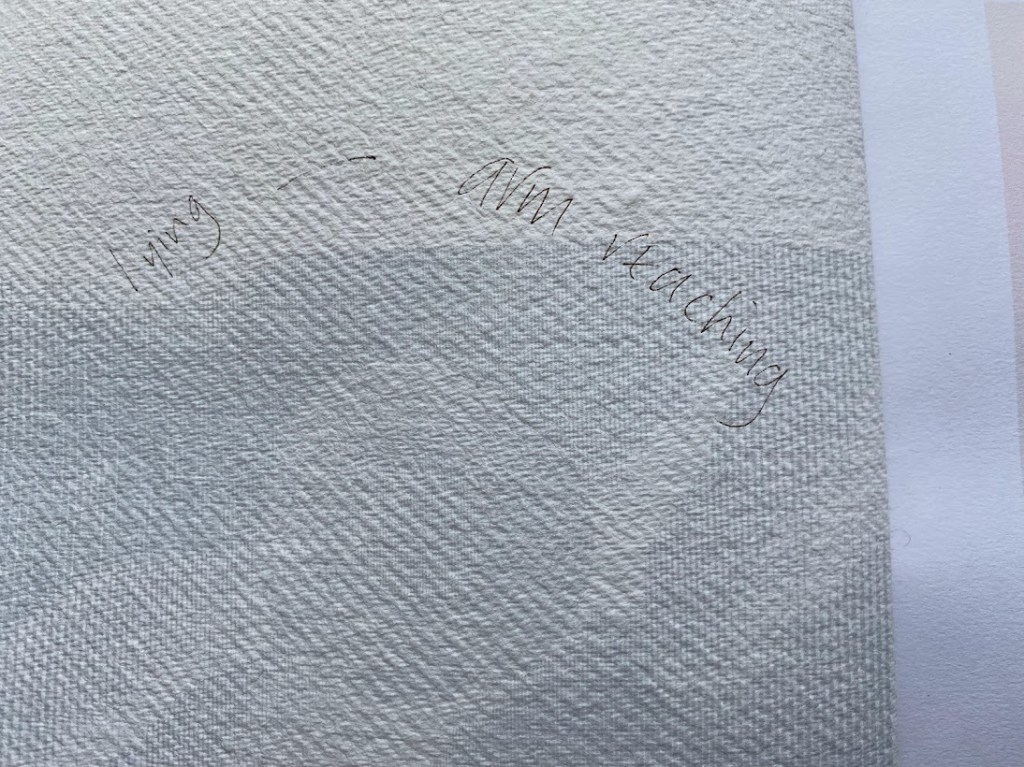
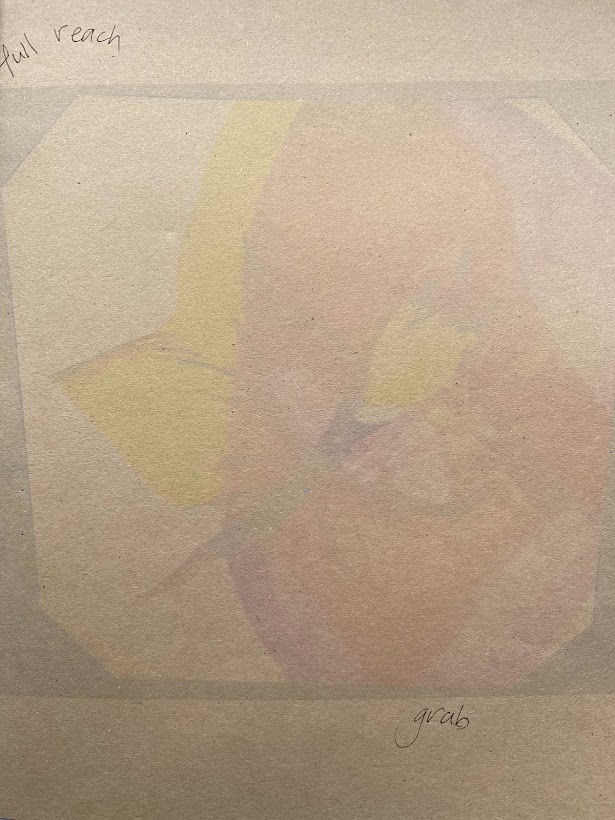
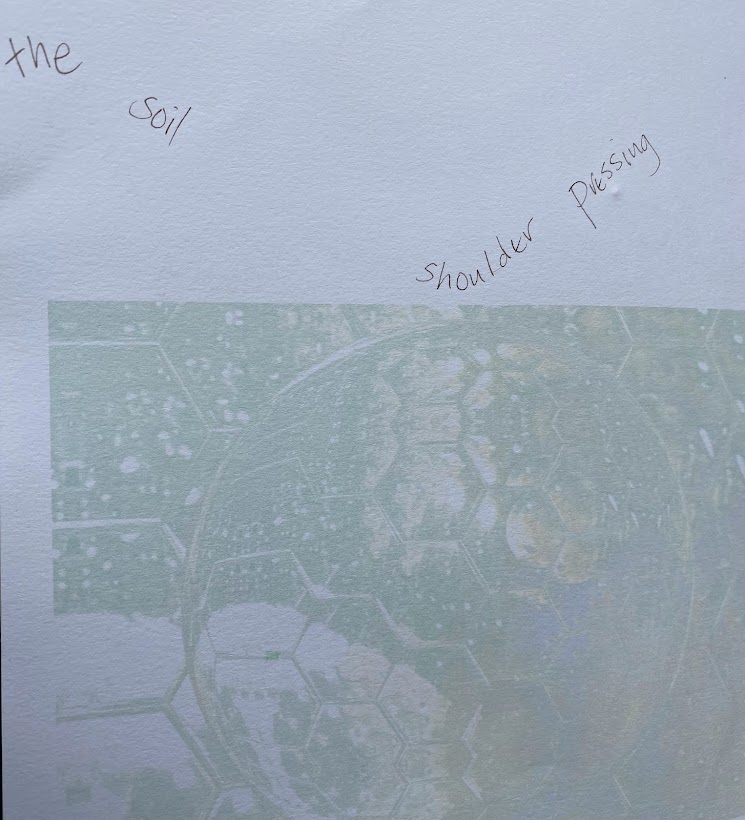
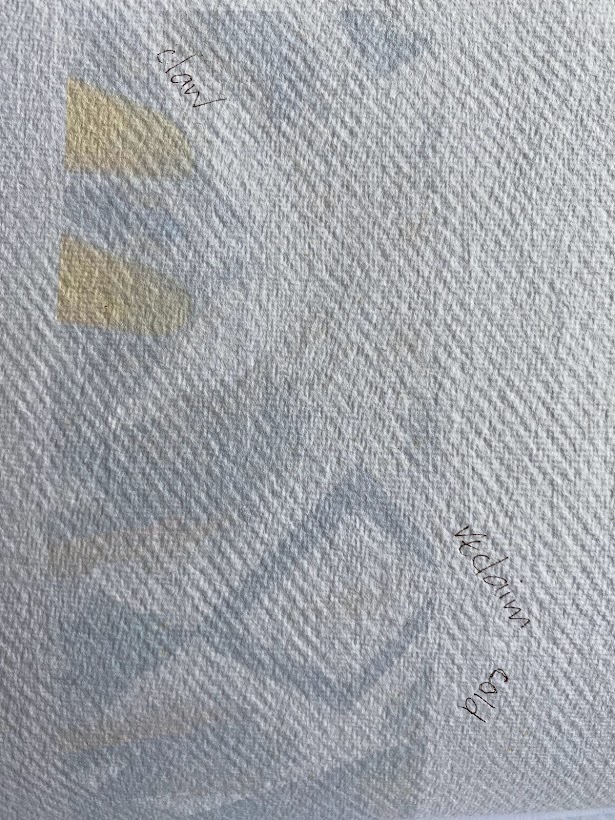
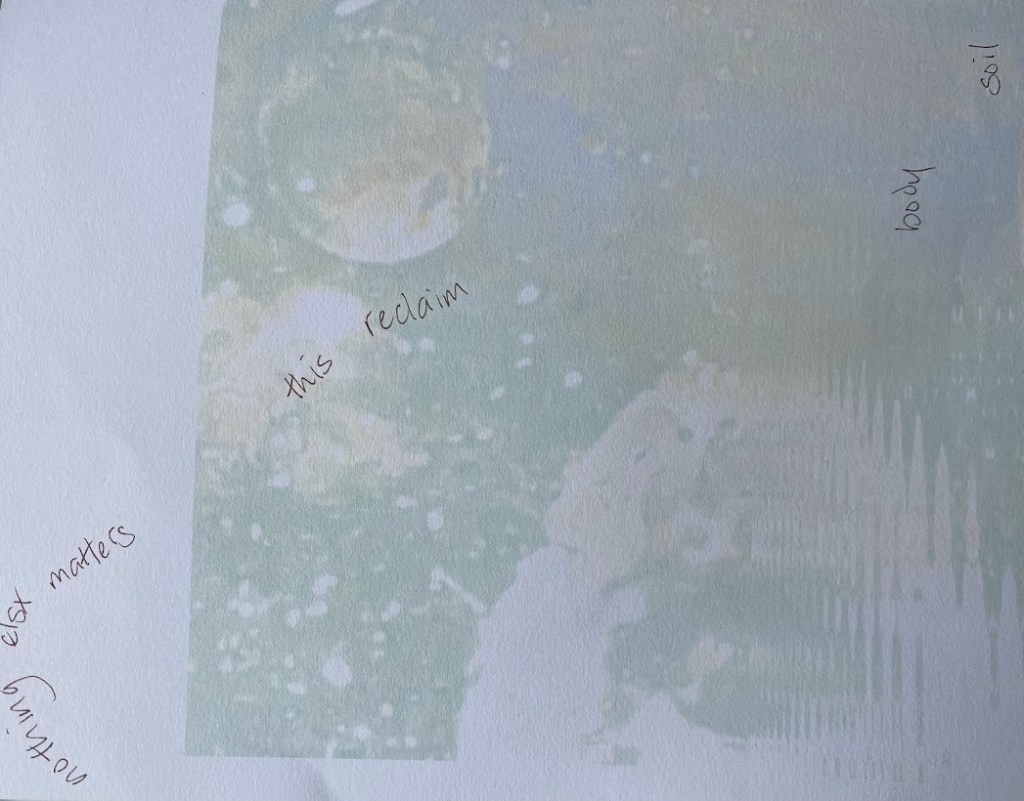
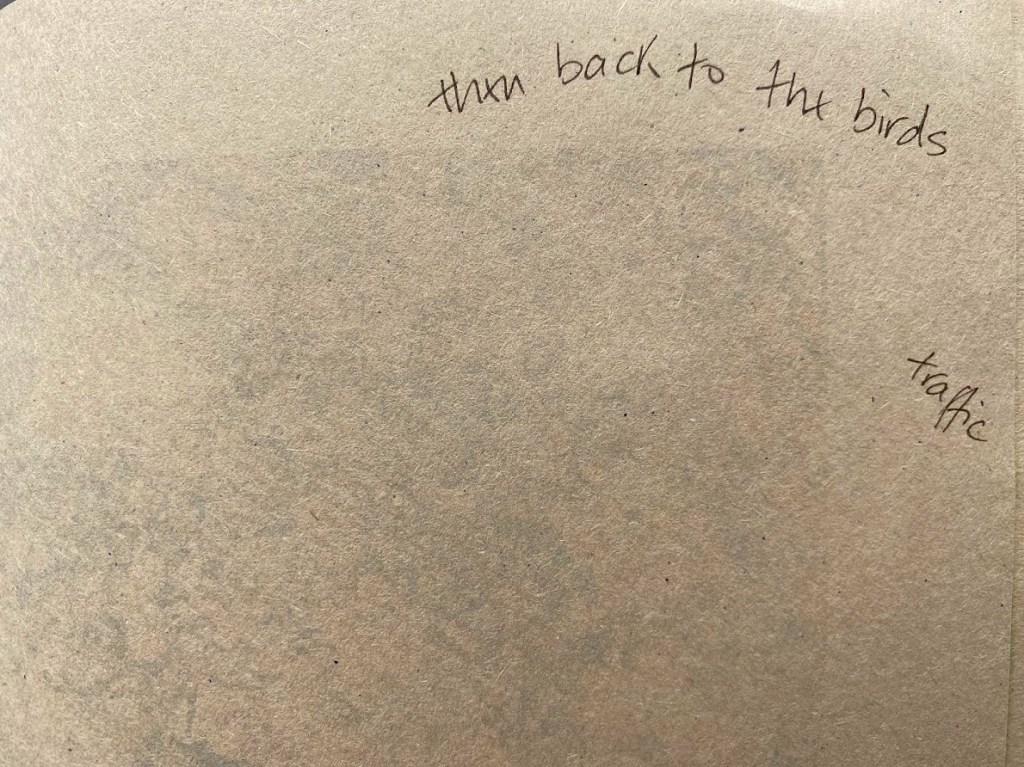
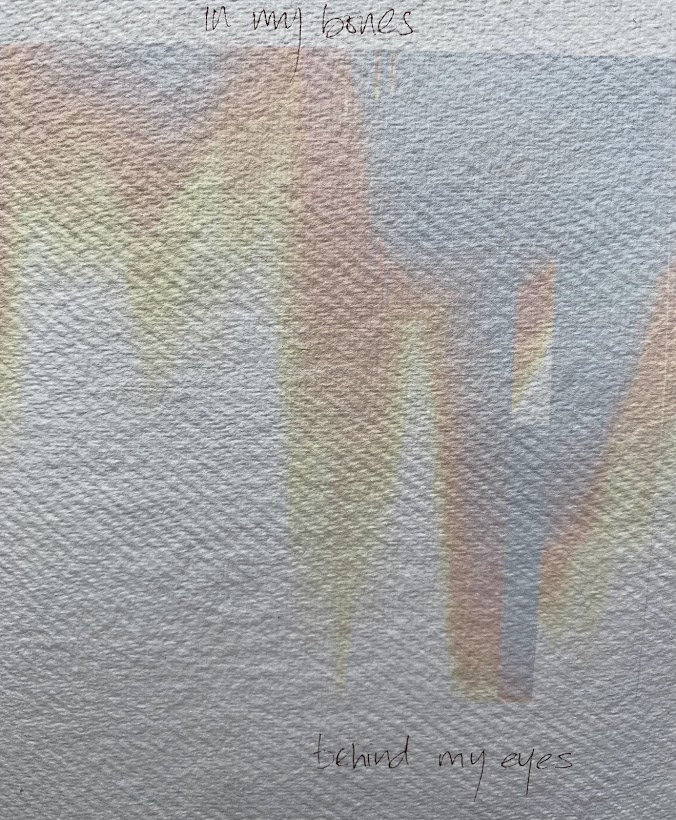
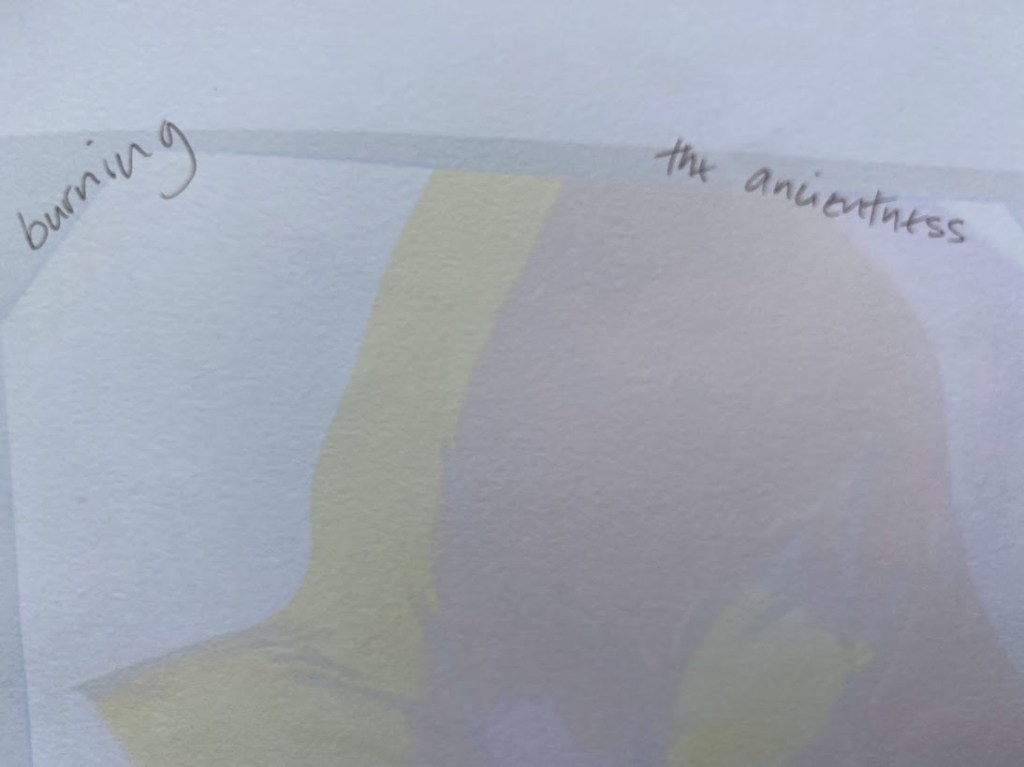
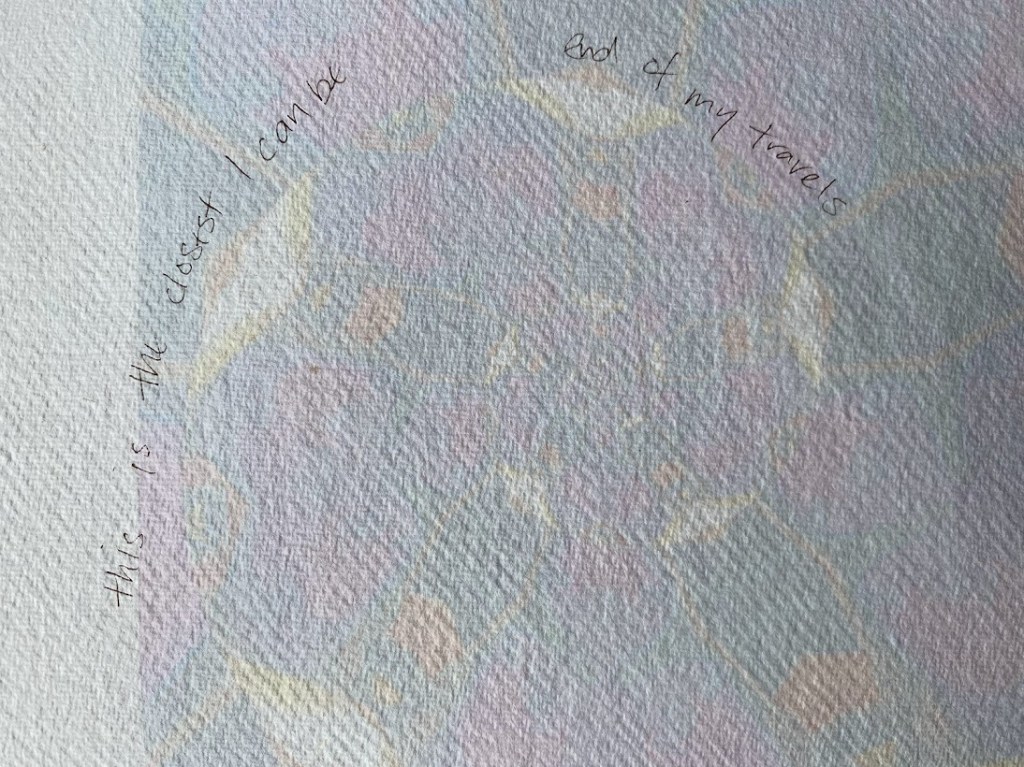
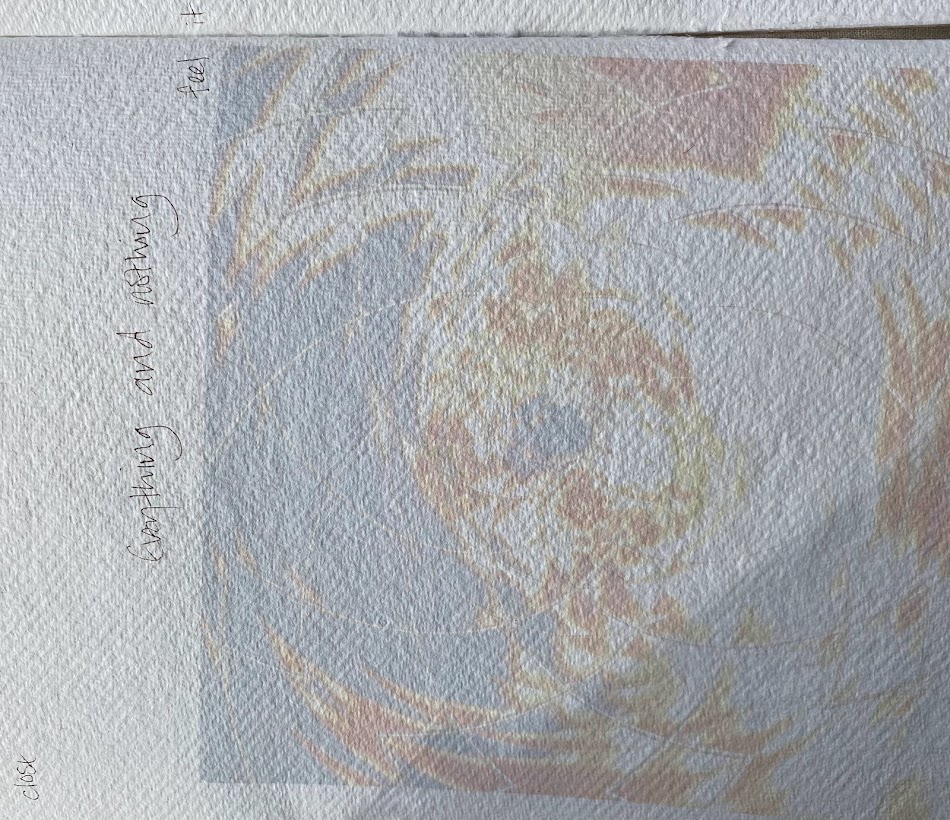
I am thinking about my response to these notes on the chosen images. It is important to keep our conversation going both on Zoom and with the work during the 9 months of the project.

Exploring the above images sparked new conversations on a woman’s body as a vessel and Buddhist meditations on understanding and accepting our own suffering. I liked that about the flesh on the beams and ceiling in mine above. Does it matter that there is no visual connection. (HA) is planning to paint from some of these images.
The Torus/Gordian Knot appeared in some of the glitched images made up of reflections of the body. According to legend whoever could untie the Gordian Knot would conquer Asia. Alexander the Great’s biographers report that during his stay in the Phrygian city of Gordium (now central Turkey), he attempted to disentangle the famous knot. But unable to find the ends of the knot, Alexander took his sword and slicing through it opened the way to his conquest of Asia and the fulfillment of the prophecy. We liked this as a metaphor for parenthood and the inability to see where the child begins and the mother ends.
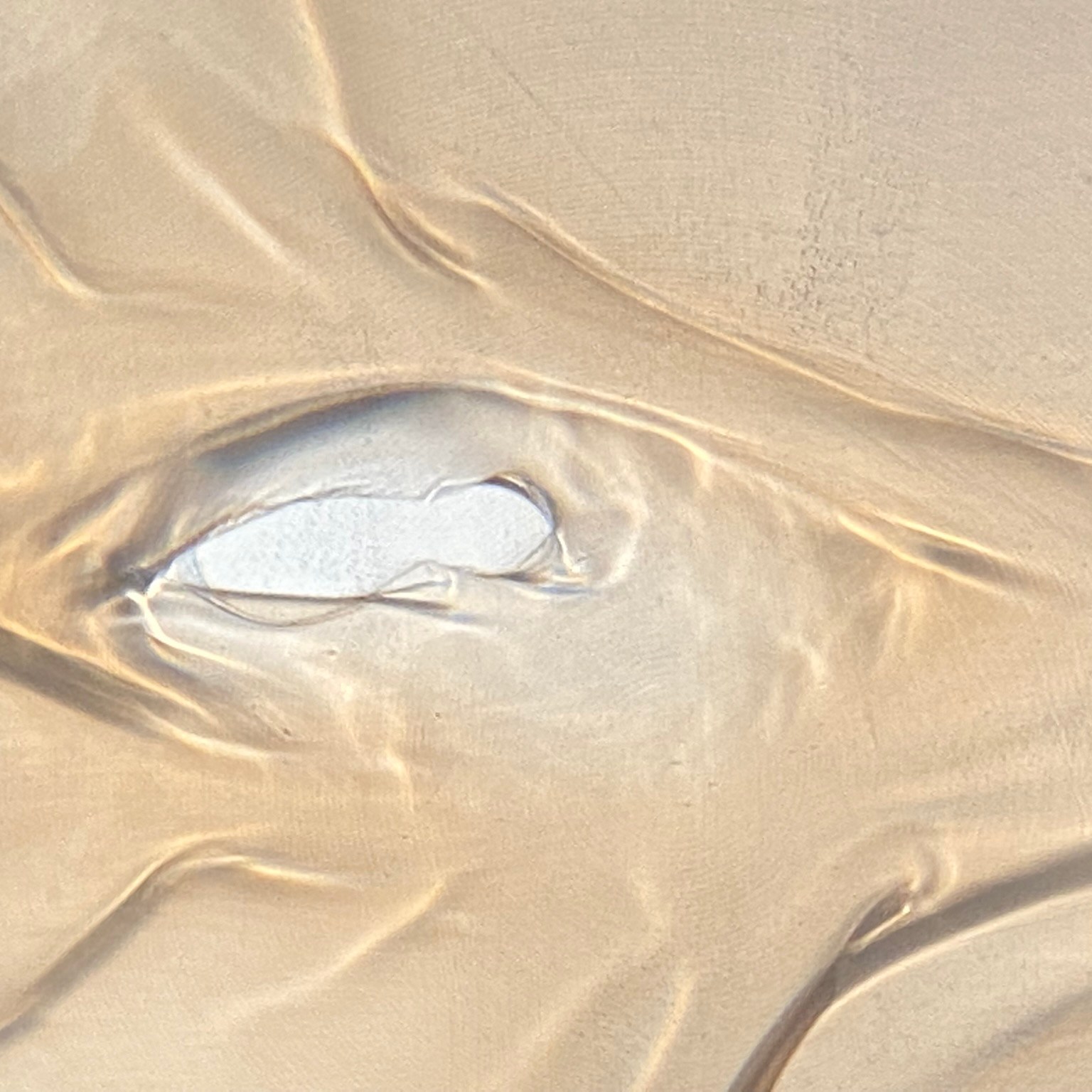
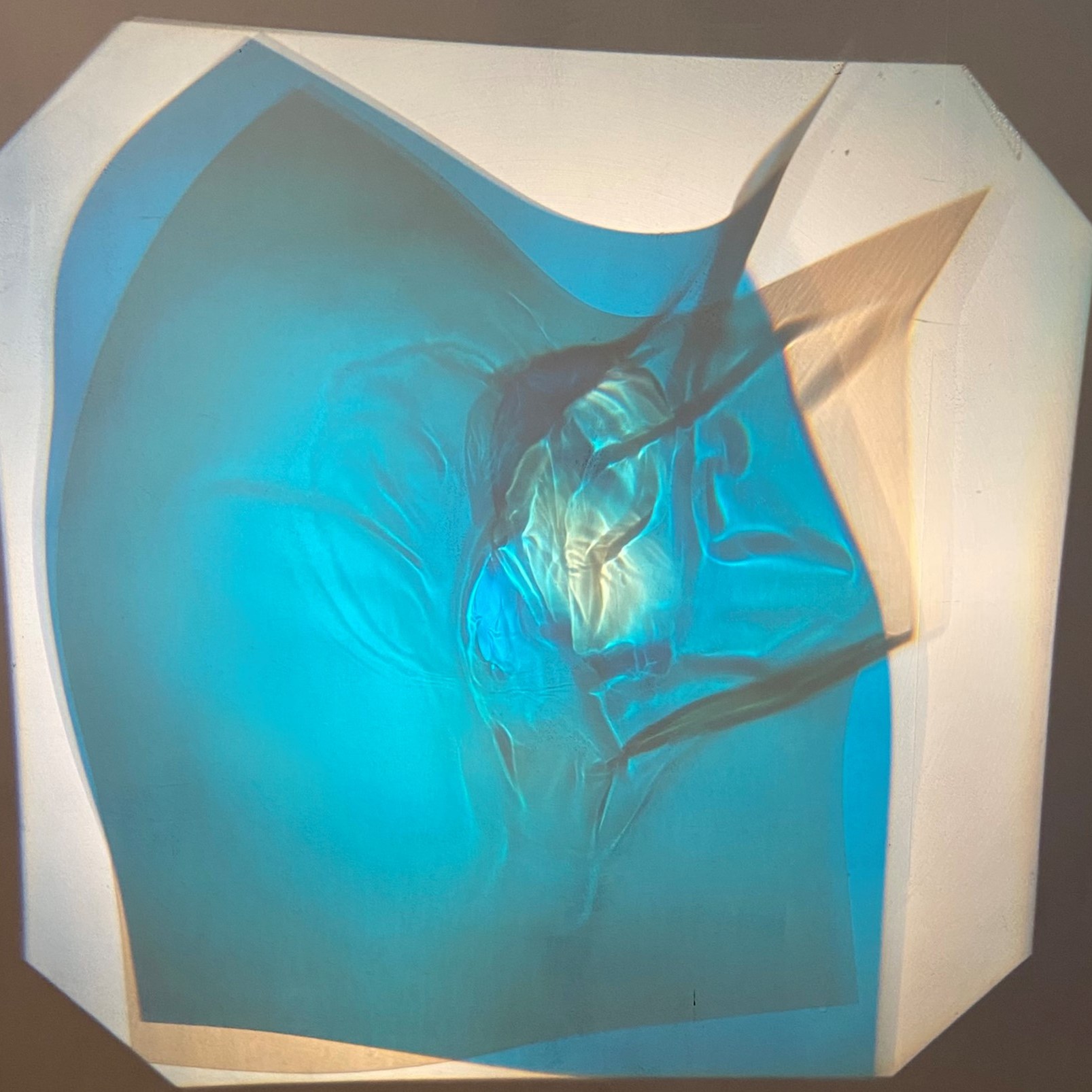
In my own practice I had begun researching a nearby reservoir formed in the 1930’s when a village of 300 residents had to vacate the Watergrove village to make way for the reservoir. Using acrylic sheet, I was melting tears and rips, creating small sculptural statements, layering them and projecting them with light. This process worked well with the theme of a exploring the moment when we are taken back in time to an event eliciting a physical response. (Below) I went on to animate some of these, although sharp images were difficult to capture as they were as the projections were as large as the studio wall.
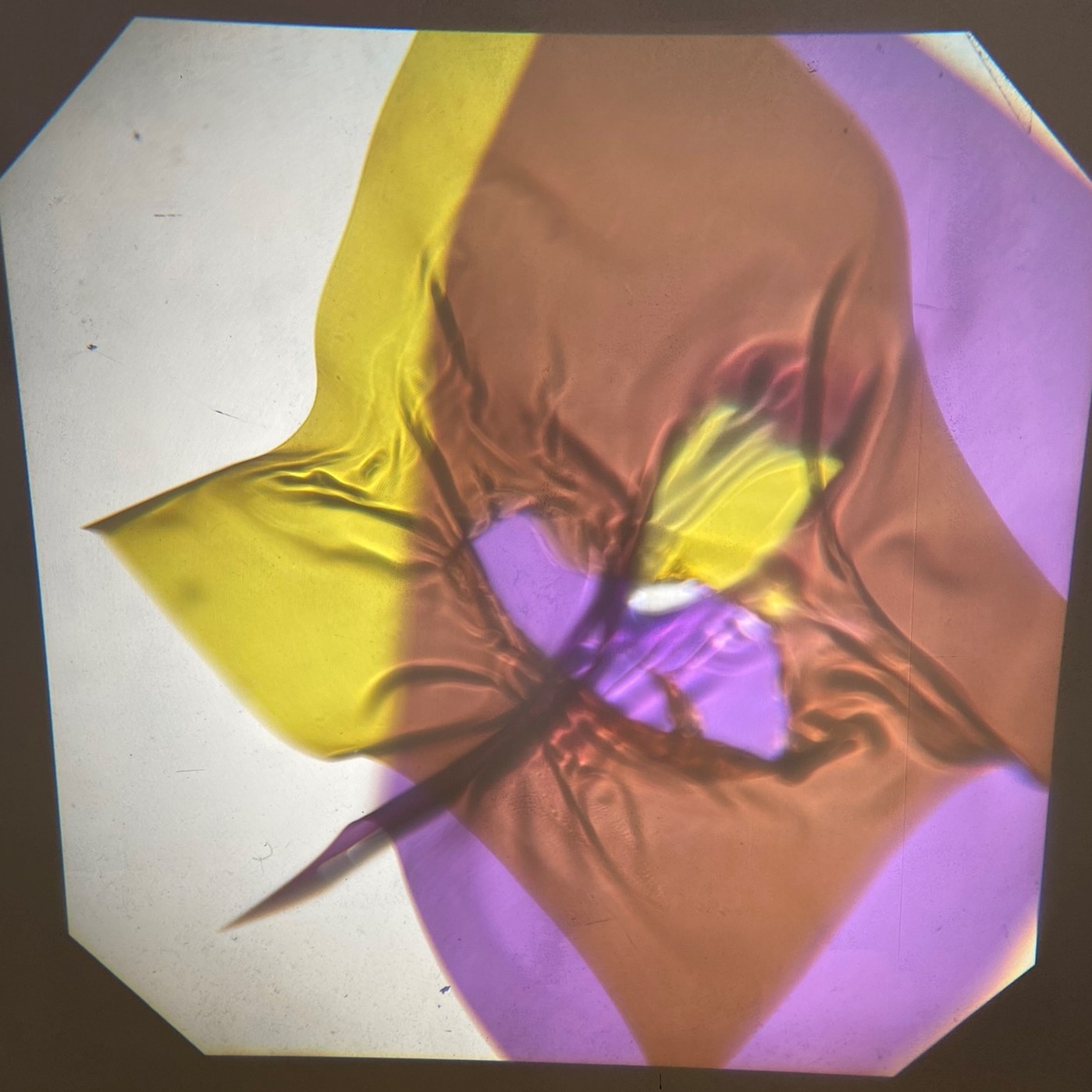
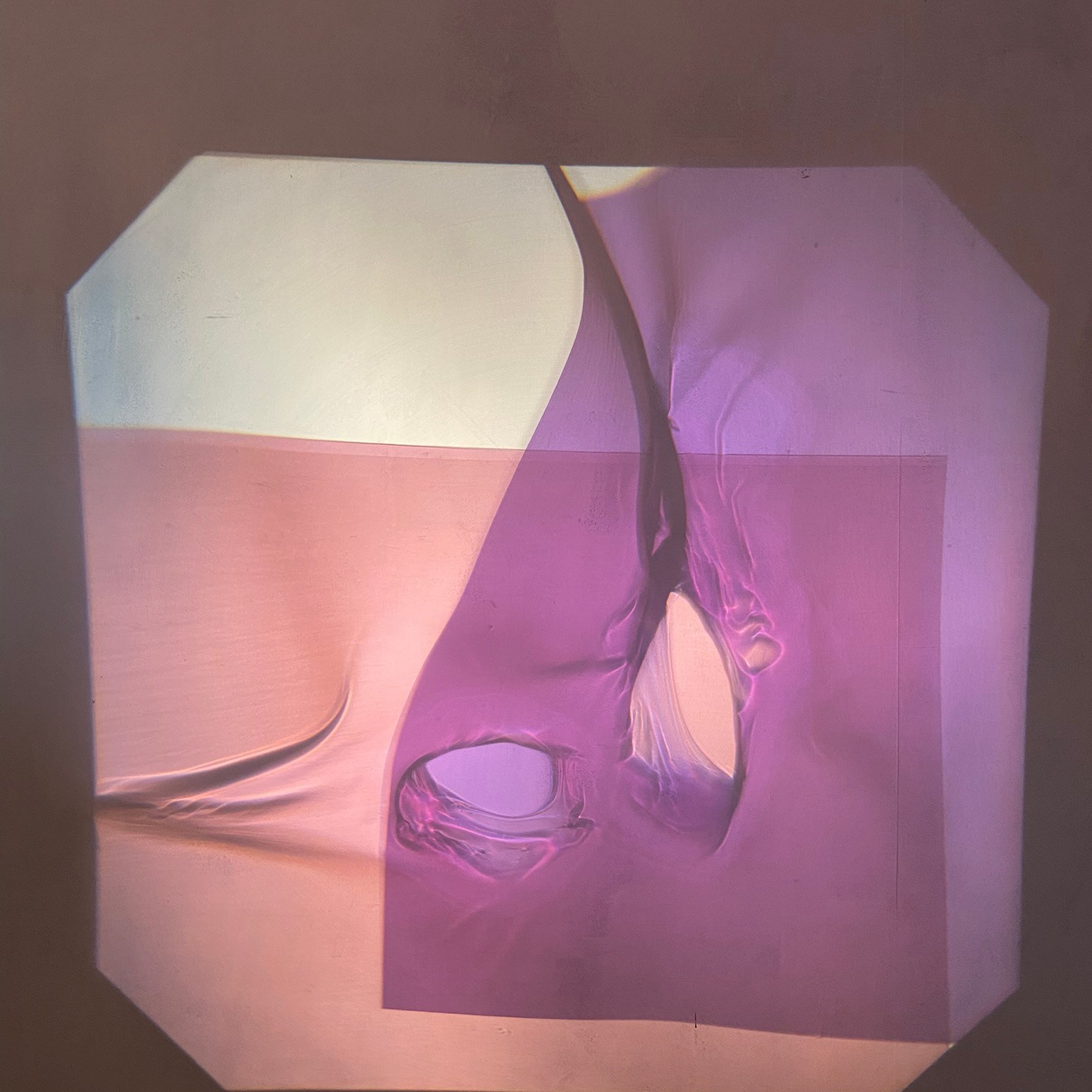
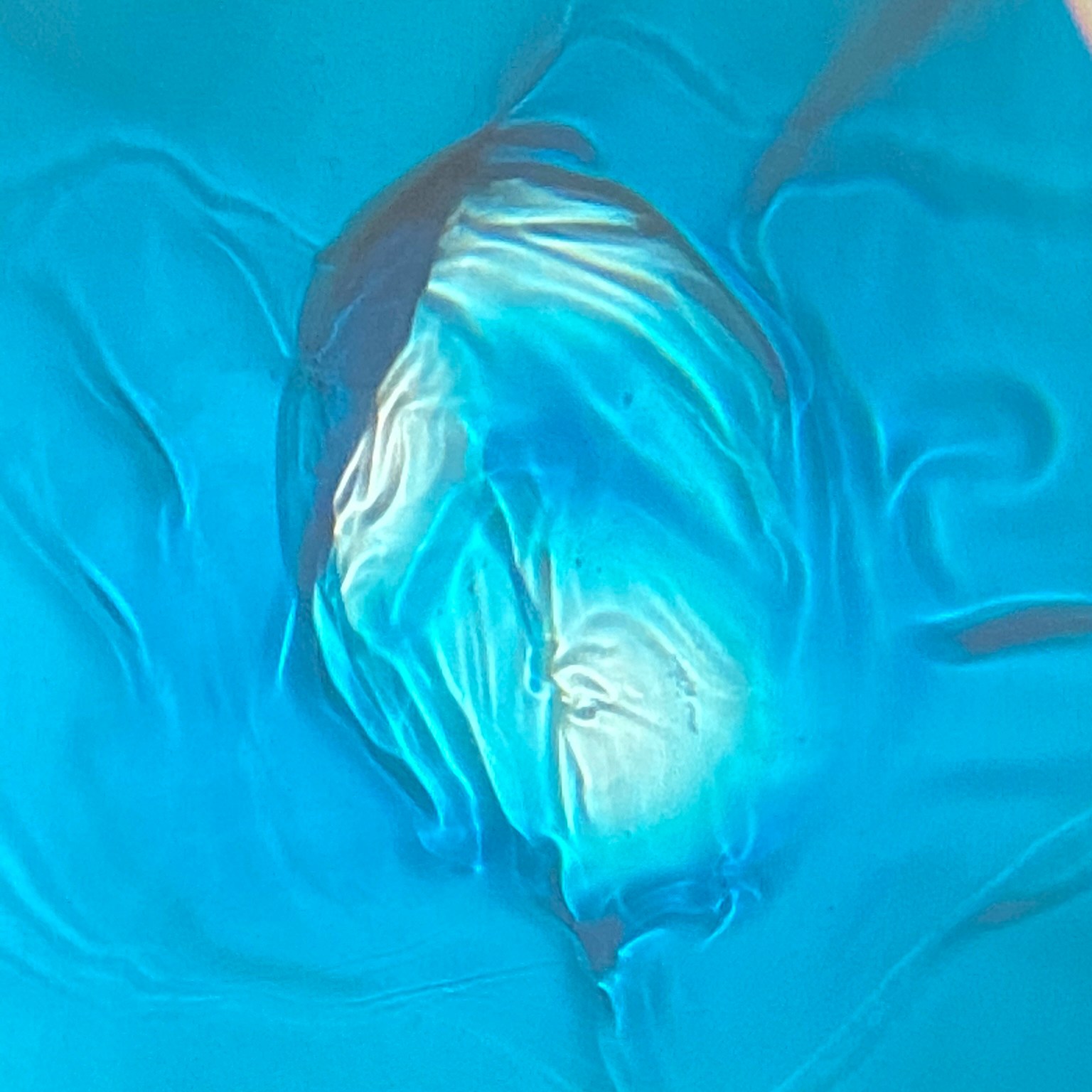
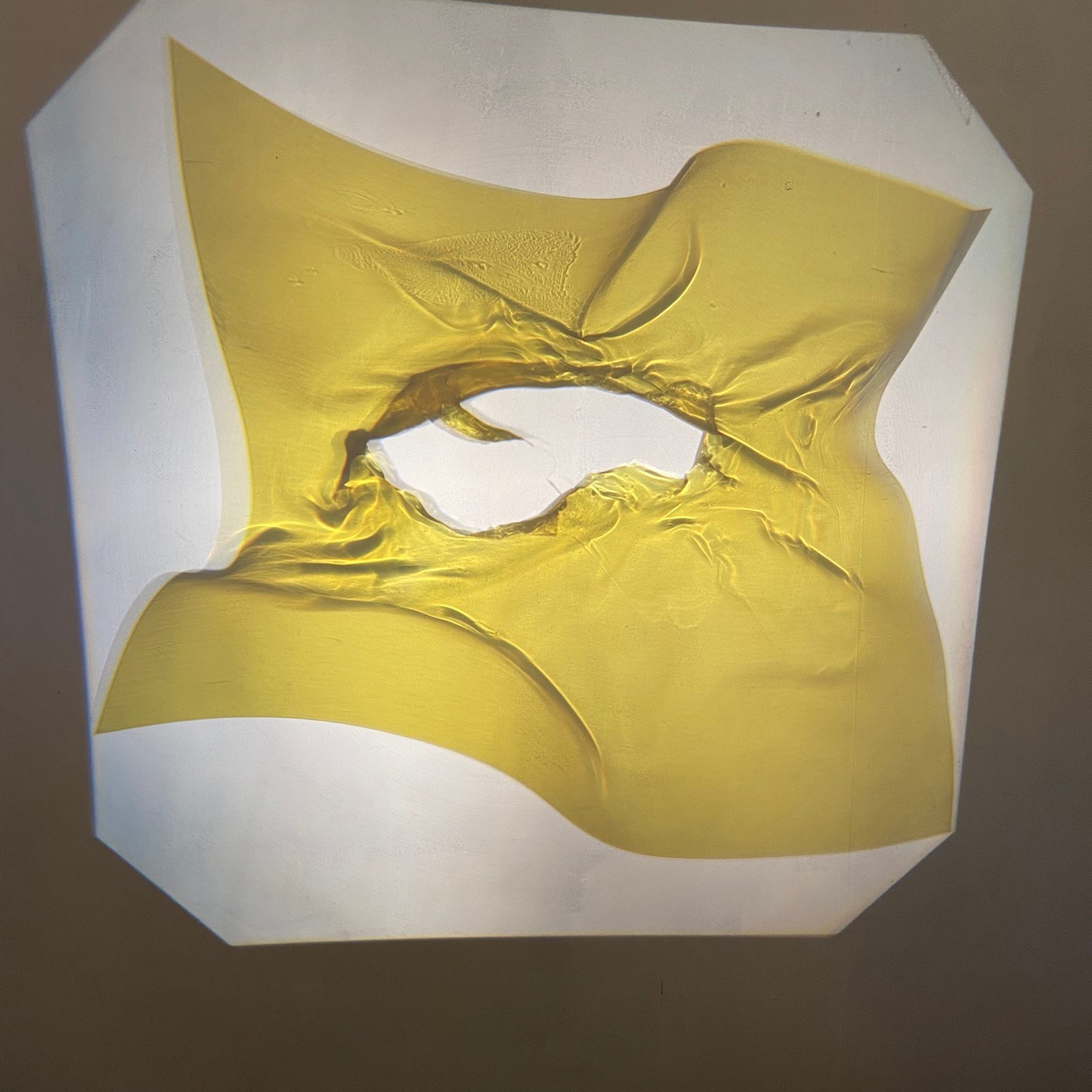
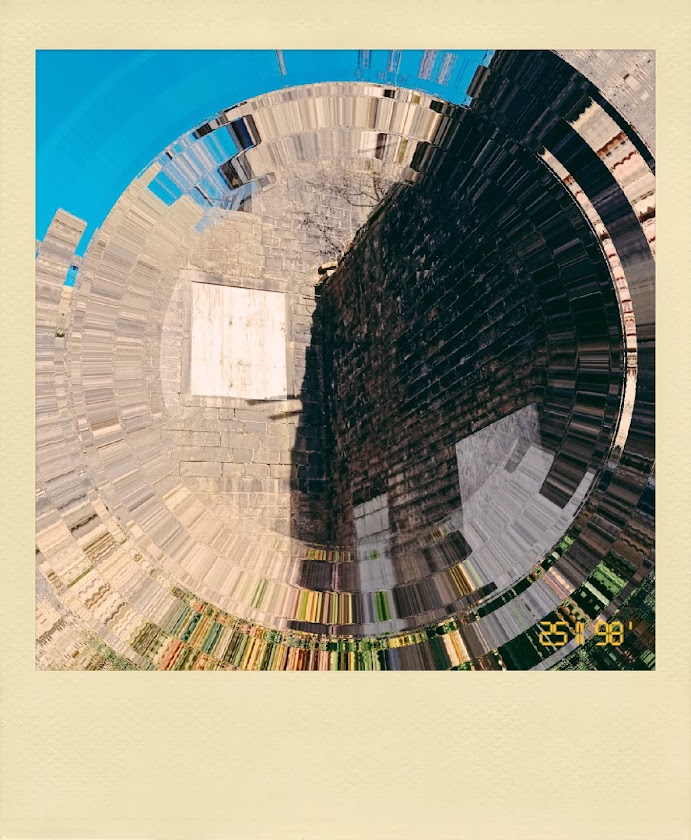
Using phone-based apps Glitch Lab and Lomo to edit my photographs.
Glitching creates opportunities to explore accidental errors and subvert the apps use, to explore place and time. Imagining the scene through the portal of a parallel universe, existing very differently from a human time based perspective.
Glitch Lab is a phone based app, free for most of the facilities, easy to use, save and share. It comes with animation but I have yet to explore this module.
I discovered Lomography and the quirky story of this cheap little Russian camera’s renaissance, along with 10 rules of use, such as ‘don’t think, just shoot’ and ‘take it with you wherever you go’, sound familiar?
By switching between the apps I have altered images from my own work and photographs taken locally in Wardle, Rochdale, where I have recently moved to. This extracts elements that I can work with in 3d or reproduce in 2d to create a new narrative.
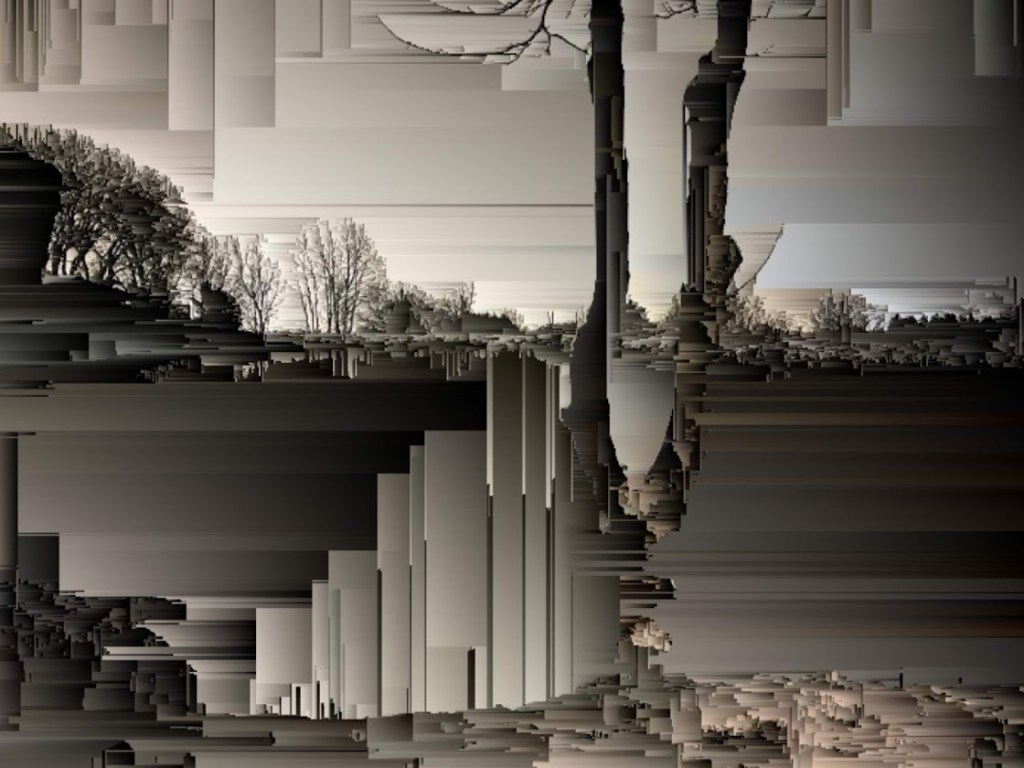
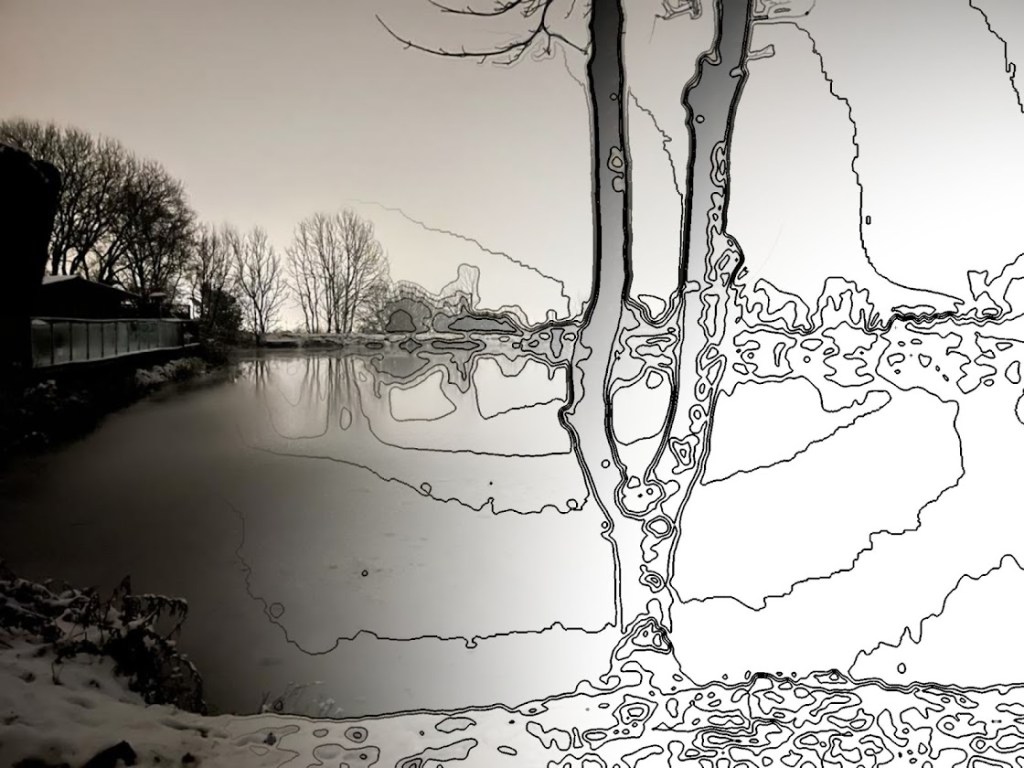
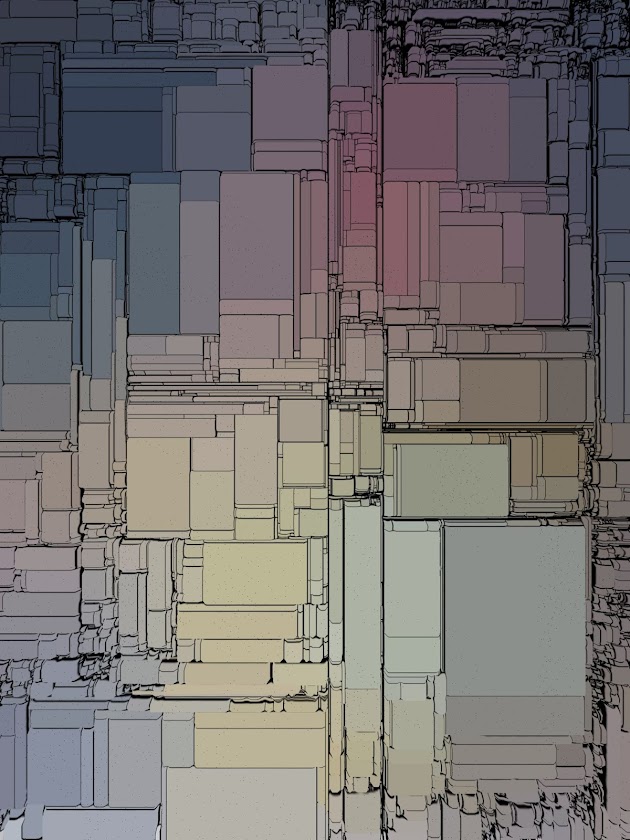
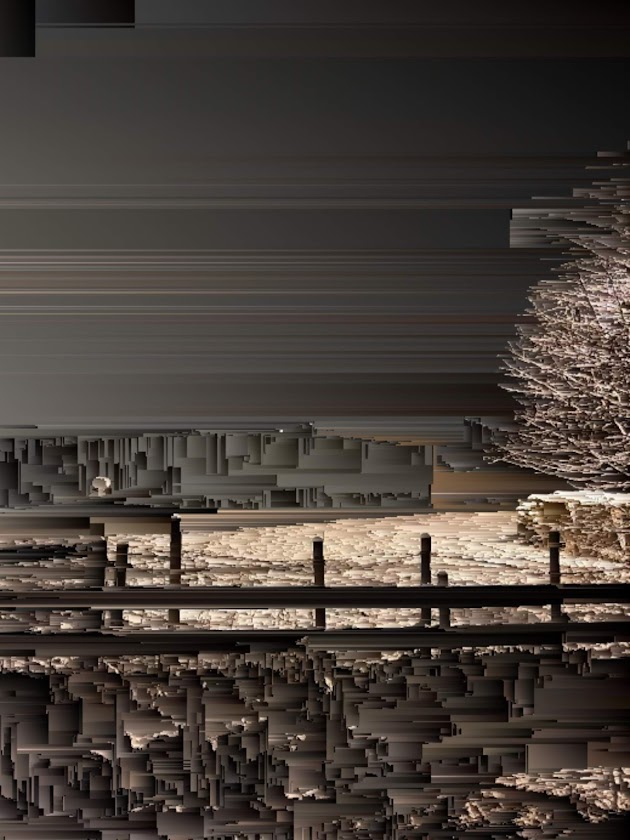
These images appealed to me for the wonderful heavy snow shades in the sky , the glitch software separated and celebrated them beautifully. An abstract sculptural element emerged. Depth and fractured lines seem to bring the image to its pixilated self, as if preparing it to move, to be seen in another time and dimension.
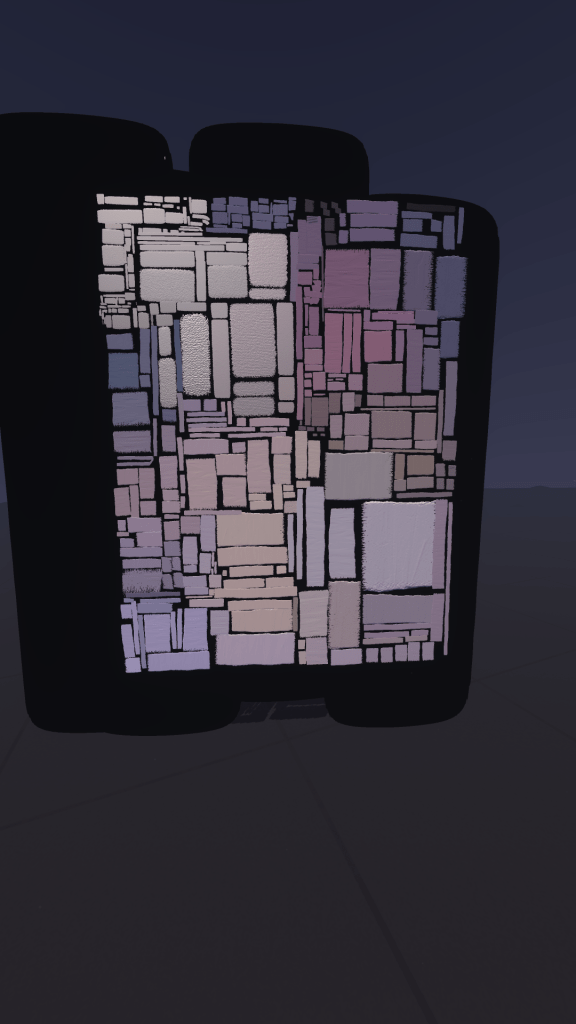
The blocks of ordered colour that are produced by Binary Tree are useful, breaking down a scene to its many subtle shades and presenting a challenge to replicate them in Tilt Brush VR (below) it demonstrated the vast number of shades that can pick picked with the colour picker in TB although lemon failed to replicate.
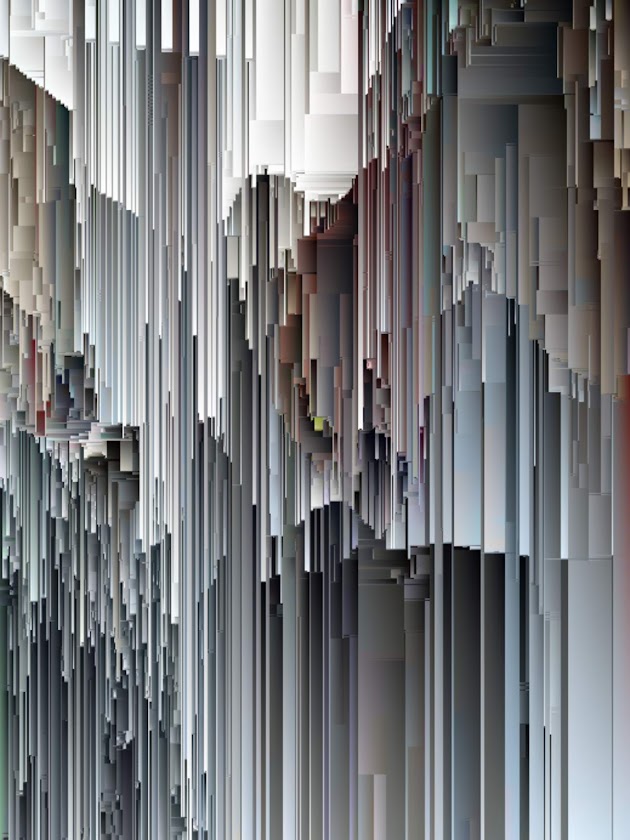
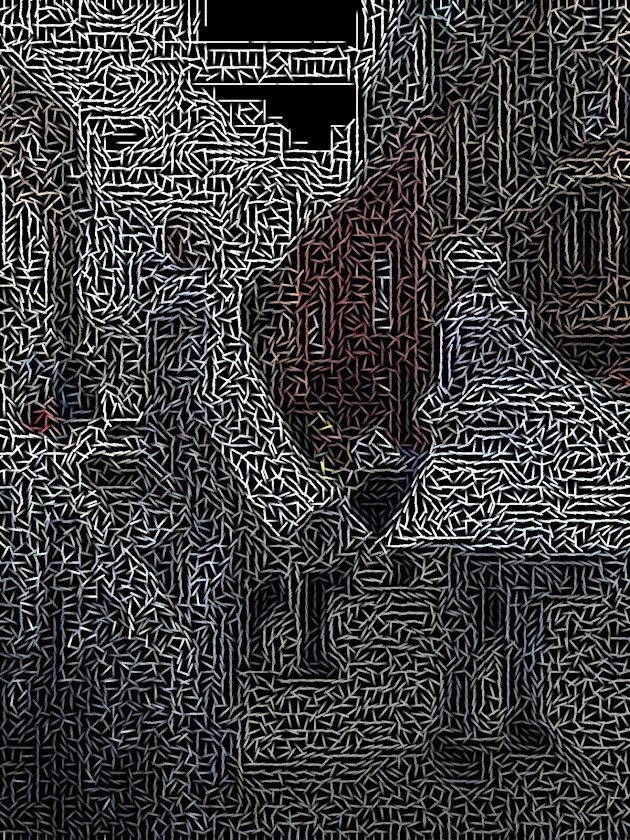
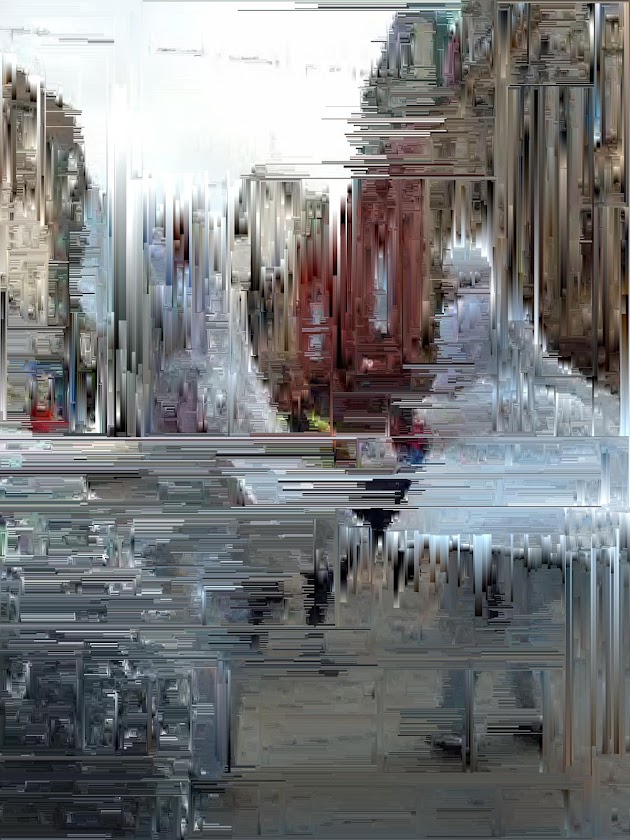
Angels on stilts in Manchester 2021 – The icy temperature and movement of the angels was captured, Troubled Waves became painterly, each can be altered and enhanced directly on the screen, abstracting and questioning the subject. Vectors seemed to reduce the image to stiches and Square Sort to icicles.
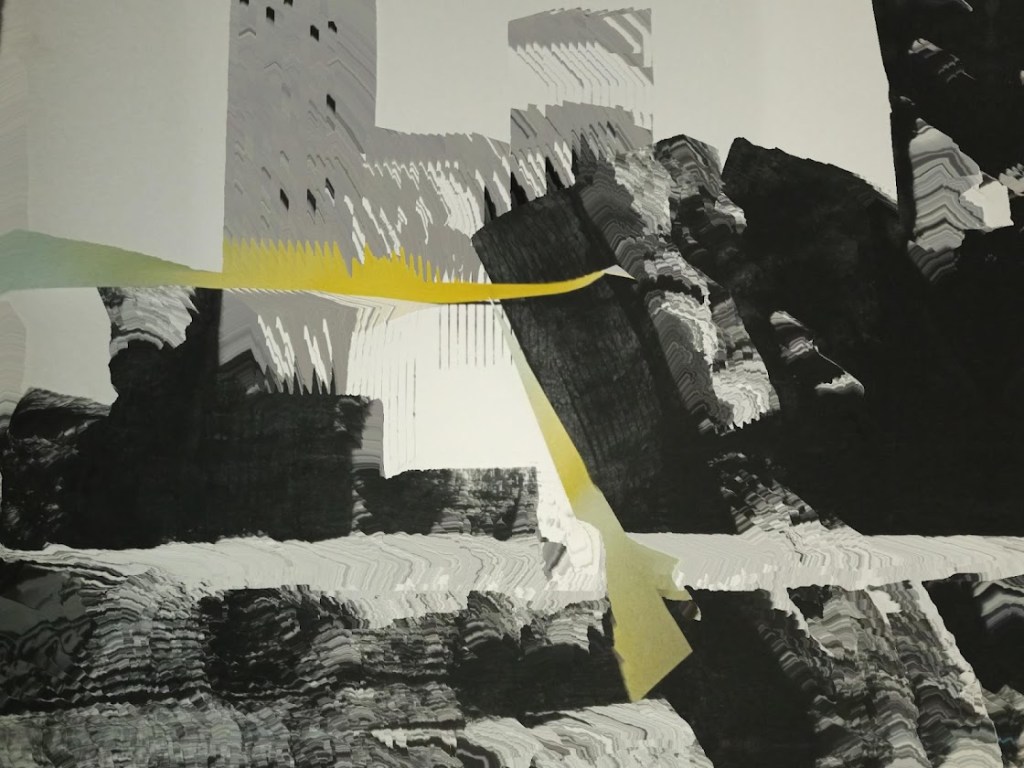
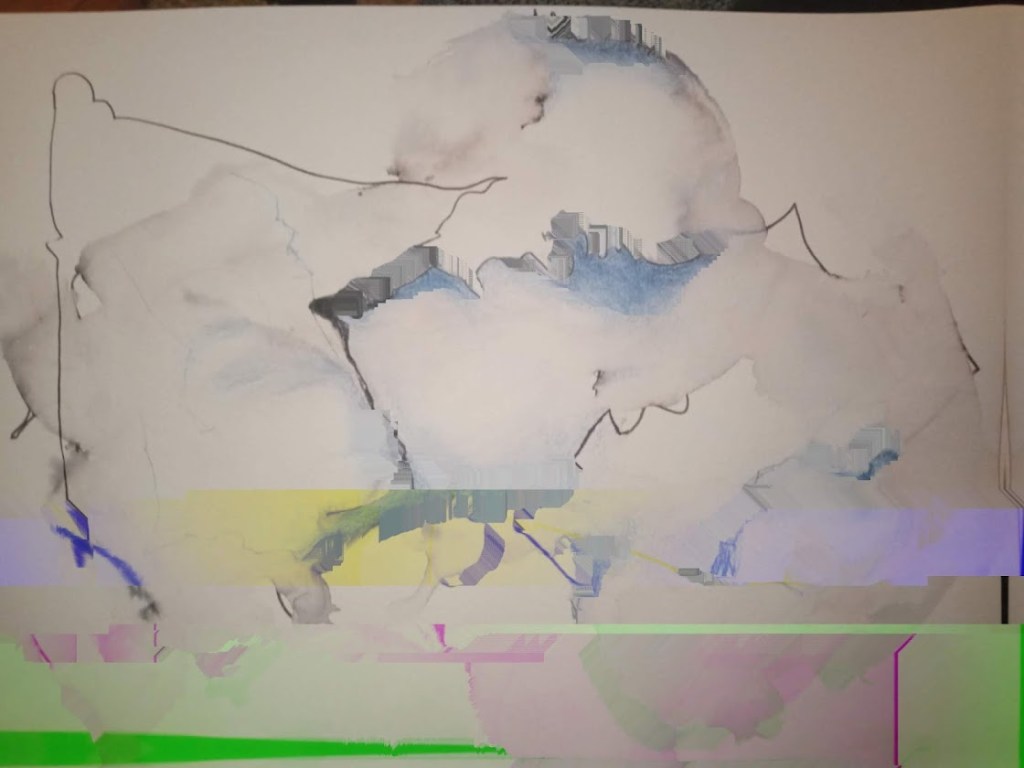
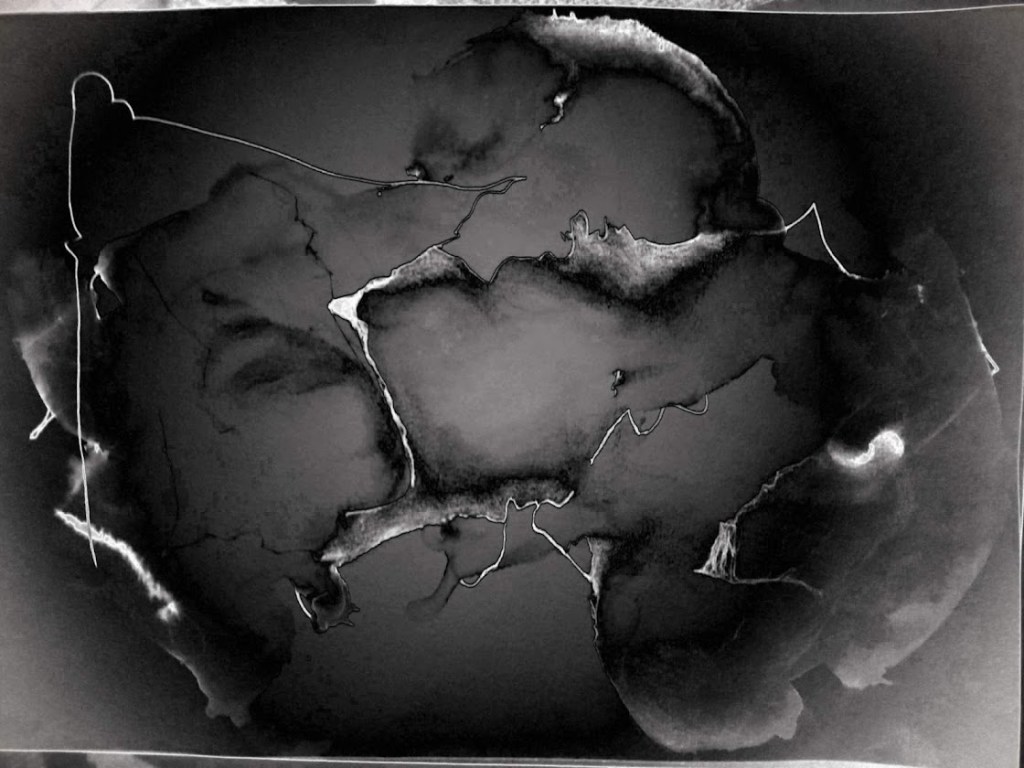
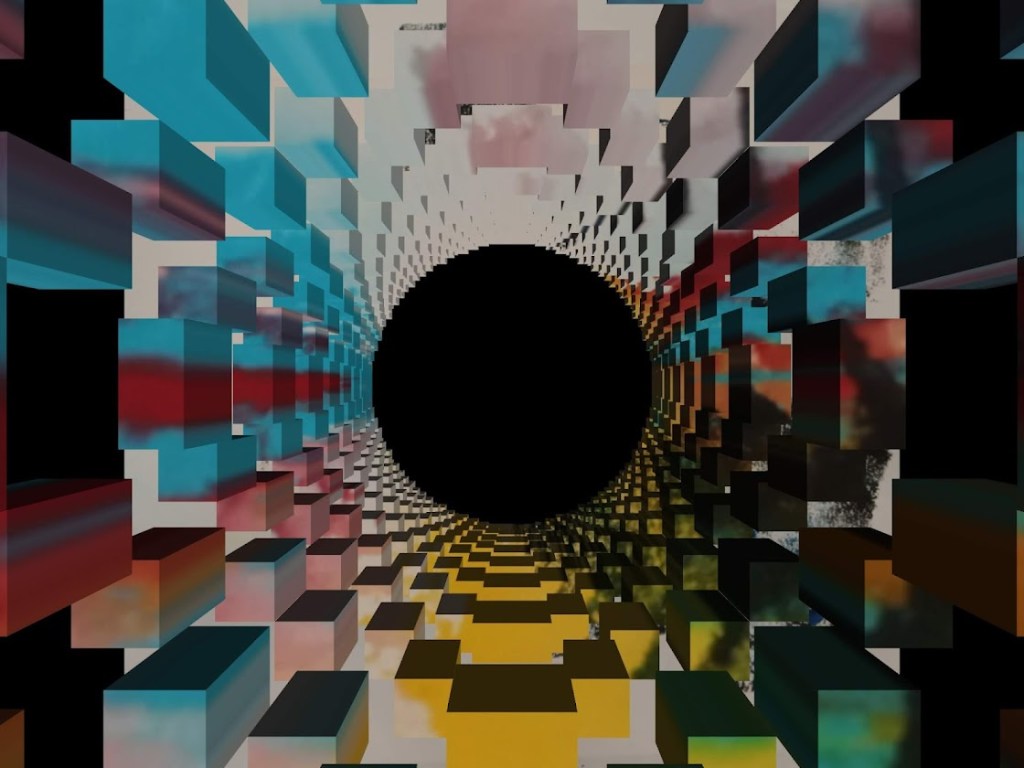
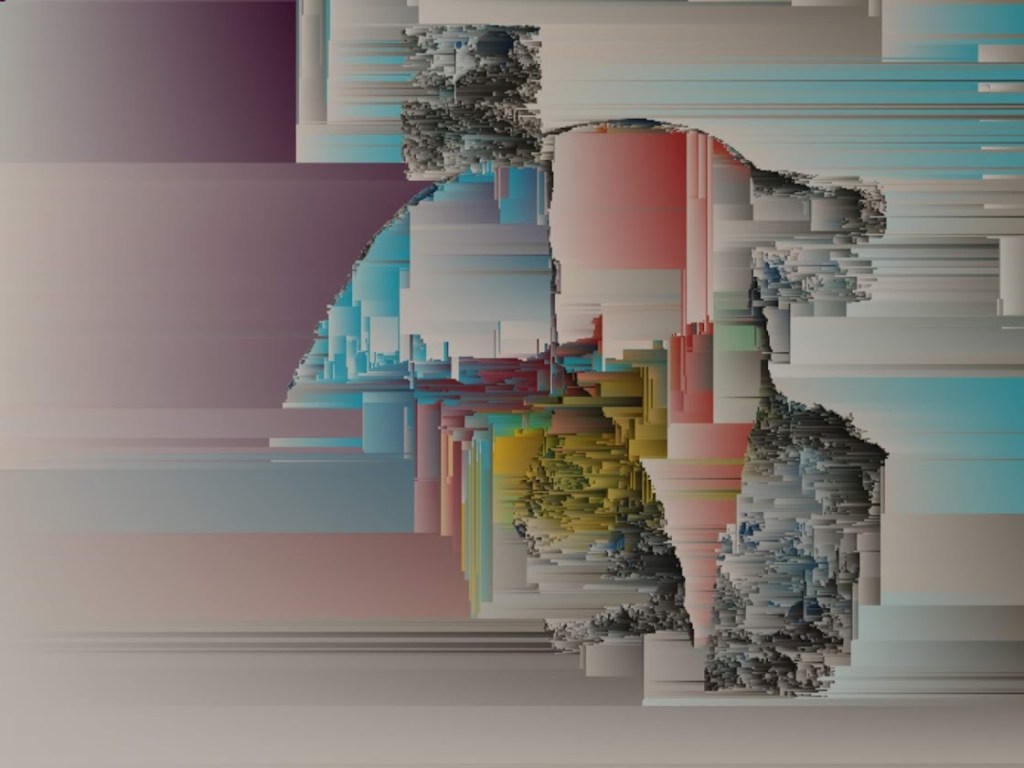
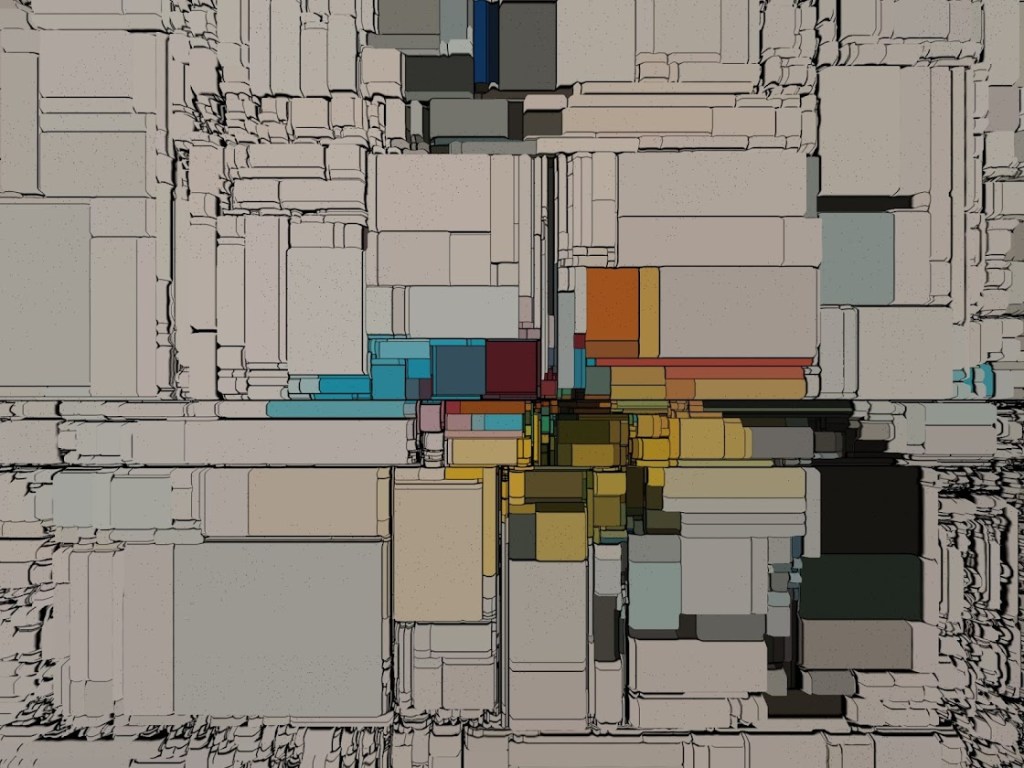
Sketches can be altered to progress ideas, texture and detail that emerge form new ideas for making off-line.
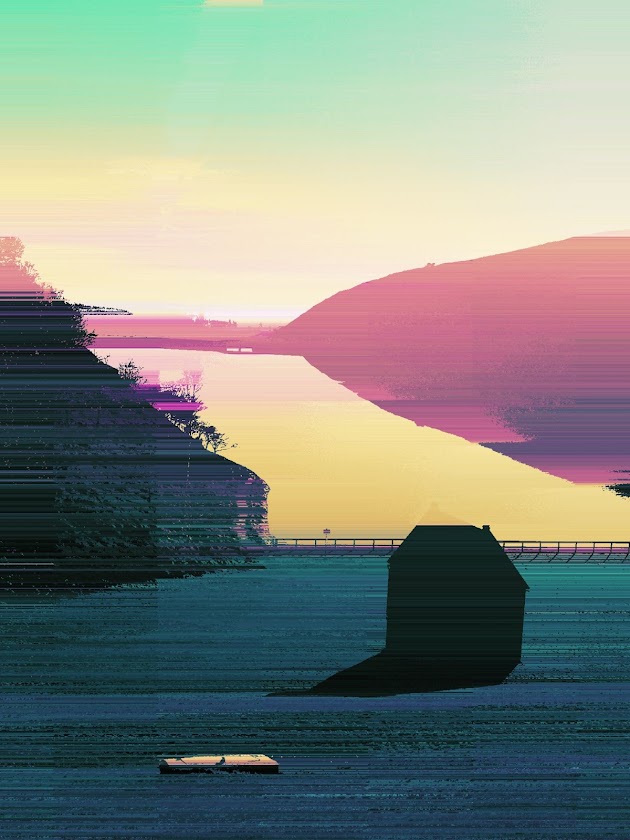
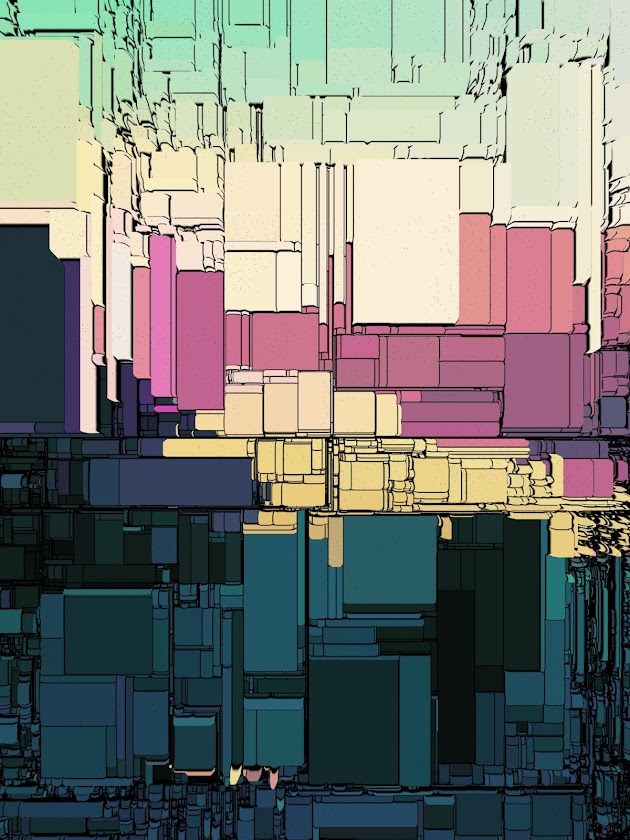
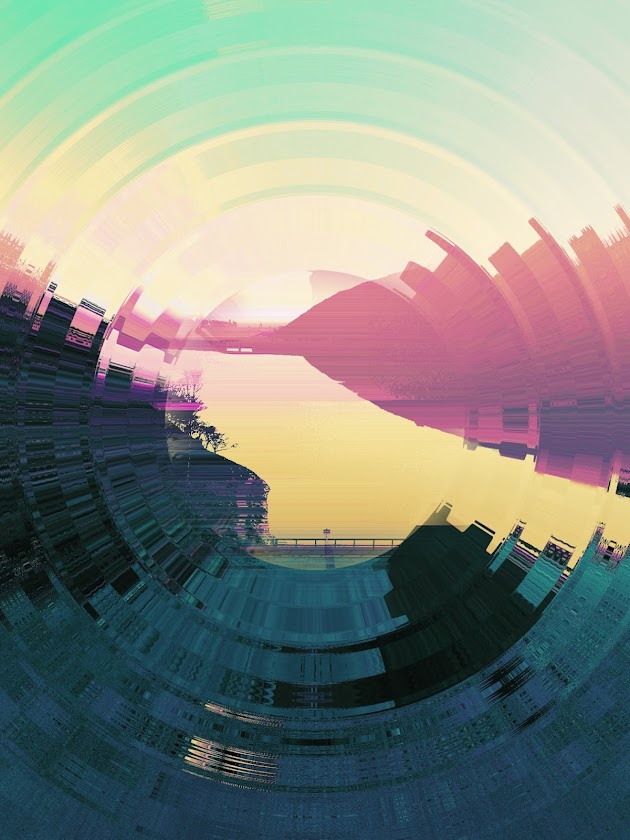
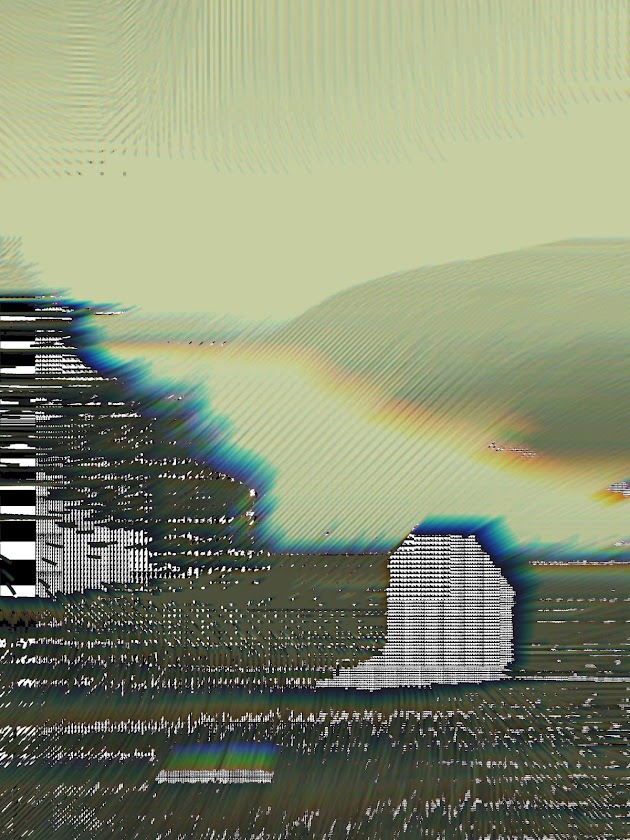
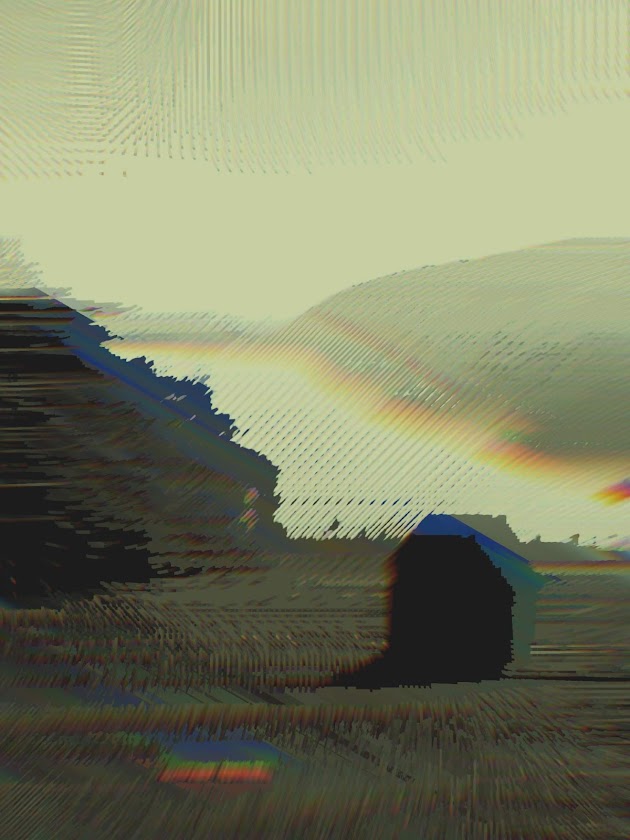
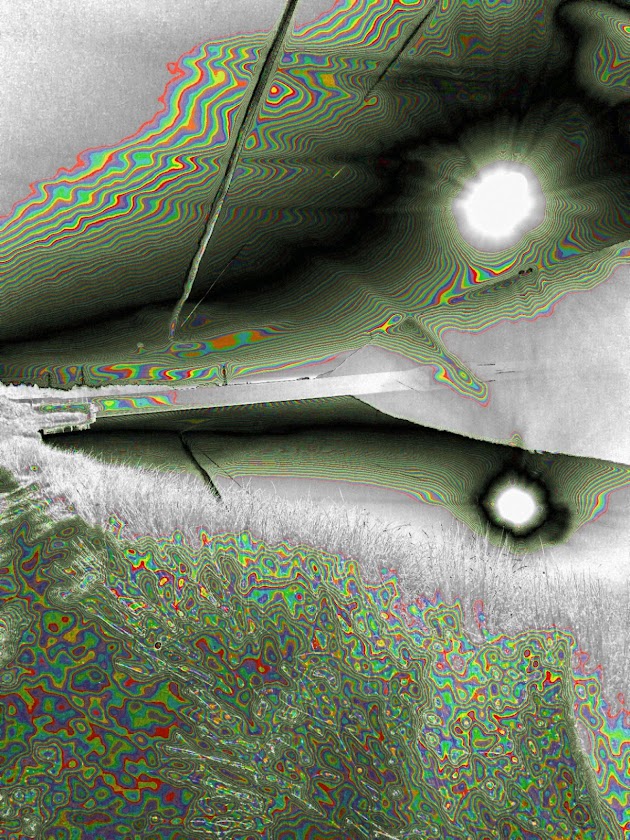
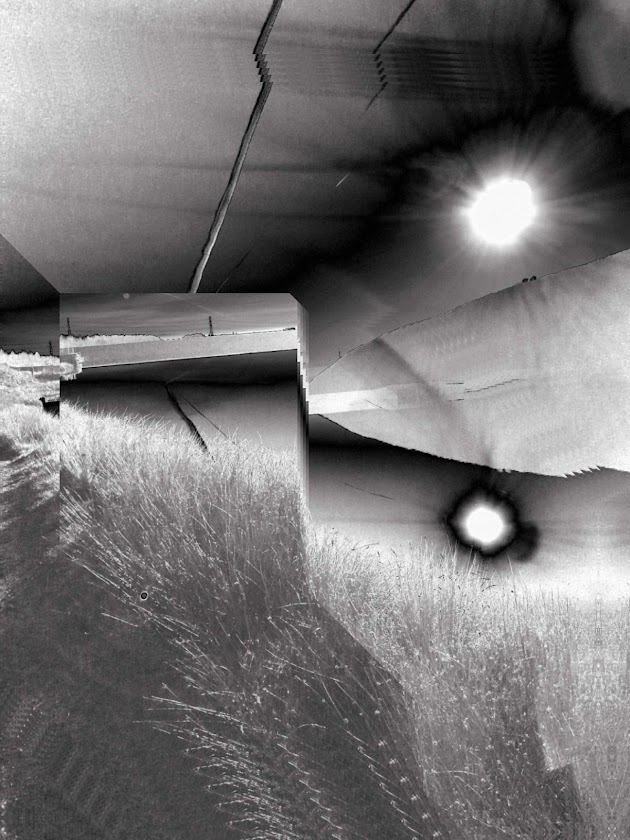
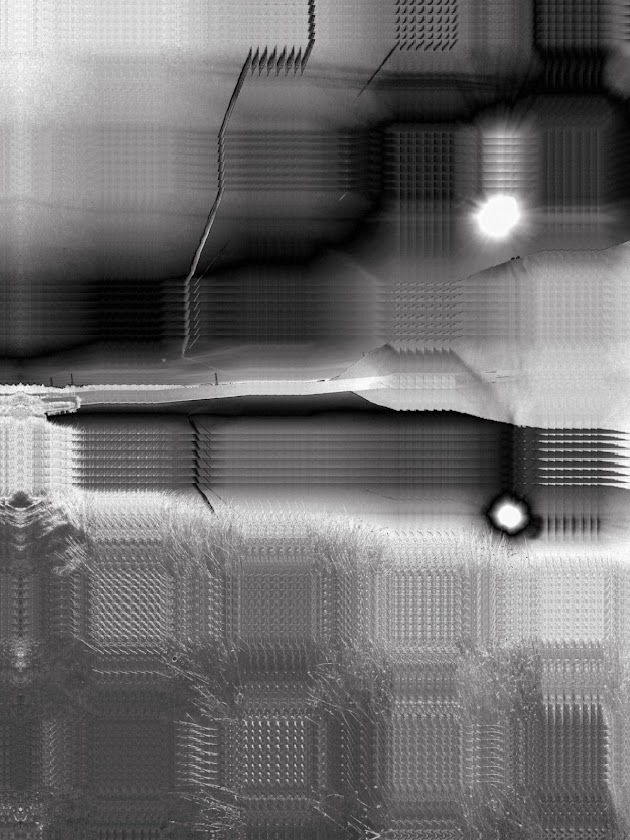
Photographs from a local walk at Green Booth Reservoir – the architecture and cold clear weather provided some interesting starting points for both apps.
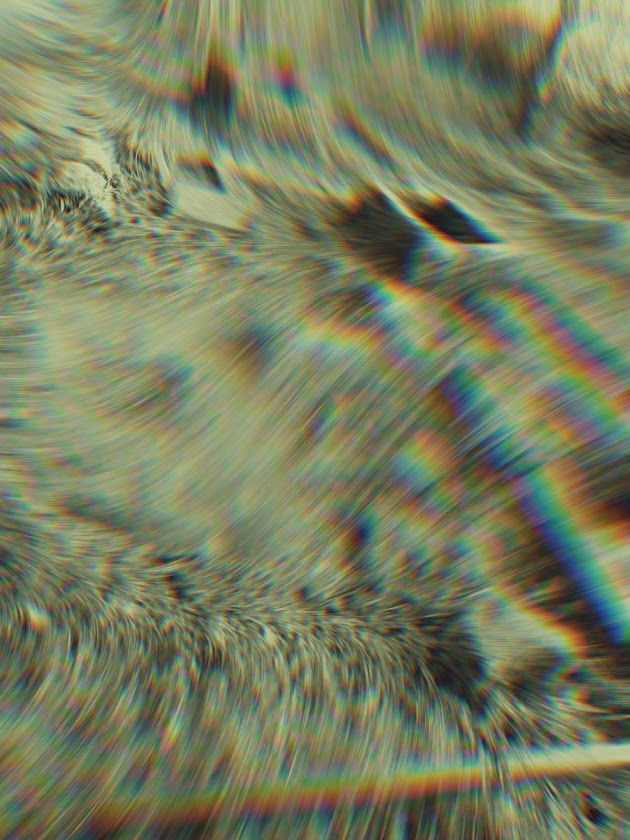
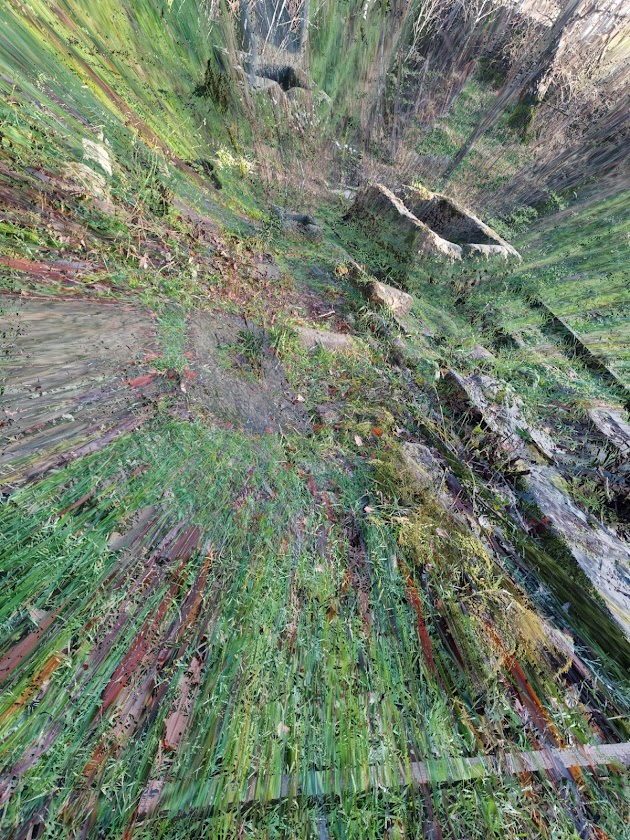
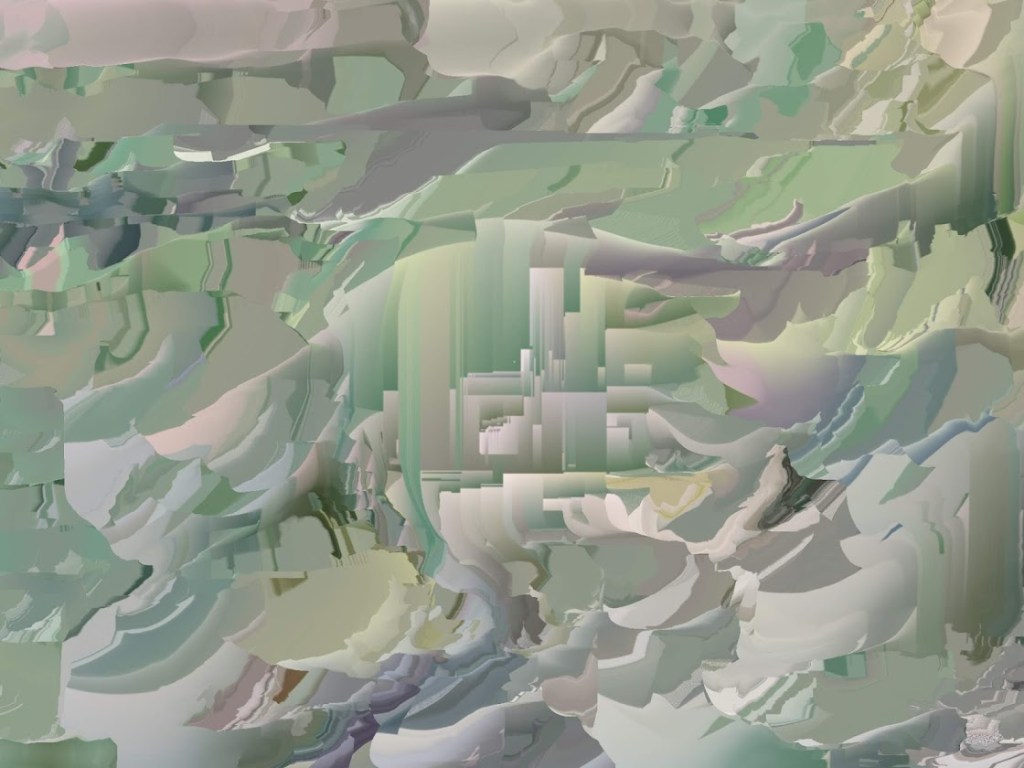
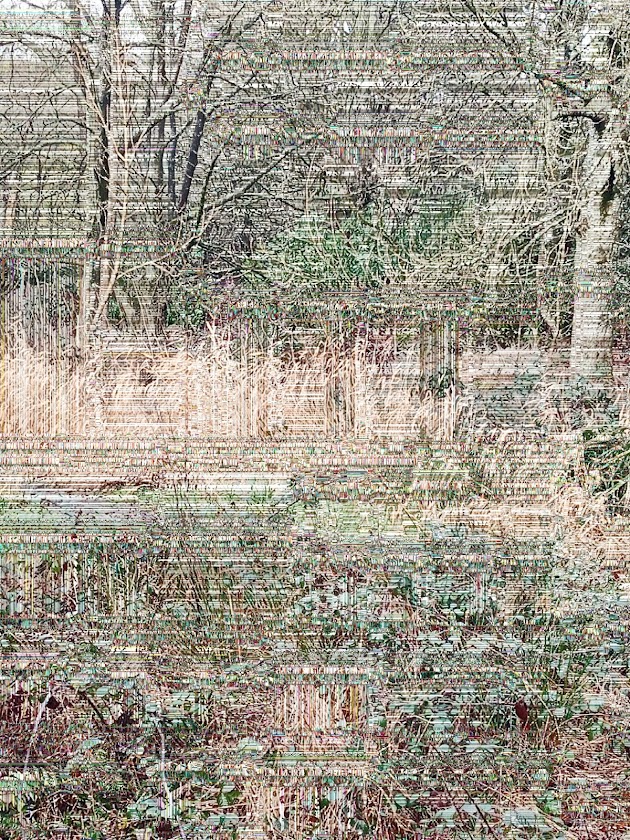
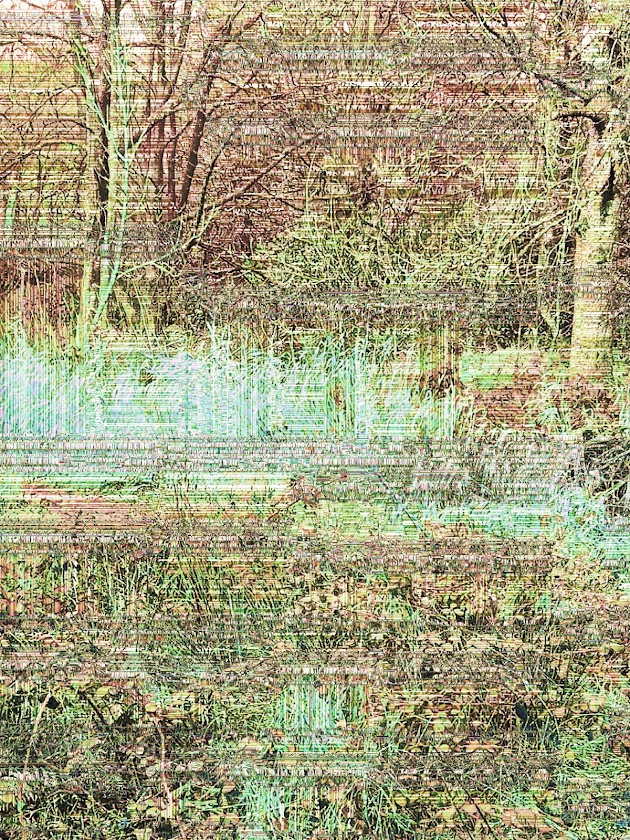
Watergrove Reservoir Rochdale – abstraction could be replicated in paint.
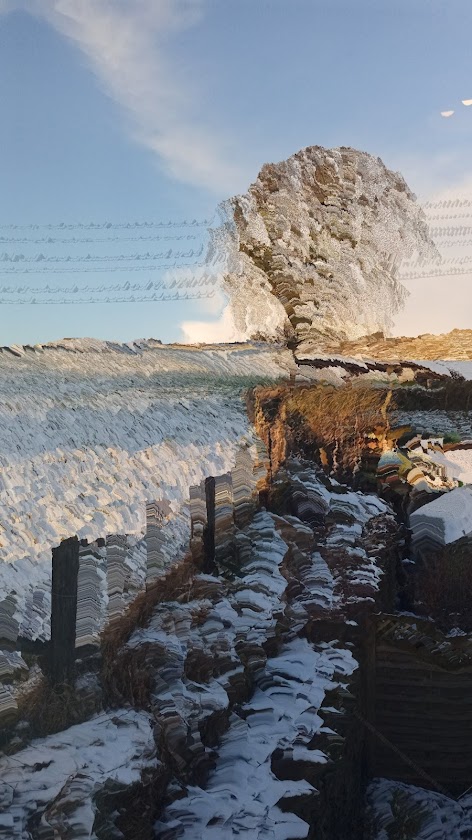
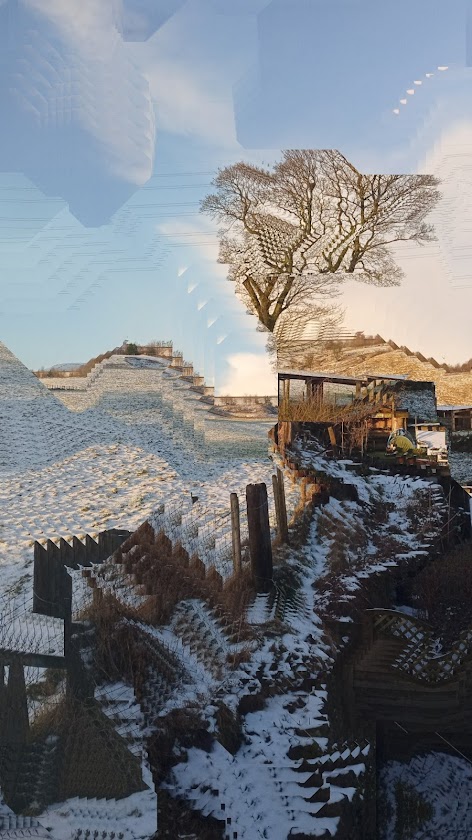
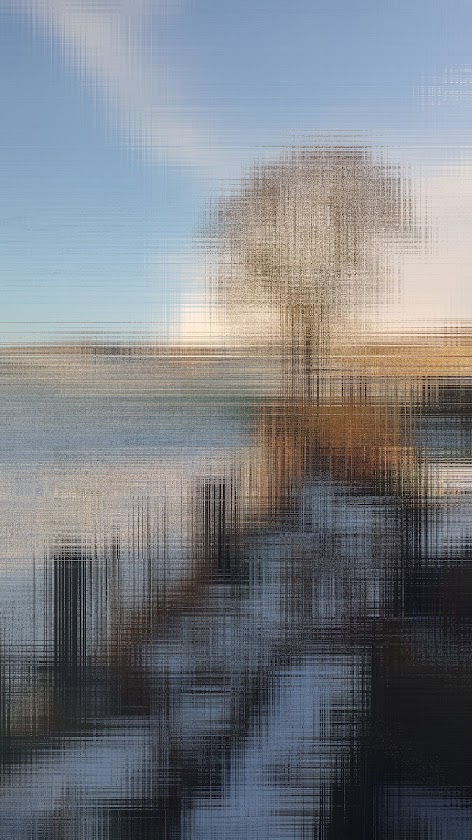

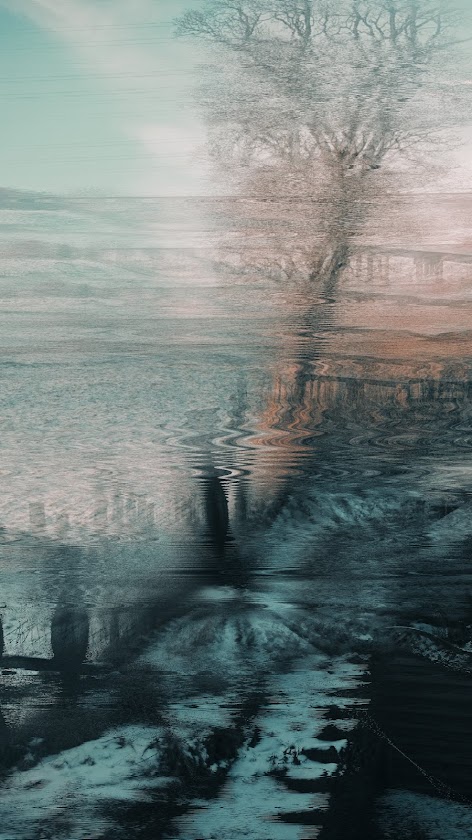
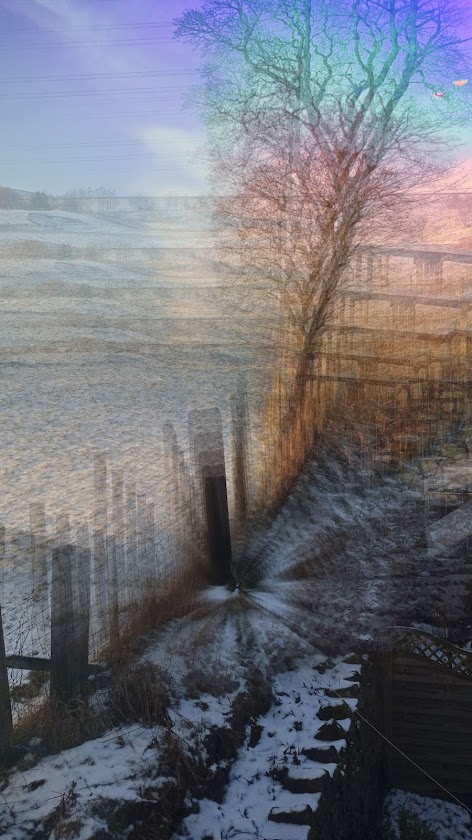
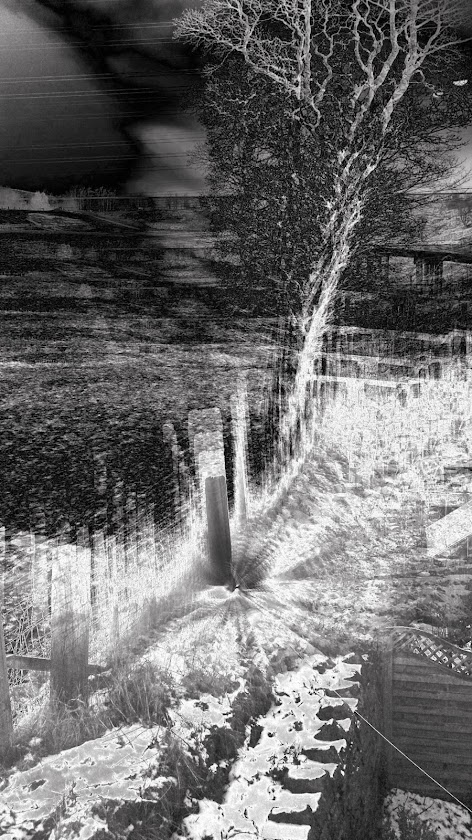


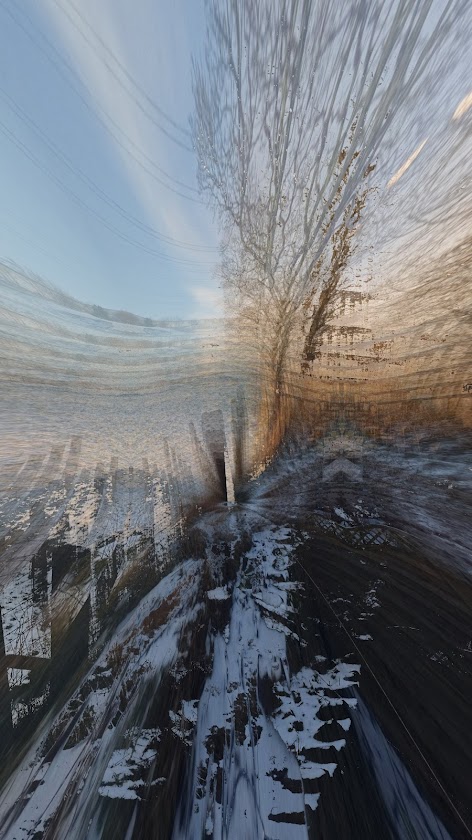
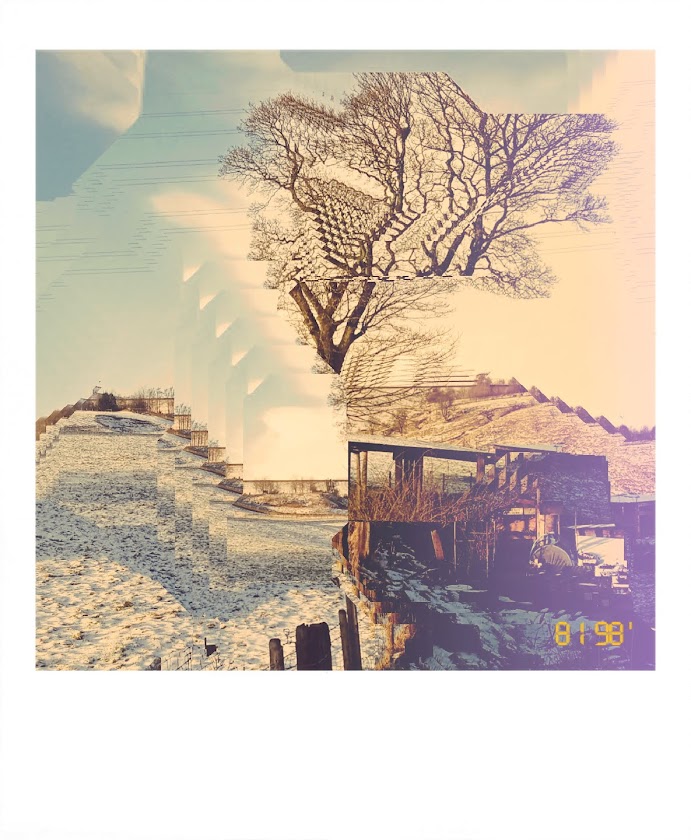
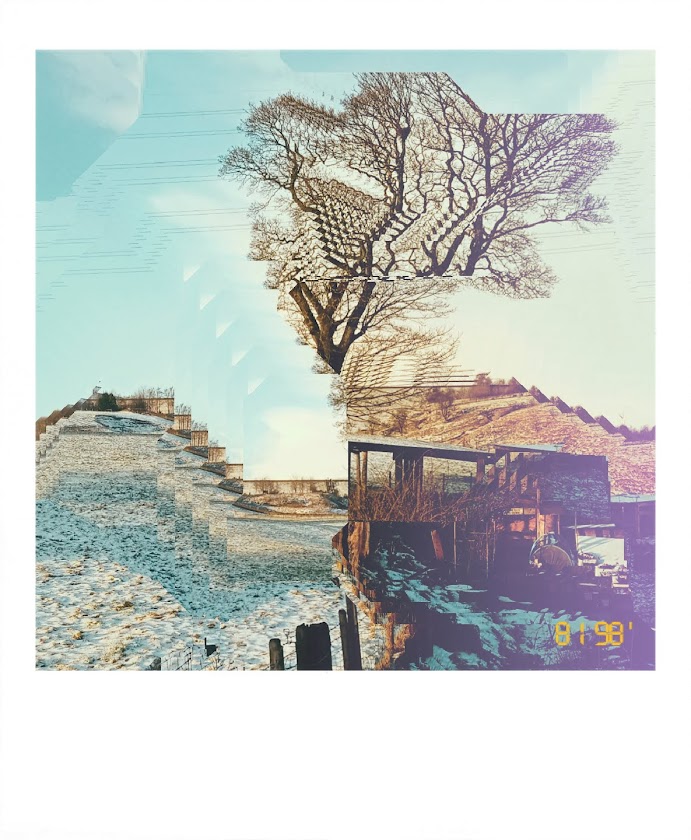
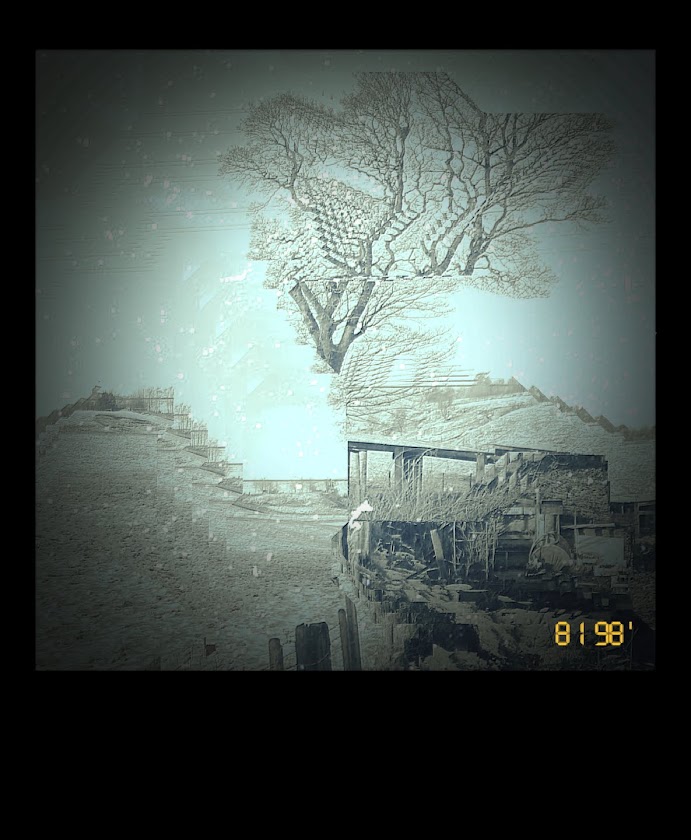
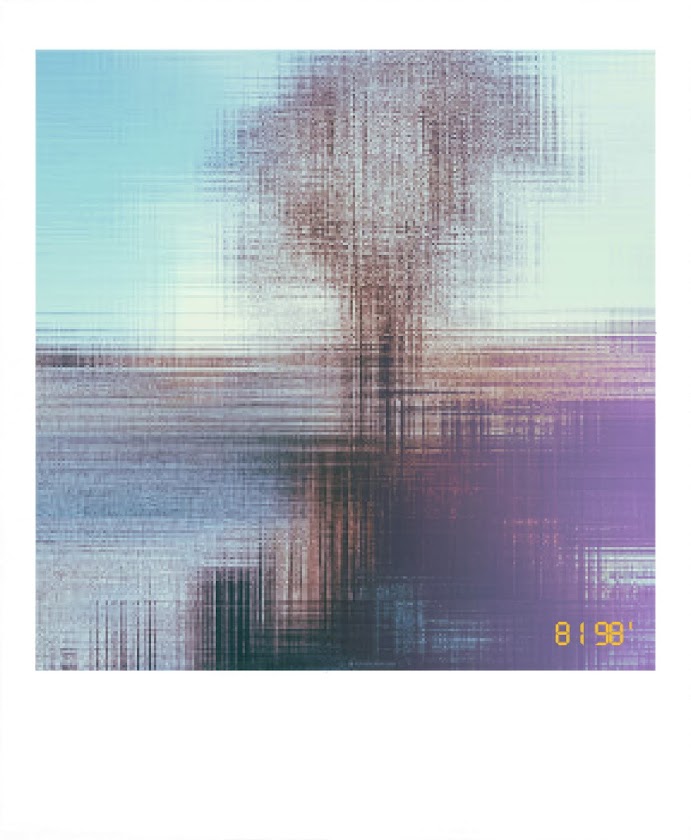
A view from my window forms the starting point for so many different ideas.
This process raises questions about the photograph and how the phone or camera altered the scene, what I saw in the photograph that I took for granted or missed IRL, how the glitching software and Lomo app re see and replicate with and without alterations and finally what I choose to keep and take further and why.
Using both apps in a sequence of changes gives me a totally new perspective and inspection of these perspectives creates new ideas for moving forward. After reflecting on this process I am now using higher resolution images with a view to presenting them in both 2d and 3d in VR.
https://www.lomography.com/about/the-ten-golden-rules https://play.google.com/store/apps/details?id=com.ilixa.glitch&hl=en_GB&gl=US

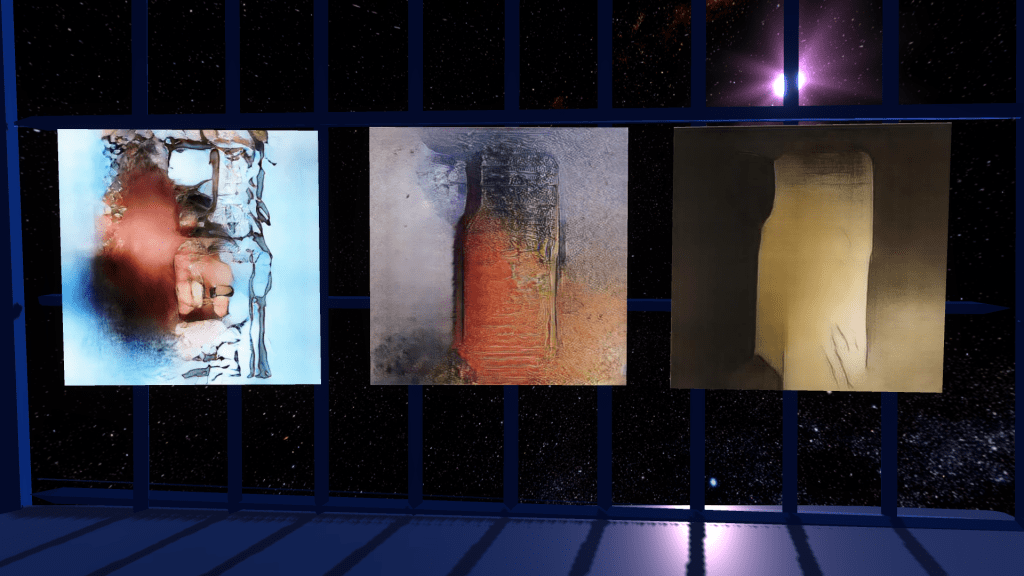
A digital response to: Vista – tales of shrinking skies and life within the city grid – Nan Collantine – Dez Rez Artist Projects.
This project was fast! There was a two-week window. I would have liked to ruminate, research and test ideas for at least a few weeks, but the limited time and exhilaration propelled us both forward.
I found myself talking to Nancy Collantine in 285 Deansgate, an empty shop front in Manchester, part of the Great Northern Warehouse which dates back to 1899. Nancy had a 7-day residency (courtesy of GNW) and had already begun to paint in full view in the shop window, on her small canvases. I had been invited to respond digitally, which fits nicely into my practice and my obsession with comparing the online – offline, in this case, of Manchester’s architecture.
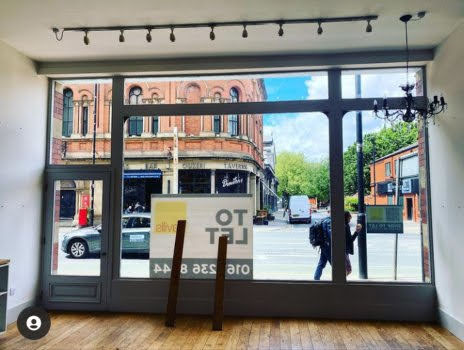
Nancy had worked in Manchester when she was younger, walks around the city for inspiration revealed: ‘there are no more spaces.’ Covid had not halted the march of intelligent buildings, piercing the sky as they spring up from the rich soil of Manchester’s architectural history. The GNW building we were in was a time portal, inside, the walls had lost their plaster board exposing the studded bright tanking on the brick wall, revealing its age and presenting an interesting abstract composition. The red brick arch facing the busy street framed: a crane, Victorian architecture, trees and passers-by, there was so much to be inspired by.

The skeleton of the city that was, now has growths, calcified and permanent redirecting us as driver and pedestrian. This new vista had stolen the sunset, changed the acoustics and even altered the breeze for my flaneur friend.

My own wandering’s, delayed by a period of isolation due to Covid19, revealed the visceral shrinking of the historical buildings in the wake of the new builds. The looming, intelligent blue glass towers are unlimited in their ascent, they pierce the sky and bully the world the below.
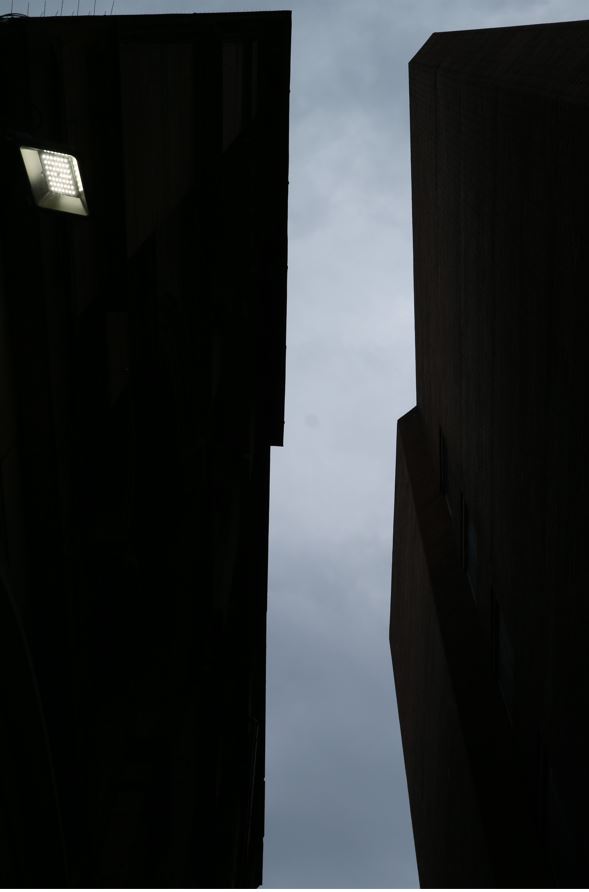
I recorded the sounds of construction as it competes with sirens and conversation. I searched for negative spaces, slices of sky between the buildings from a pedestrian perspective which we discussed at length. All too often artist’s compositions are altered, abstract lines made vertical, defying the human vision for the aesthetic.
The past, present and future seem to coexist architecturally, as it does in our online-offline world. Systems, services, conversations, relationships, visits, education…. what part of our world does not have an on line cousin.
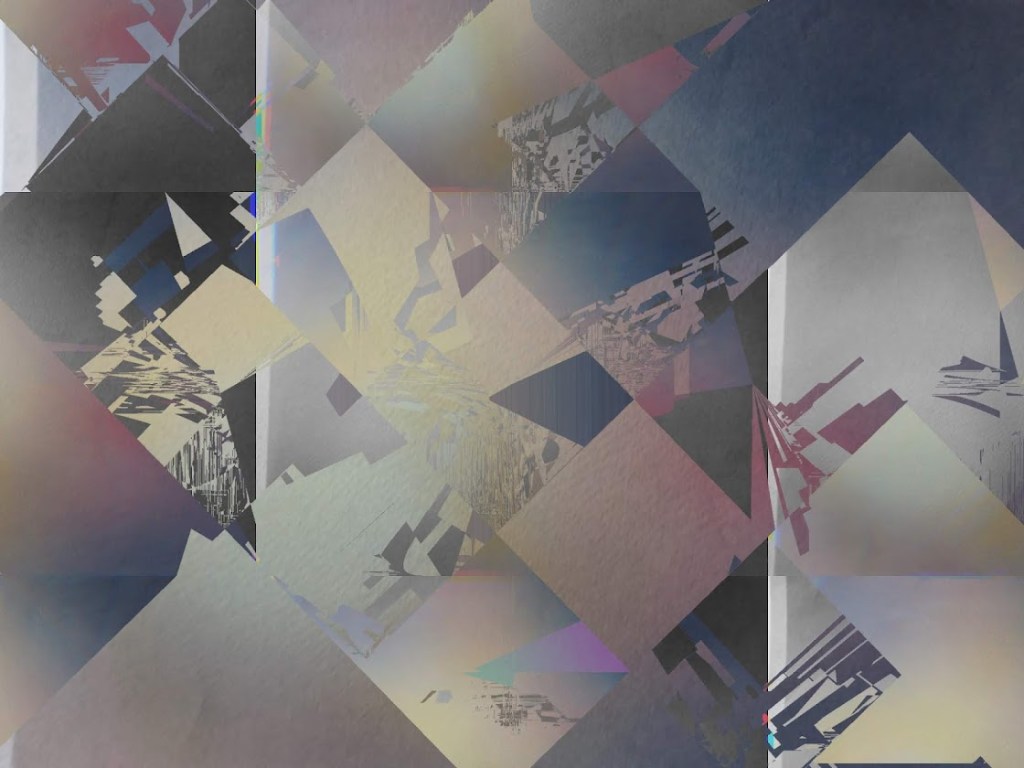
My response to Nan’s paintings and our collaboration, is a digital pop-up gallery, exploring the negative spaces, using AI software with which I made hundreds of new abstract images (examples below of some I did not use in the video). The research became a collaboration with AI, enabling me to use my photographs, sketches and the colour pallet of Nan’s paintings to ask: what would the AI do with these spaces? I focused on one shape in particular, made up of uncomplicated lines, a sort of control for my experiments.
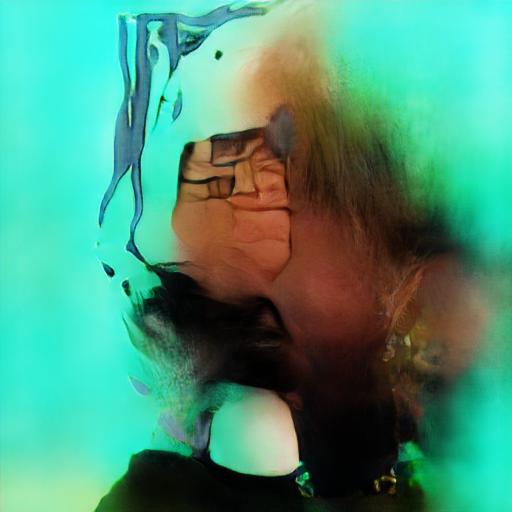
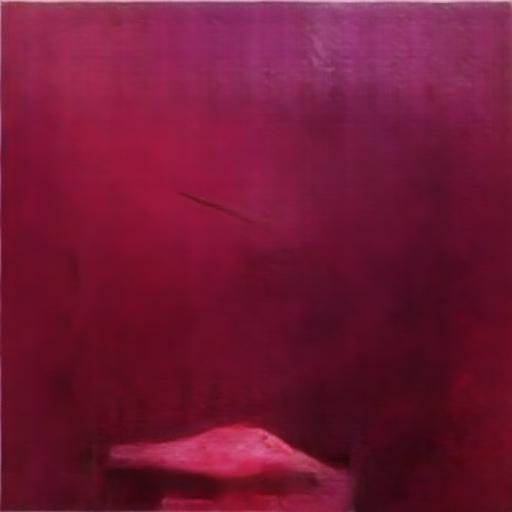
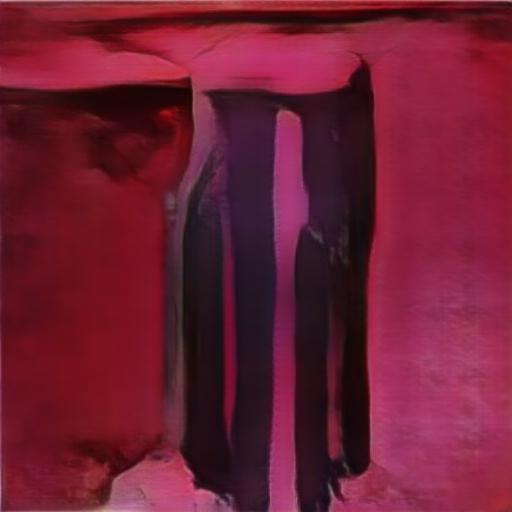
AI has existed since the 1940’s and Generative Adversarial Networks (GAN’s) developed since 2014. GAN’s are the type of AI systems which enable the software used by Artists today. The AI is fed with styles of artists from the 18 – 19th Century, artistic movements, and my own images, to produce new abstract compositions.
I used Photo Mirage to animate the AI composed space (below) and recreate its looming perpetual movement. The city is constantly moving and these spaces will soon disappear. I felt an urgency to document them, and even today can’t stop seeing and photographing negative spaces from the different perspectives I find myself in around the city.

The viewer journey’s around the virtual gallery made in VR Tilt Brush. A three-dimensional painting space in which I become constructor and curator, reclaiming the work by my selection. The use of AI removes the hand of the artist, making the negative space positive, I can regain control by selection and animation much like a co-art project with another artist or in a cross disciplinary project.
The pop-up gallery is formed of an abstract, incomplete construction of a tower, suspended in the universe by an iconic crane and lit by a far away sun.
The viewer leaps from the gallery and travels downwards in a undulating abstract representation of the tower as it pulsates to: firstly, the sounds of the city’s endless building noise and secondly, a digital sounding tune made with Pixelsynth, software that responds to images by creating music. This sound registers the iconic towers where once it would have made music from the stars.
Online Exhibition Link:
I still have a lot to learn about AI and what might be to come, my research has raised more questions than answers. The collaboration with Nancy has just started and I am looking forward to what comes next!
“Some people worry that artificial intelligence will make us feel inferior, but then, anybody in his right mind should have an inferiority complex every time he looks at a flower.” —Alan Kay
Links:
I would love to chat with you guys on the subject of visualising language. @babssmithart

Collaboration has presented some rich ideas and listening to artists who are new to my work has given me perspective and has been a lifeline during this isolating time. Understanding what motivates other artists is inspiring.
The results of the collaborations manifest in many different ways. I thought initially the most effective would be working with scientists and people whose role was outside of art. This is something I love and will continue to do. I am discovering however that working with artists is challenging and presents obstacles which when tackling, results in my learning so much about my own work and the direction in which it is going. I think that I derive a lot of feedback which I would have had in group crits at Uni, and subsequently at the studio, but have not happened because of lockdown.
Where does a crit or chat about art work end and collaboration begin? For me it begins with a shared experience or joint subject and the agreement to continue to make work and bring it together (using a google document and Zooms), being influenced and working from each others work and continuing the dialogue of discovery. This is where I feel my practice changes for the better, trying something new or being reminded of an artist I had studied in the past but hadn’t realised the impact of this evident in my work. Listening to an artist describe the narrative in their work and their understanding of mine always uncovers something surprising.
Combining images purposefully is not something I have done before and it is harder than I imagined. I found myself thinking about the artist and their response as I would normally do with the viewer.
Here are some examples of the very different collaborations that I am involved with:
The XCollab are a new group who are pairing artists/students to create and exchange a piece of work individually which provides the influence for the final piece from each participant. The organisation issues guidelines and a time constraint, which presented new challenges. The final two individual pieces from each pair had to demonstrate the other’s work clearly and it had to be based on the colour blue. It could be a continuation of existing work.
I had been remaking an image of Salford Quays in which the bridge is reflected in the Quay West building. I worked in Tilt Brush and as the sky was blue with a deeper coloured block in the grid of the building it seemed to fit the brief.
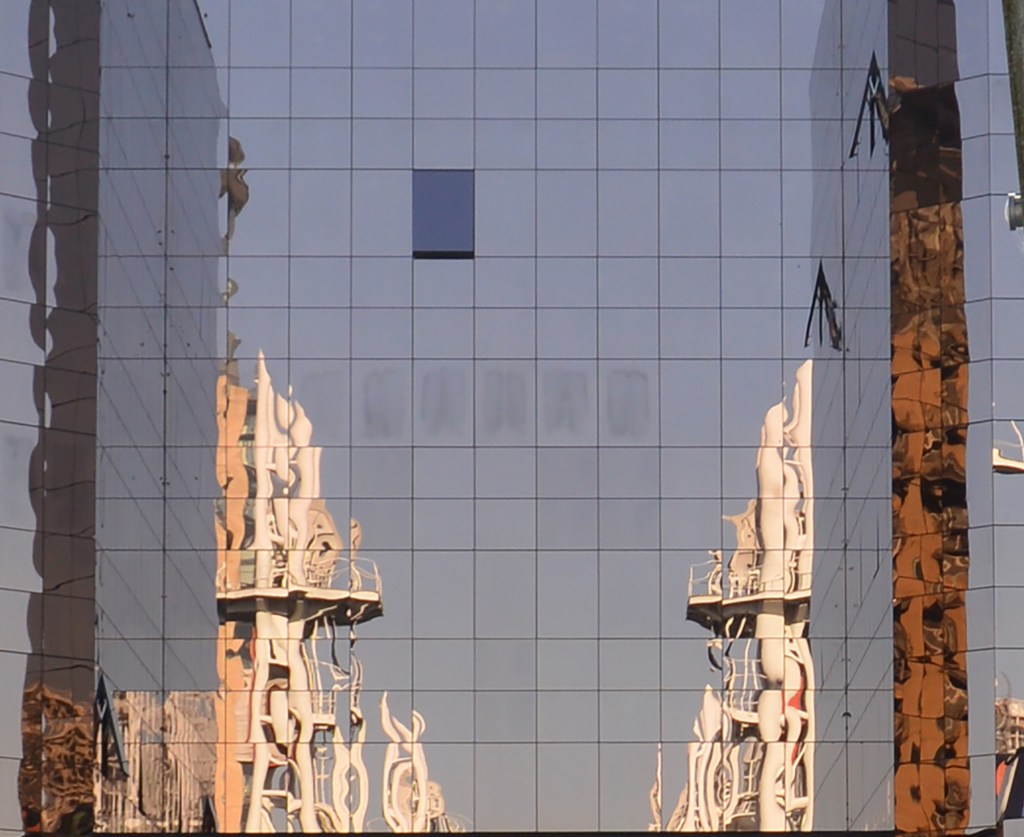
I explored the colours and shapes, using a grid as a layer and the mirror tool to create the two sides of the bridge, I recall the shimmering of the glass which is not evident on the photo but which became my focus. There were four layers to create depth and light.
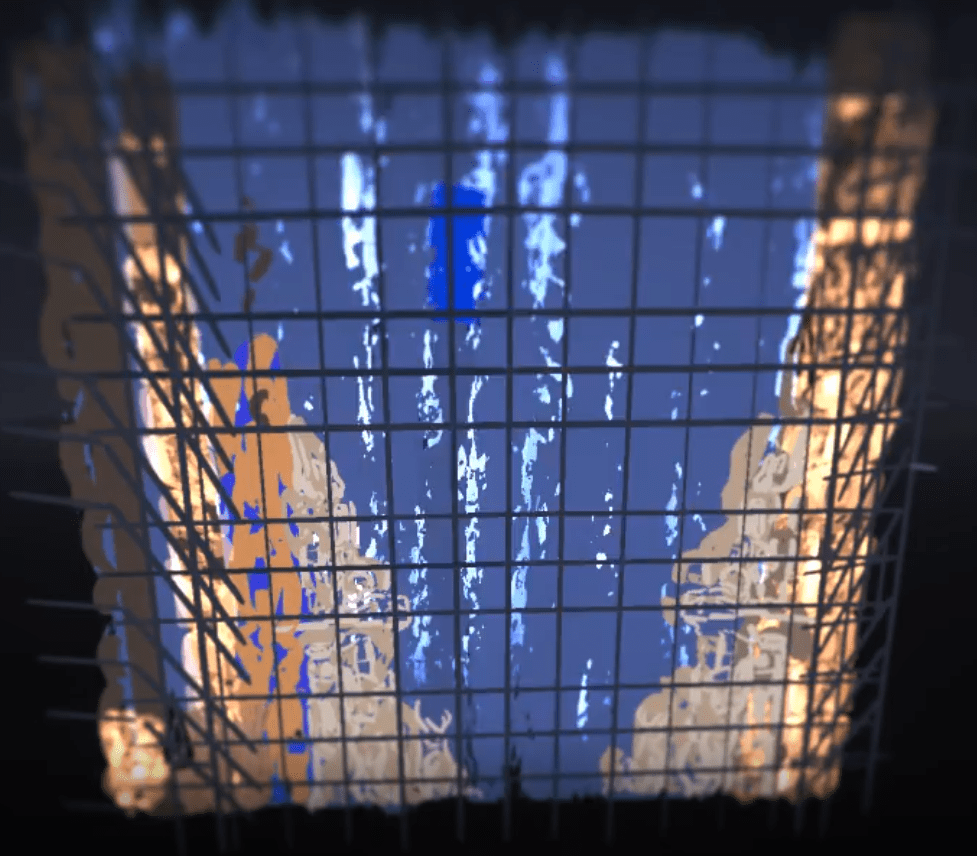
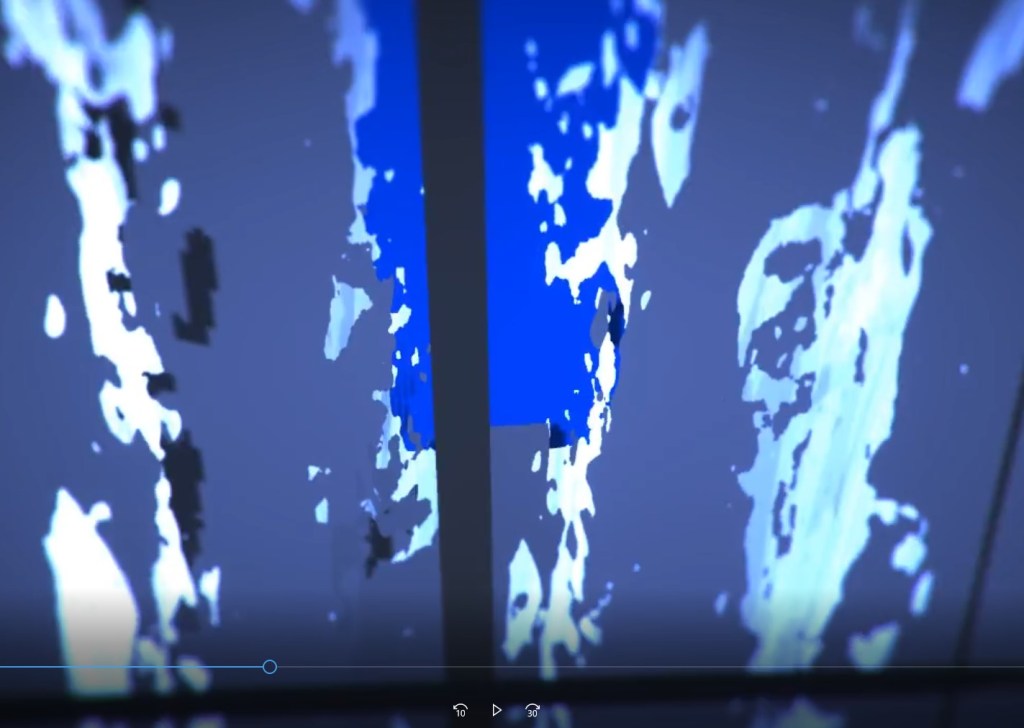
I was introduced to Margo Sulek who is studying Structural Engineering and Architecture at The University of Sheffield, and is a talented artist looking to study art in the future. We believe that the organisers saw a correlation between our work, we got on really well and chatted before and during making the work. Margo made an ink drawing of a church combined with modern housing. The turret was flipped so that the spire pointed downwards. This reminded me of Takahiro Iwasaki’s intricate architectural structures in the Venice Biennale 2017, in wire and plywood, which were formed underneath from a mirror image of the top of the building.

The final two pieces of our work will be exhibited by The XCollab in the near future.
Collaborating with Tannah Cantrell
Tannah is this year’s Bursary winner at Paradise Works studio where I am based. Her rich oil paintings are figurative and display an interaction between people and objects. I worked with one of these paintings and a suggested title: I missed my friends, to re present the image in Tilt Brush VR.
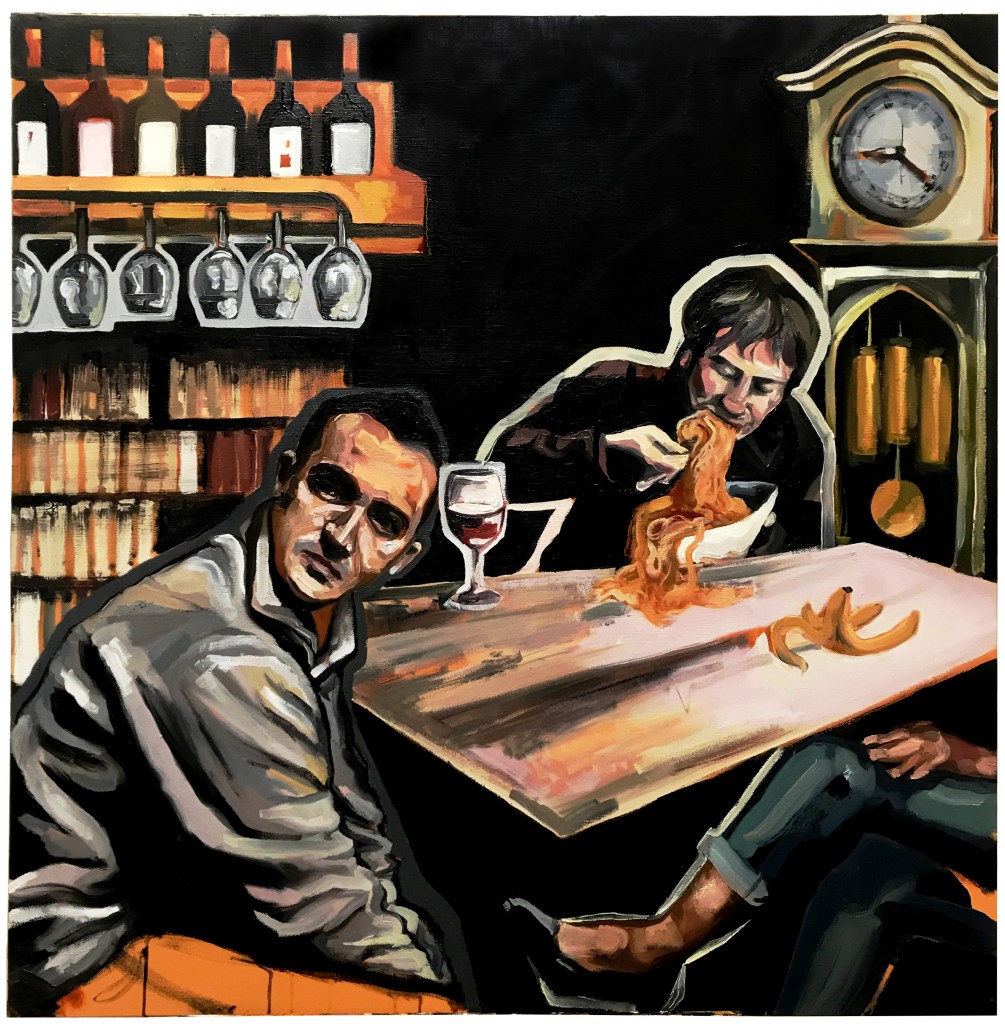
I hadn’t worked figuratively in VR but the accompanying quote resonated with me and I separated the background making it sketchy as if it were a plan not unlike those we want to make during lockdown. Then I reproduced the main figure with his tilted head gradually falling to represent the sadness and futility of our current circumstances. The canvas became a black cloud and although I am still working on the resolution quality for stills in VR you can see the shadow of the faces as they fall.
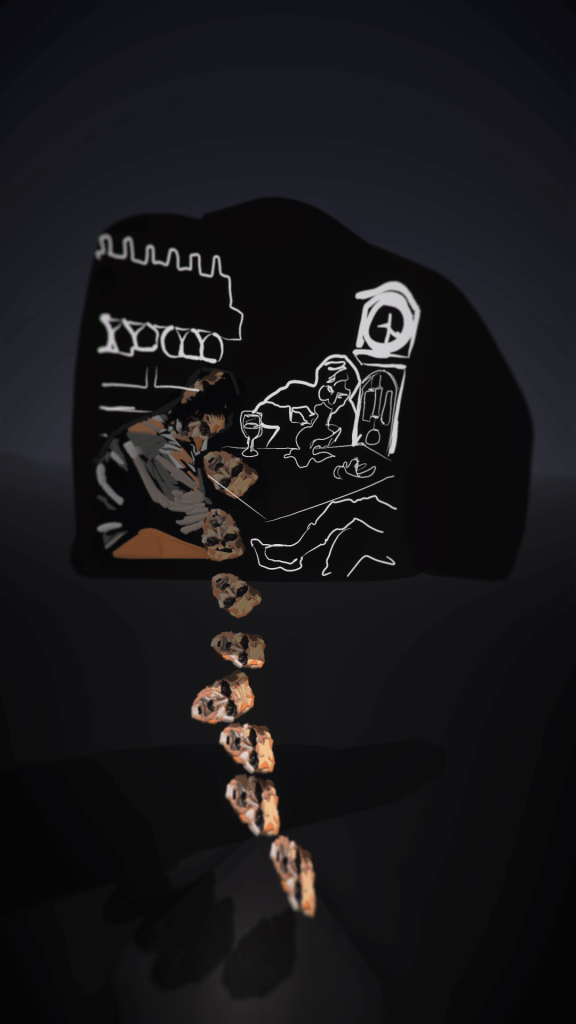
This collaboration was an exercise just for fun. It made me think differently about the possibility of making figurative work, and Tannah loved the shift from the painterly to sketchy and the falling head. I am looking forward to seeing what she does next. The wonderful thing about this type of collaboration is that there are no time constraints or restrictions, just a framework which can be adjusted to suit ourselves and current or experimental work. I have enjoyed attempting to replicate the deep colours and brush strokes in her work and learning about how she paints. The possibility of making some of the image as a sketch or plan will definitely feature in my work going forward. Watch this space!

Sounds are sharp and clean, absorbed by the diagonal shapes protruding from the walls, there is nowhere for the reflection of sound, even the floor is absorbent. We talk and listen to sounds that we make with materials, music and speech and document our thoughts with words and sketches. There seems to be a pressure, similar to being on a plane or under the water, a thickness in the air between our bodies and the wall. There is a sense of presence as you might feel in a church. Without external noises, space and structure for sound to carry we hear in a profound way. Is this what real sound is? The scratching of a pen, I can see the letters and shapes appear. I scratched my cheek and the sound is almost violent.
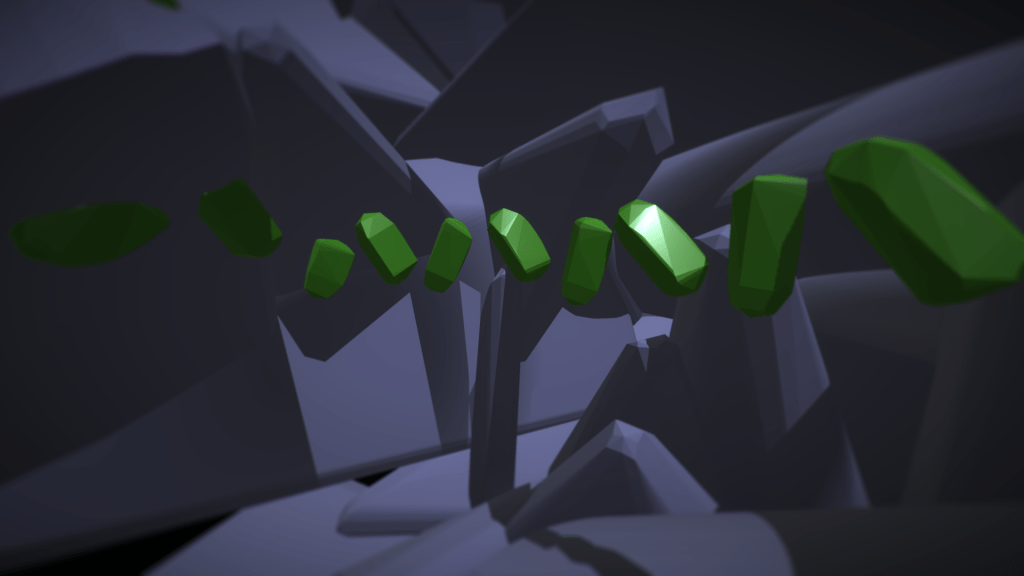
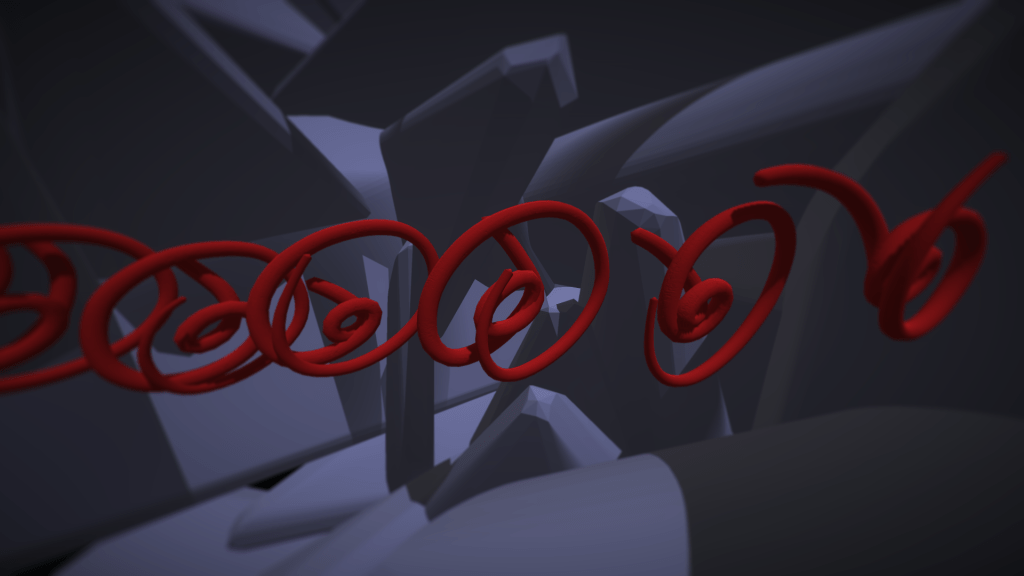
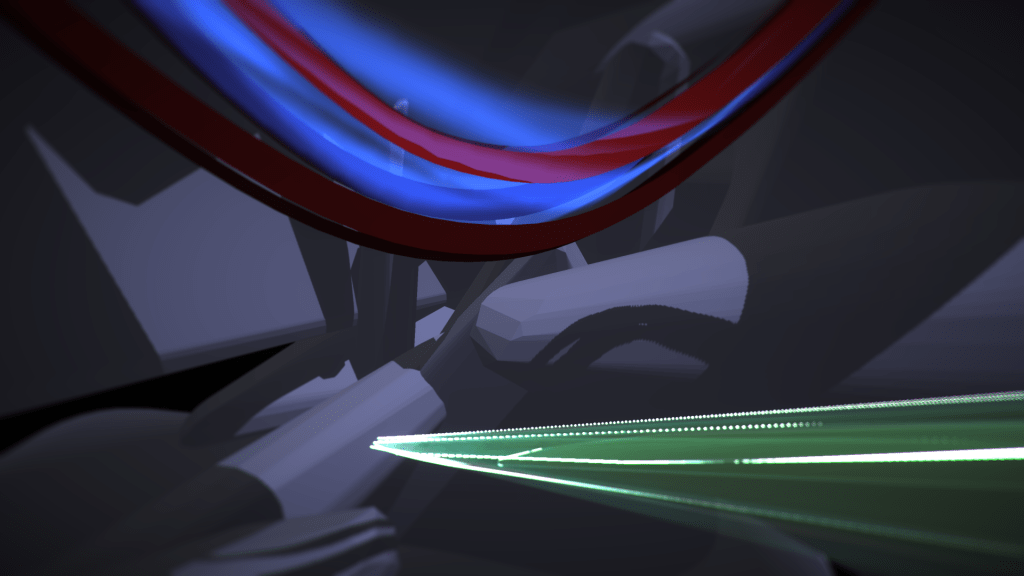
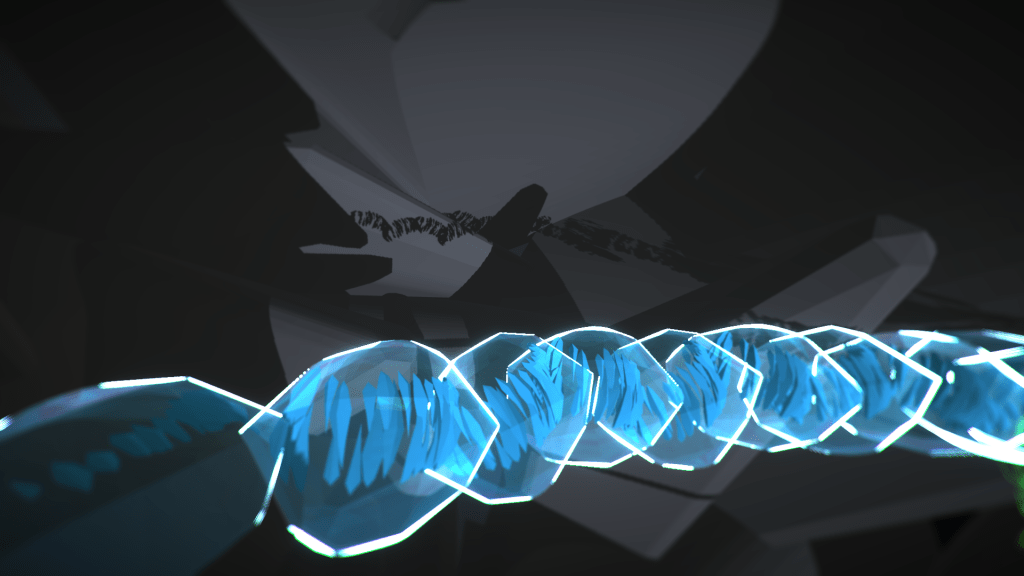


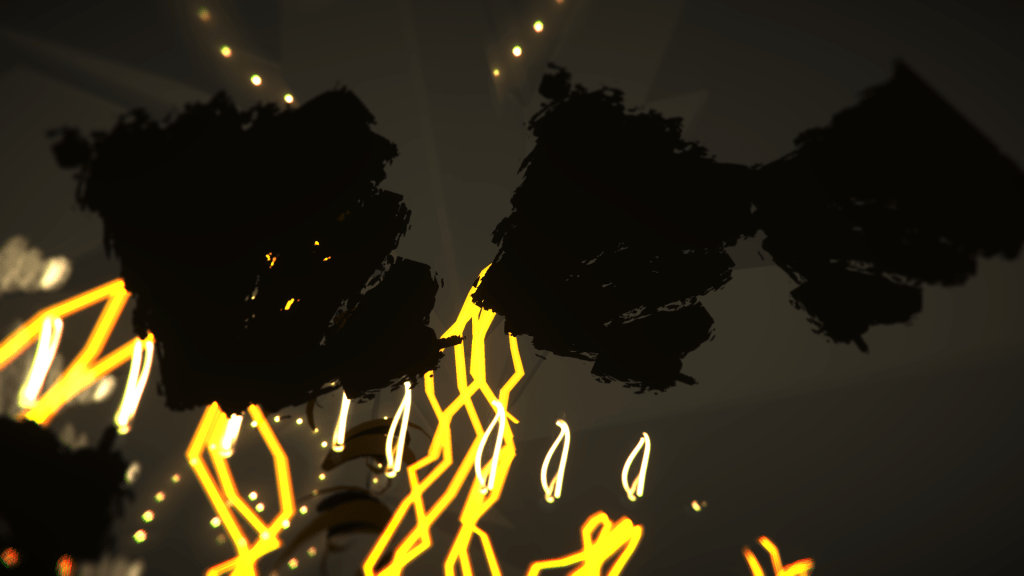
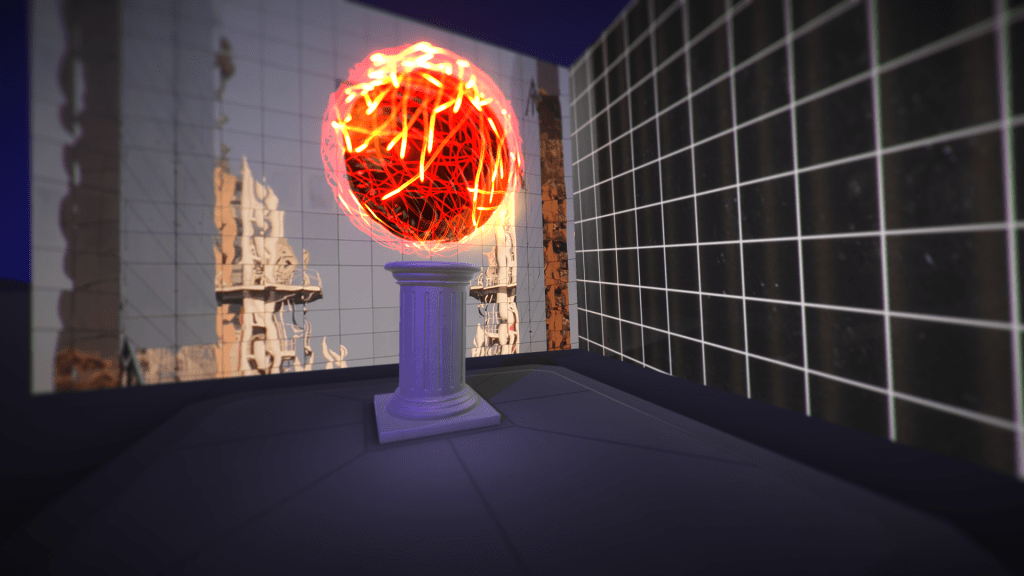
The sizing features in TiltBrush enable both work and imported images and objects to be scaled up and down with the wands. This makes for endless possibilities, a series of cracked screens painted with light in the studio became the walls of room into which I could create or import.
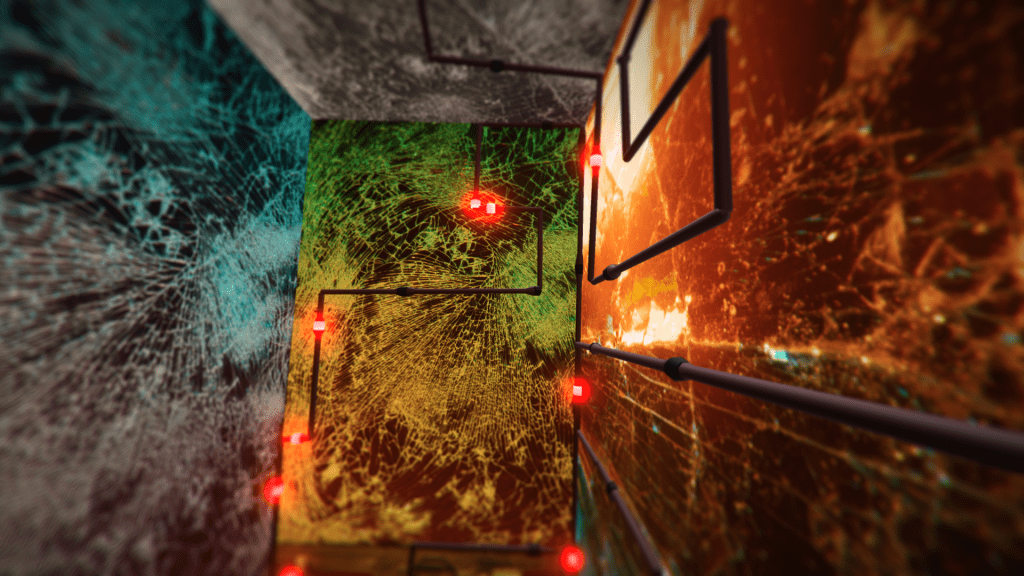
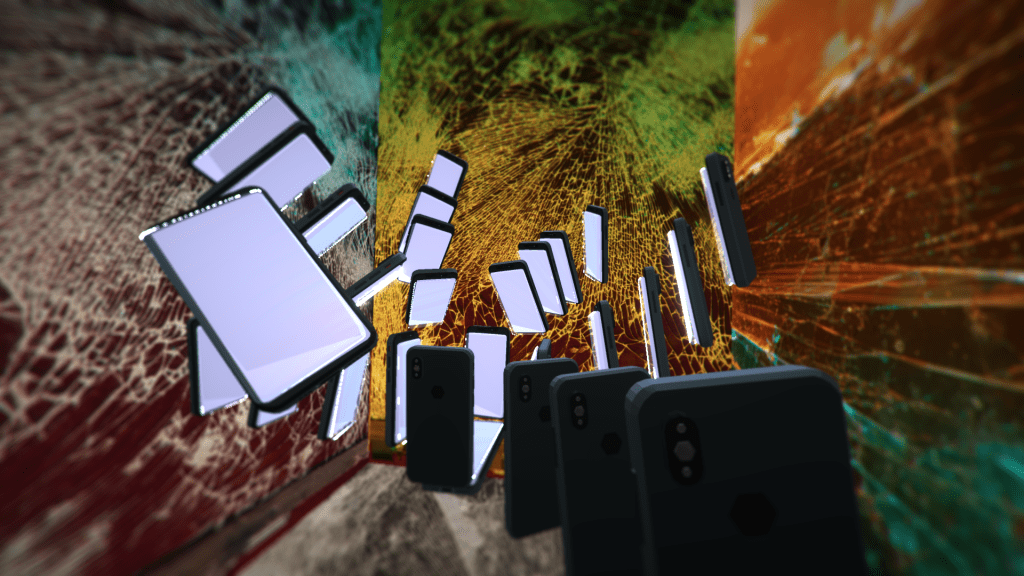
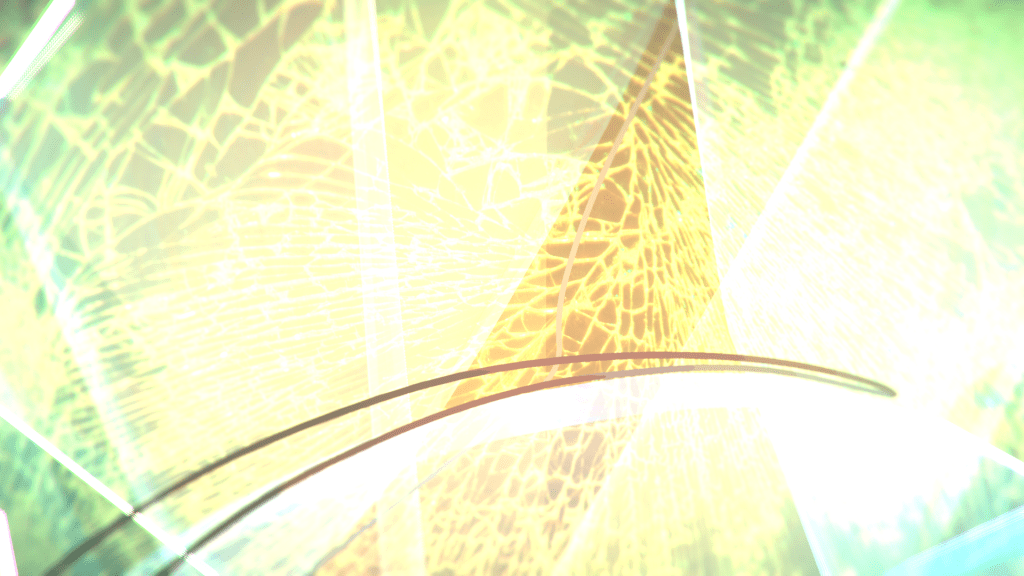
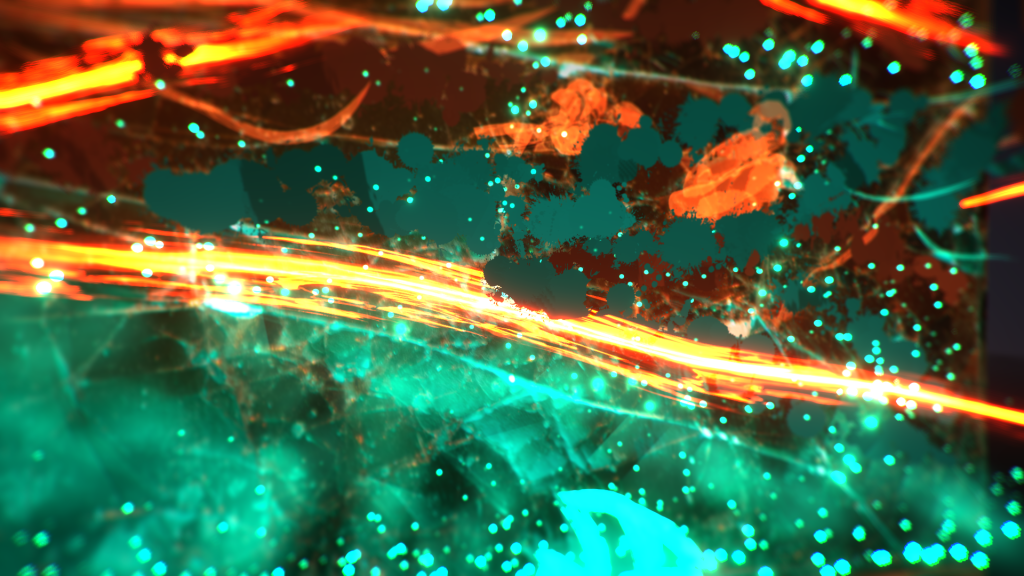
When considering the abstract lines of the cracked screen and its relationship to the digital world and the fragility of the human in its interaction, I repainted parts using the dropper to match the colour and light pulling it out of its flat plane and exploring it in 3D . The limitations in colour on the palette present some interesting diversions and more questions than answers.
There are limitations, these images can’t be cut or changed only resized but I did attempt to collage by tipping and collating them which when filmed or photographed within the scene at certain angles creates a travel effect for the viewer as they move through the image.
The diamond tool has the effect of creating unexpected planes within a painted image, again the flexibility of the camera to capture these is where the fun lies. I have also discovered that the panoramic feature can be turned off, to avoid the blurring at the edges of the scene. Images generally have needed further enhancing to use in social media etc. So this something to work on further. It feels a little hypocritical to alter them too much out of tilt Brush but needs must when creating a 2d image. I hope to improve the quality to screen print in the future.
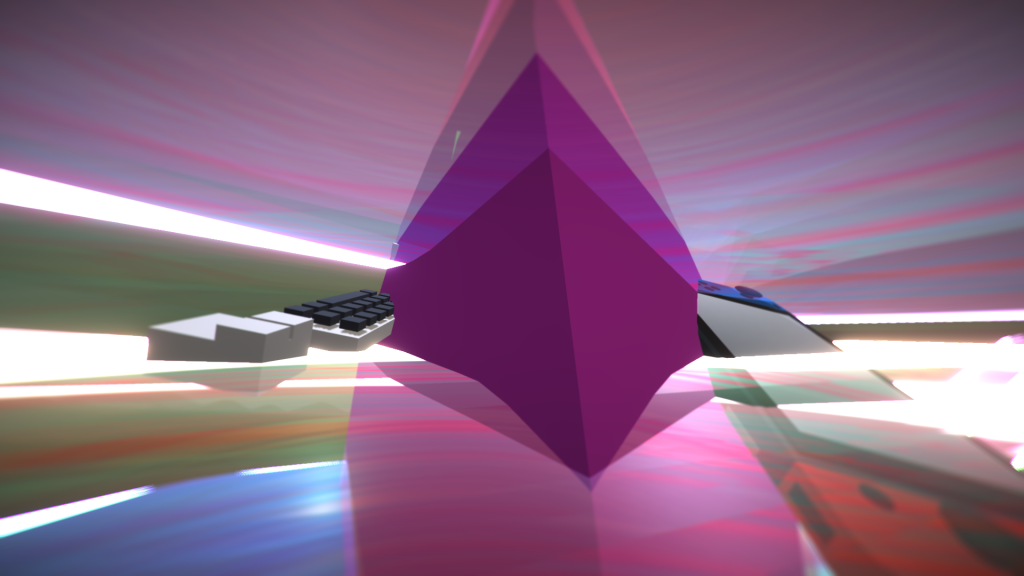
I attempted a realistic scene from a photograph of the silver birch in Salford Quays this wasn’t too difficult but very animated and game like which I am trying to avoid. It was a good experience and the fact that it would be possible for the viewer to walk through the scene with a headset is something that I will begin to work on as I get used to the software.
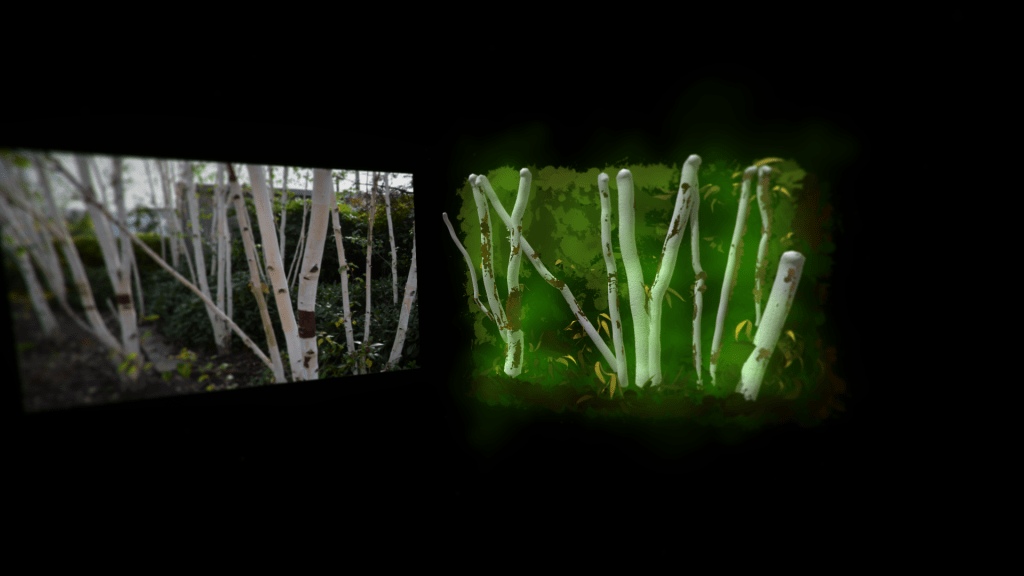
In conclusion it is important to have in mind if it is a film or VR scene I am creating as the perspective necessary when walking in and around a scene is very different to looking at the image or presenting it in 2d. My interest lies in the viewers perception the concept of looming and it’s effects, the micro to macro process and the further investigations that occur as a result of working in this medium.
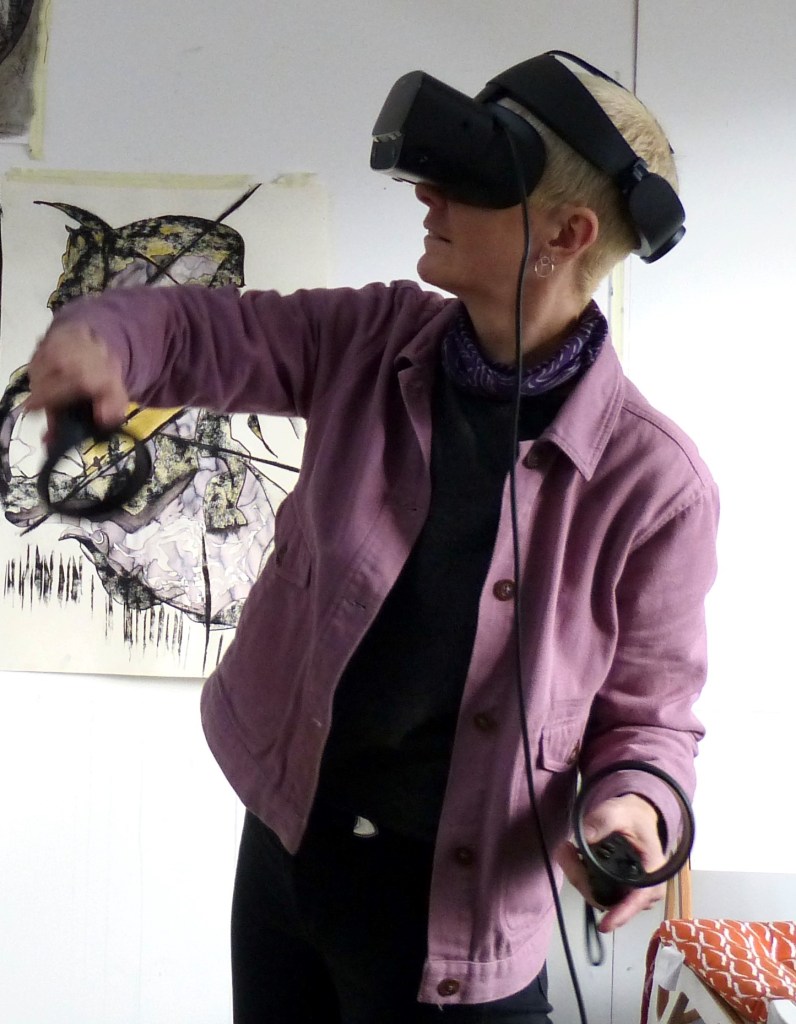
I like having a challenge in my work be it material or machine based, I would go so far to use the word conflict. I find that using tools in unconventional ways creates mistakes and happy accidents which are like gifts, keys to open new doors. Lockdown presented a challenge for me in that as I began the Graduate Scholarship with UOS Art Collection based at my dream studio with Paradise Works, I was unable to use the scholarship bursary as I had intended – to travel to Berlin, London and other cites to visit exhibitions. A cancelled taster in VR left me thinking what if . Renting the kit was expensive and time would be limited to practice and see if it suited me. I bought an Oculus Rift s and badgered my son over the Christmas break to set it up on his PC that had the necessary graphics card. This was more economical than renting because if I didn’t take to it I could sell the kit, loosing less money than the cost of rental and I would have more time to test out my ideas. This subsequently became important as its is difficult to work for more than an hour without eye strain. I was lucky that I did not feel any motion sickness and straight away I discovered Tilt Brush and Adobe Medium, software that facilitated my making painting and sculpture in 3D, needing only a 2mtr square space but opening up a whole vista and infinite possibilities. I realised that Illustrator and Photoshop had always been a tool for me to visualise the making of sculpture and print, It felt flat and lifeless, a tool which I had used with technicians to understand my concepts in a visual format as I fabricated them. This was just how things had developed because the physical movements of a painters arm and tactile creativity of the artist was what I connected with and a screen and keyboard never really gave me this.
I invested the bursary in a pc with AMD Ryzen 7 3800X 8-Core Processor 3.90 GHz, 16gb and 64-bit operating system. This was a scary moment but many people had bought or received a headset without the knowledge that they need a beast of a PC to run it. I felt justified, this new medium was not only facilitating ideas and new work but it was asking me to think more deeply about the viewer and their perception of the work. Was I creating in a flat plane or a scene in which the viewer could choose which direction they look and go? The presentation of the work could be multifaceted, changed to say something new with just an adjustment of the camera paths. This is such an anomaly with an IRL exhibition, as I had found with my first exhibition out of University which used light, Perspex and found objects.
The pc was built and it is a thing of beauty faster and bigger than anything I have used before, this in itself is a huge benefit when working digitally. Then the learning began, in Tilt Brush there are many tutorials but finding the right one was difficult as this medium is largely used in creating landscapes and characters in gaming. Below are some examples of the marks and many brushes available. The most fun came with the sound responsive and animated brushes. My challenge is to move away from the animated texture and create organic work responding to subjects as I would IRL.
Testing mark making in Tilt Brush
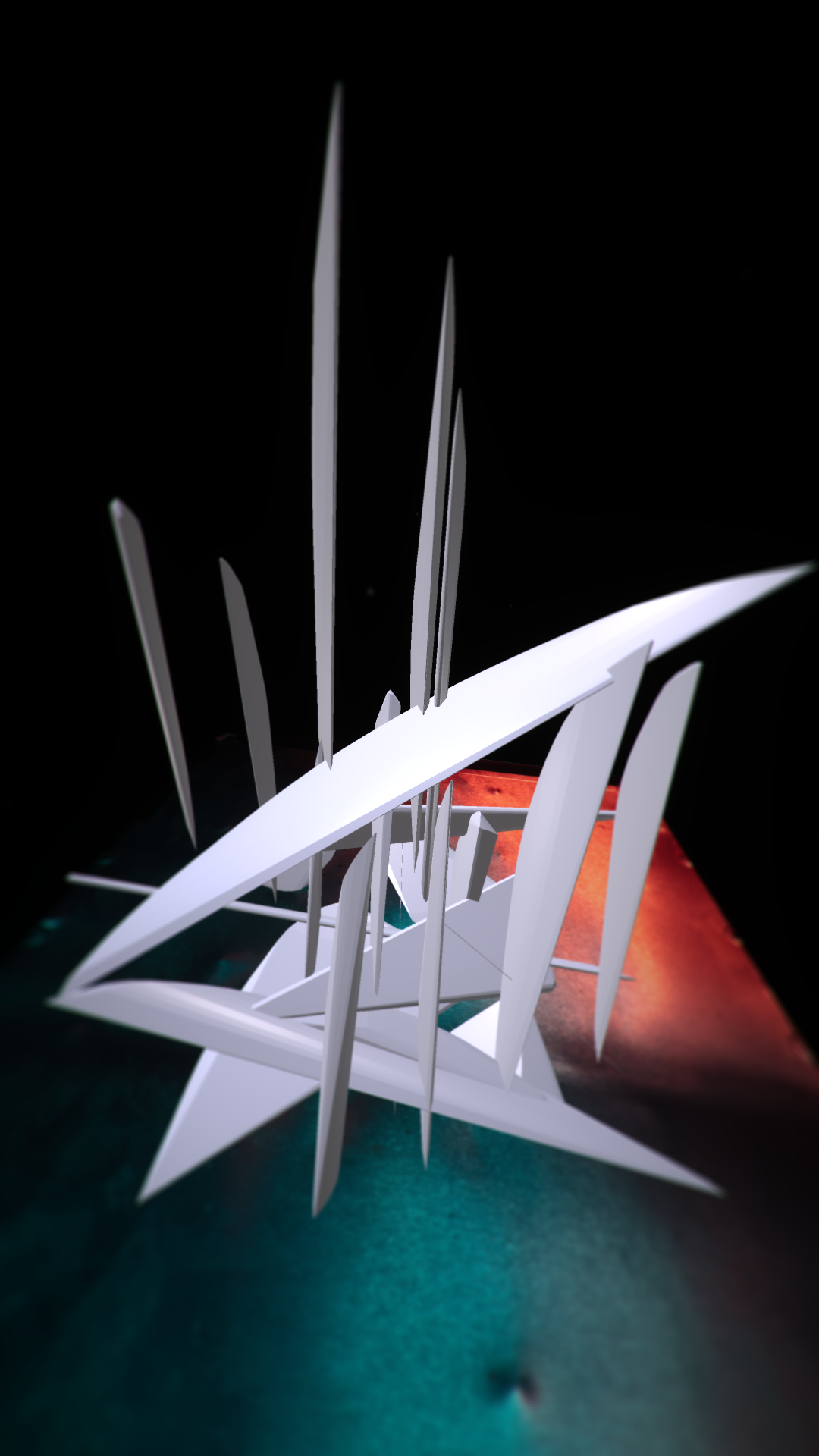
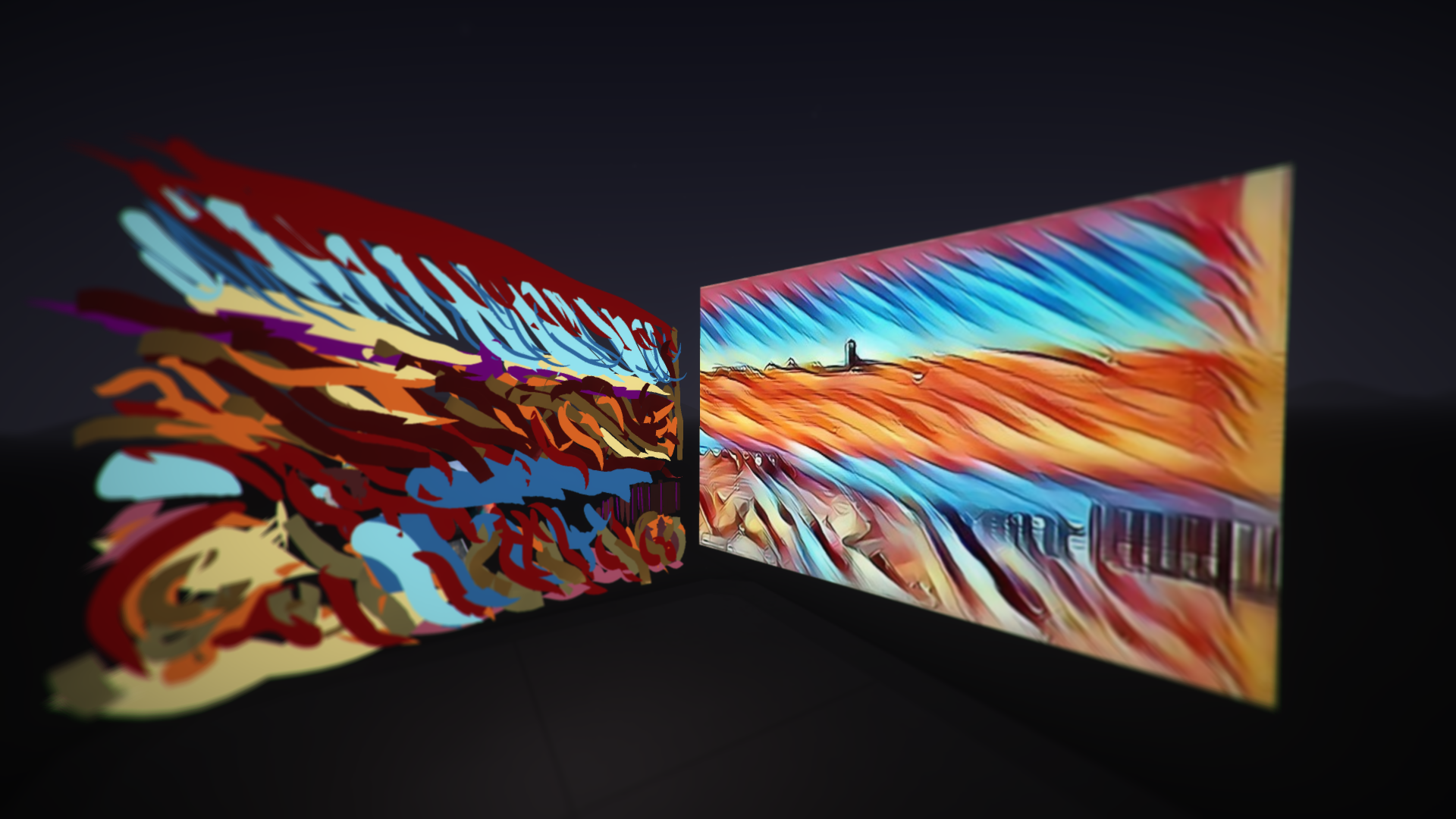
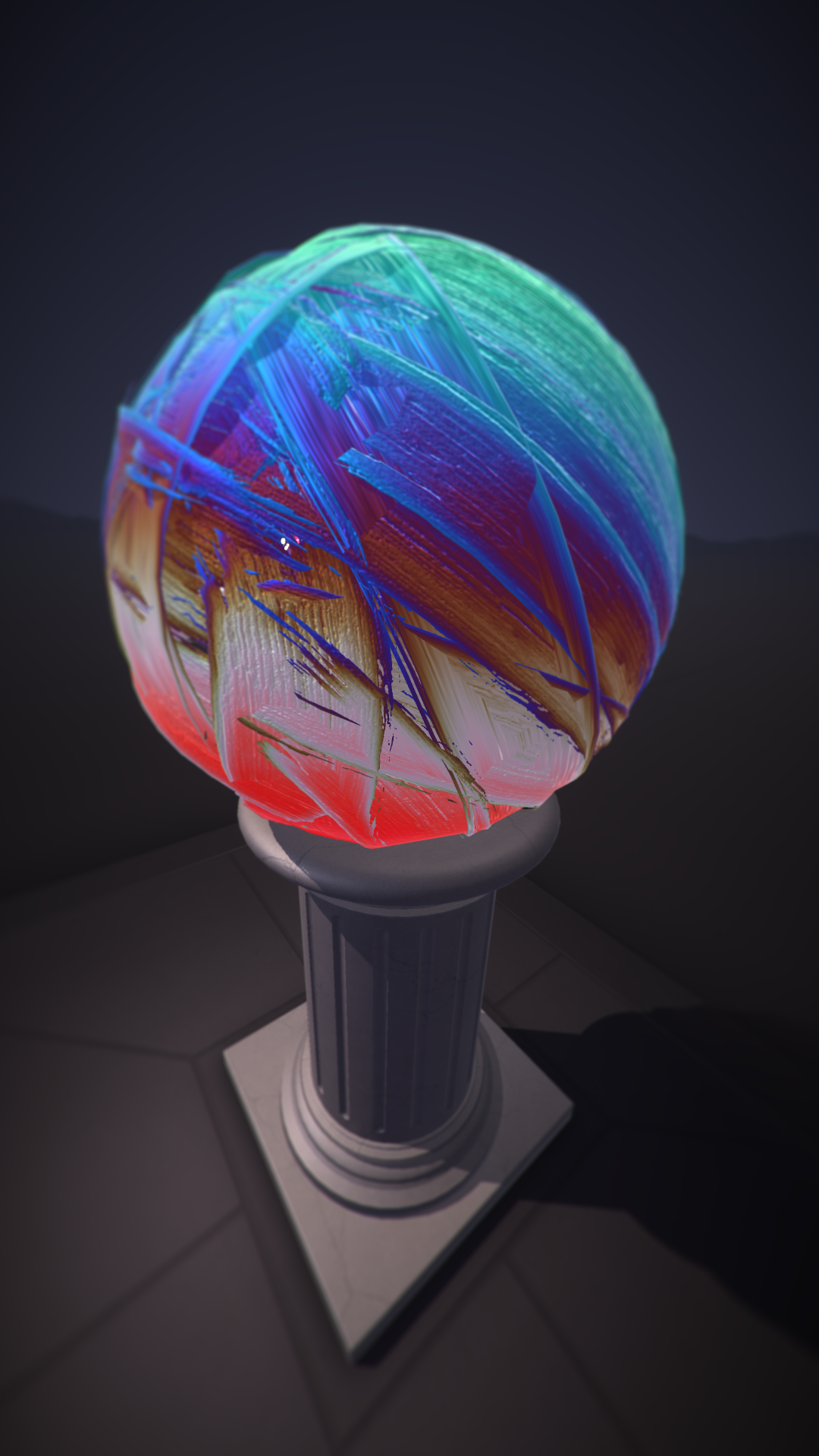
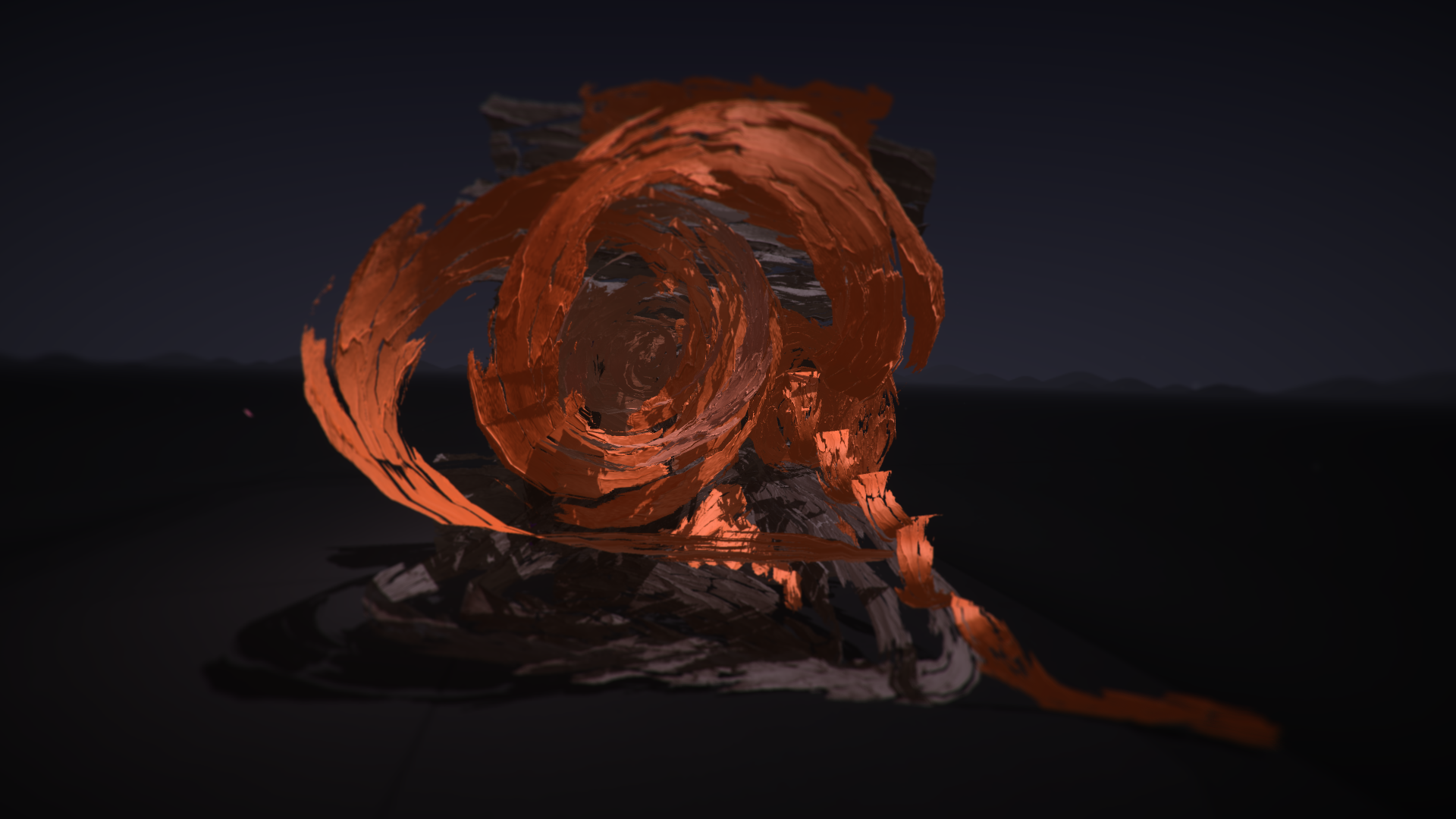
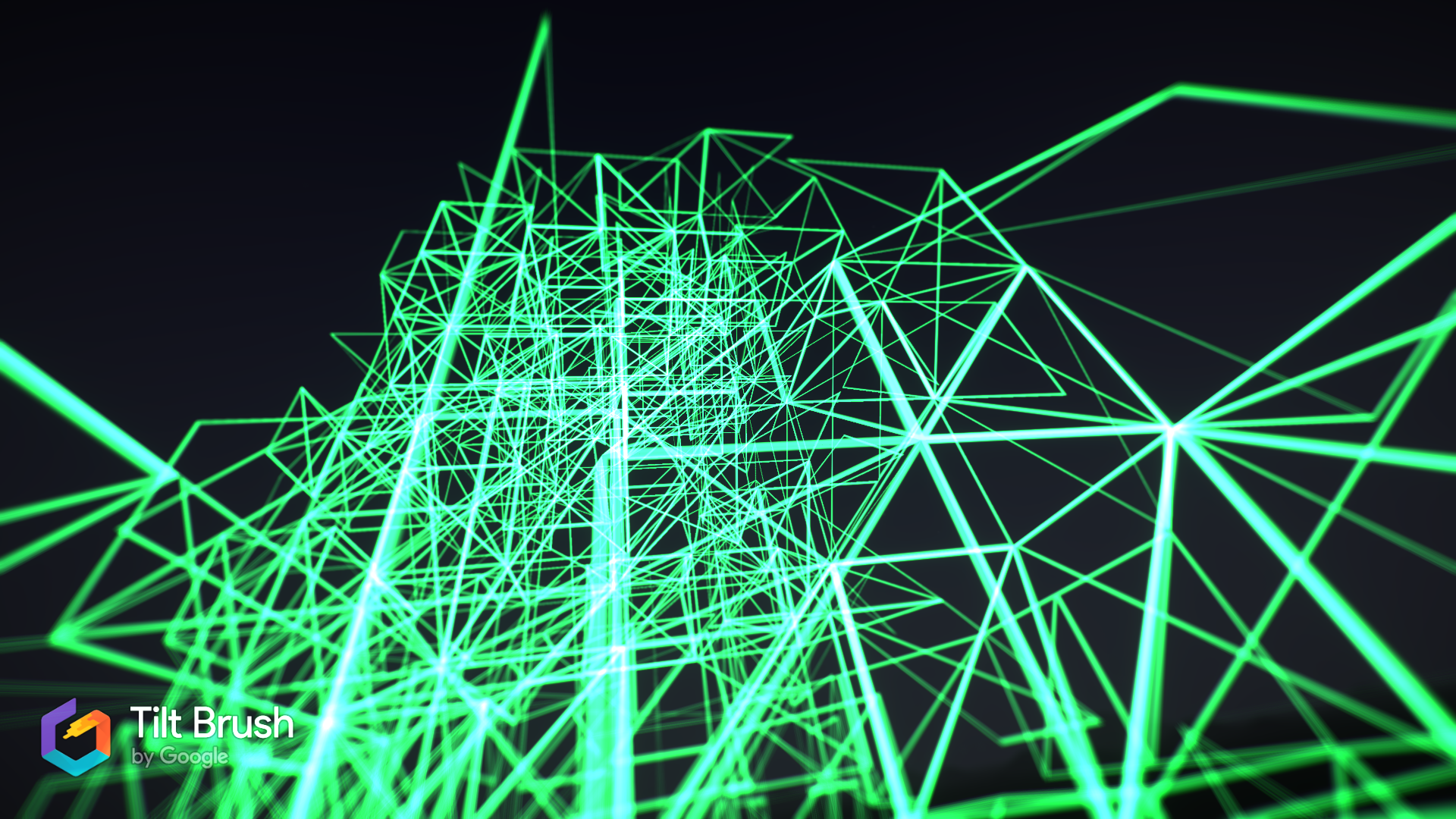
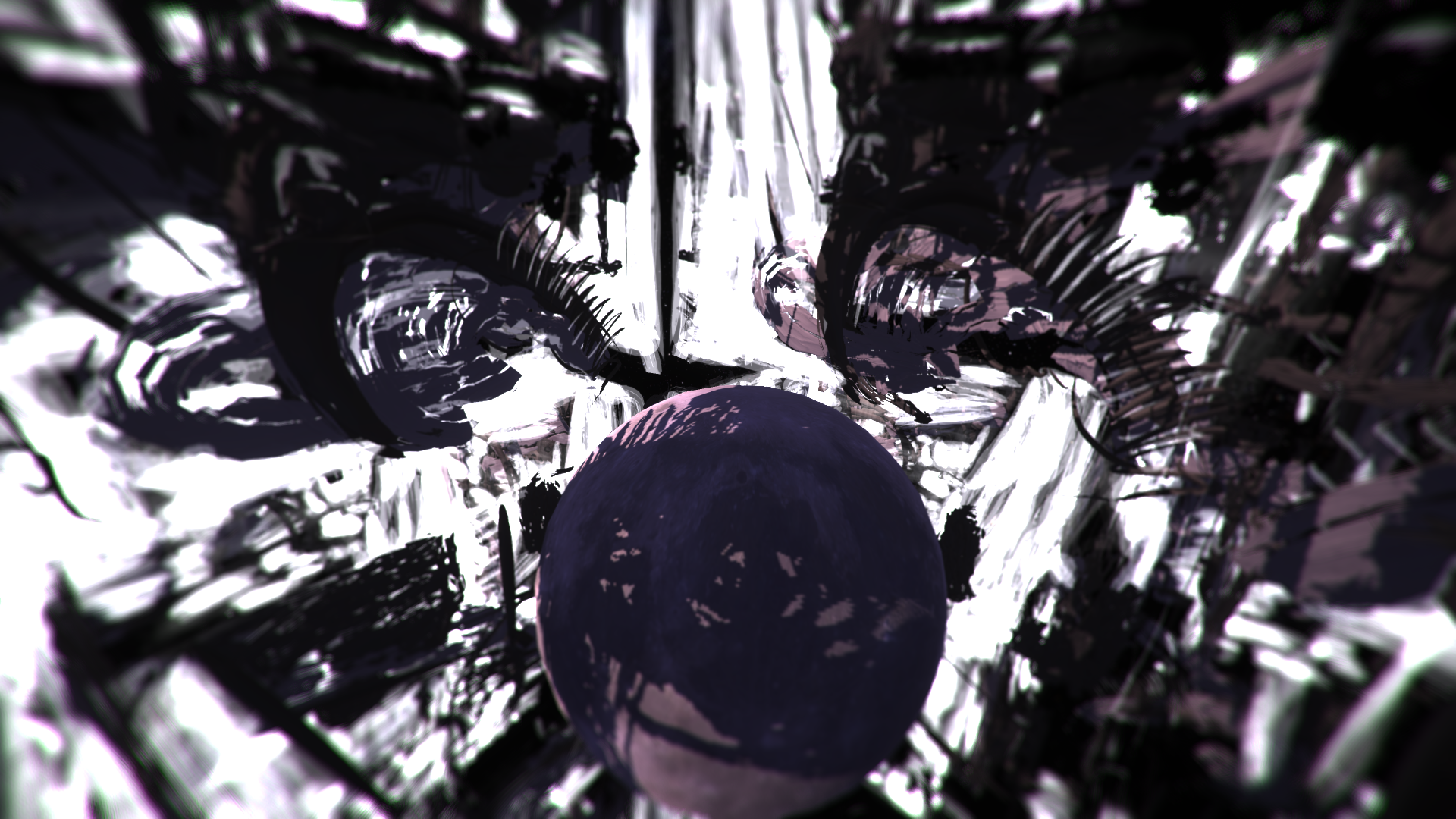
In conclusion it had been a good start but there was much to learn, not just about the functions of the tools but working with the images and film I made. I began to research how this medium would fit in my practice and consider the possibilities of taking the work off line and Augmented Reality. The opportunity to remove the hand of the artist presents possibilities at different stages of the process. The next step was to identify projects which I could explore through these visuals in my practice as I developed my skills. I had taken lots of photographs of Salford Quays and in an effort to understand what it was that I liked about the light in the landscape, I interpreted one in TB to explore colour, reflections and light. The function that allows resizing means that work can be made as big as a building and this changes our perception radically, to have an image loom over you or walk on it as a pathway makes you think and work on it very differently using a swooping body movement and connecting with the place and the emotion physically.
See the short film of travelling through the light on Instagram
https://www.instagram.com/babssmithart/
When I look at art, I am always delighted at the audacity of the artist who includes a found image or an object in their work. It is indeed to work on dangerous ground effectively taking a representation of the past, a piece of history steeped in numerous possible narratives and perceptions and recontextualize it. Placing the object in a brave new world for our reflection. In the moment, it exists in this situation, alone and alien and yet embraced as if to be forgiven for its earlier intention and cradled in its new context, we can rebirth it with new meaning or indeed we can view it with suspicion and praise our evolution since its existence. Whatever reception it receives the artist is using this object in their palette. A time machine nestled within the work.
I treated myself to a book as a reward for my last submission in my Fine Art Degree. One hundred Sculptors of Tomorrow (Kurt Beers). It is eclectic, entrancing and just perfect for a graduate whose main interest is 3d objects. Having left behind in University some of the best machinery and tools, not to mention technicians to make work with, I began my journey into researching new materials to use in my work in the studio, particularly recycled materials.
Gabriele Beveridge, an artist born in Hong Kong and living in London, is represented in Beer’s book by three sculptures. Sugar Baby Mystic Mountain caught my eye as I leafed through because I immediately questioned the feminine image wondering how digital photography or Photoshop had reproduced what seemed like posters for women’s beauty products. Something that I personally felt uncomfortable with. I was drawn back to weaving through the seated workers receiving a makeover or redesigning their eyebrows in the department store on their lunch break. Why use this image? It now stood as an object and it literally faced me. The found poster is combined with hand blown glass and represented in a frame. The glass is shaped like a breast and half covers the models face but it also reminded me of the blown bull’s eyes found in in old door frames. Is that my mind looking for a different interpretation? This, the author describes as the artist’s mastery: her refusal to submit to an overtly sexualized meaning. Beers go on to explain how Beveridge is dealing with “how we use and exploit each other in the most urgent and ruthless way”. This work is brave, beautiful, and provocative. It is subtle enough to push the viewer to face their own preconceptions in the moment. At times we are fooled by art and confronted in a crude and assuming manner, but Beveridge has taken this initial impact and asked the viewer to reconsider how we use the images and so each other, indicating the inhuman in the human. This sculpture really isn’t what it is because to each of us it is probing our conscious and finding a new identity, it is fluid and has inspired me to think seriously about found objects in my own work.


There are two coincidences which link me with the Artists Placement group, firstly it was founded in the year I was born and secondly, sadly, its founder Barbara Stevini died this year on February 16, my birthday.
During the mid-sixties the APG facilitated a more active role for the artist within the surroundings of commerce and industry. The artists included Barbara Stevini, John Latham, Barry Flanagan and Anna Ridley. They would be invited into businesses to investigate what was going on and make proposals accordingly. There would be no product planned or expectation. The artist effectively negotiates an open brief. Their motto was context is half of the work.
When I understood the pivotal role that this group had played, it did not seem like a revelation to me, but a natural development in the role of the artist. The legacy left behind remains to this day. The commissioning of artists to work within government, commercial and scientific organisations, is commonplace. Residencies form fertile ground for mutually beneficial relationships and the understanding of cross disciplinary practices serves to not only enhance but create exciting work for artists of all disciplines. I have experienced this firsthand when working with a Scientific Researcher at Salford Royal, who’s work includes the study of changes in the tiny capillaries of the fingertips. Working together has facilitated a project which will help researchers to understand better arthritic, invisible pain. It will inform the public and patients about the progress being made in medicine in this field. This in turn will hopefully reduce anxiety. Often in research the act of taking part is one of selflessness as the patient volunteering won’t benefit themselves directly.
We discuss our practices, consider the importance of research and keeping records, how we experience and benefit from failure, progressing projects simultaneously because of delays in funding and most of all, existing in the realm of ‘what if’. This is the most exciting part of working with a scientist to imagine and create, to dream and then to try. I feel lucky to be in this position and we are both looking forward to the results.
I have admired the work of Cornelia Parker since before I started my degree but have understood her practice from a different perspective as an artist myself and have revisited her work time and again.

It is difficult or me to choose a piece that I like in particular as it is the process of making that I am interested in, however the Perpetual Canon made up of 60 flattened instruments once belonging to a brass band is one of my favorites. The depth of investigation that the artists reaches to work with appropriate materials must open up areas of understanding and opportunities that enrich process.
Perpetual Canon was originally created for an exhibition in the North East of England, a region associated with industries such as coal mining and its tradition of brass bands, described by Parker as ‘an anthem that is slowly winding down’. A canon is a piece of music where a melody is played and imitated after a short delay. I am intrigued by the richness of the investigation and the choices the artist can make, this for me is art and life in harmony. I particularly like the involvement of a community and their historical documentation creating a living piece of art. Collaboration is a beautiful thing.
I am particularly interested in Parker’s comments written in one of my favorite books, ‘Sanctuary’ a book that interviews British artists about their practice and their use of studios. Parker explains her influences to be Tony Cragg, Whose work I admired and enjoyed Immensely at the YSP. As I begin to understand my attraction to the work of one artist the connection to another becomes clearer. Parker talks about how she is drawn to the fragmented and the fact that she is interested more in broken objects than those in tact. She talks about brokeness being part of society. Artists such as Tony Cragg and Marcel Duchamp deal with things that are the fragment or immaterial.
When ‘searching for the sculpture’ in my own process much of the images I use are from a world which is invisible to the naked eye and could also be described as a fragment or immaterial. Taking these images or pieces and making them visible is the job of the artist. I have used found objects collected from a demolition site but also made new objects as part of my own practice.
Some of Parker’s key comments that resonate with me are “The process of making work is often oral – social interaction.” Parker works with Government and Commercial organisations, this provides that complex interaction, dealing with any number of people and ranks. My work with a climbing center, The Autism and Criminal Justice System and Researchers at Salford Hospital has enabled me to engage in a dialog rich in metaphors for aspects of my contacts work that I have explored in my practice. Using metaphors to make sense of abstract concepts has been scientifically proven to play a key role in our understanding of the world around us. Different conversations reveal different ways to understand and result in the artist’s exploration of a new vision. For Parker the process itself interests her more than the final work. I have often felt an outsider among my peers, my lack of interest in producing something aesthetically beautiful and ready for an external exhibition is outweighed by an obsession to explore a subject in many different mediums from print to metal, from paint to perspex. Creating the same shape for example in clay and then resin. I am addicted to the ‘friction ‘ that a new medium or method will create and the further questioning of a subject until it is exhausted. This can take a year or more to complete.
Parker talks about the outsiders (artists) interaction with an organisation which creates a friction as the two worlds collide and her art is made as a result of this. While writing my statement recently I realised that this is an integral part in my own practice. I search in these conversations with the outside world finding opportunities to explore metaphors in visual forms and respond to that friction.
Parker goes on to describe art as ‘digesting or inhaling and exhaling’ I like this description it expresses a air of curiosity, an opportunity with which to explore and experiment. With reference to the Mermaid Sculpture Parker enjoys the fact that the model will age , her children will grow but the body of the mermaid will stay the same. This exploration of nature and time points to the porousness of life and is such a delicate expression of our mortality.
My own investigation into tears and their crystallisation is similar in that the expression of a human sensitive response is explored and made permanent in stone. Much of Parker’s work has been the opposite – to destroy things and remake them. This is a reinvention, a rewriting of history that demonstrates a new way of seeing.
To understand the work of Eliasson I listened to interviews, presentations and introductions to his exhibitions, mostly while at the Gym in Salford University. I subsequently followed this with study in the library when I had an over all view of the artist and an idea of what work that I am particularly interested in. This was important as there is so much of Eliasson’s work to consider during his long career. Eliasson looks for inspiration in science and uses his own intuition to develop work pragmatically through the process of making. I describe my response to science in a similar way. I was struck by his regular reference to the fact that each viewer’s beliefs were welcome in the arena of the work, especially those in opposition to each other, this could facilitate discussion and progress in Studio Eliasson or the exhibitions themselves. For art to be a leveling influence and facilitate conversation is a wonderful thing! In The Riverbed project (2014) at Denmark’s Louisiana Museum of Modern Art, the artist talks about the statistics which give him an overview of the numbers of viewers passing through and the busier times. Eliasson couples this with listening to comments and feedback. He experiences the work as it continues to evolve within this commentary, that appeals to me. My subjects can continue for over a year and I ask for feedback and input as part of my process.
Influences on Eliasson are installation and environmental artists such as Robert Rouschenburg, James Turrell, Bruce Nauman and Gordon Matta-Clark.
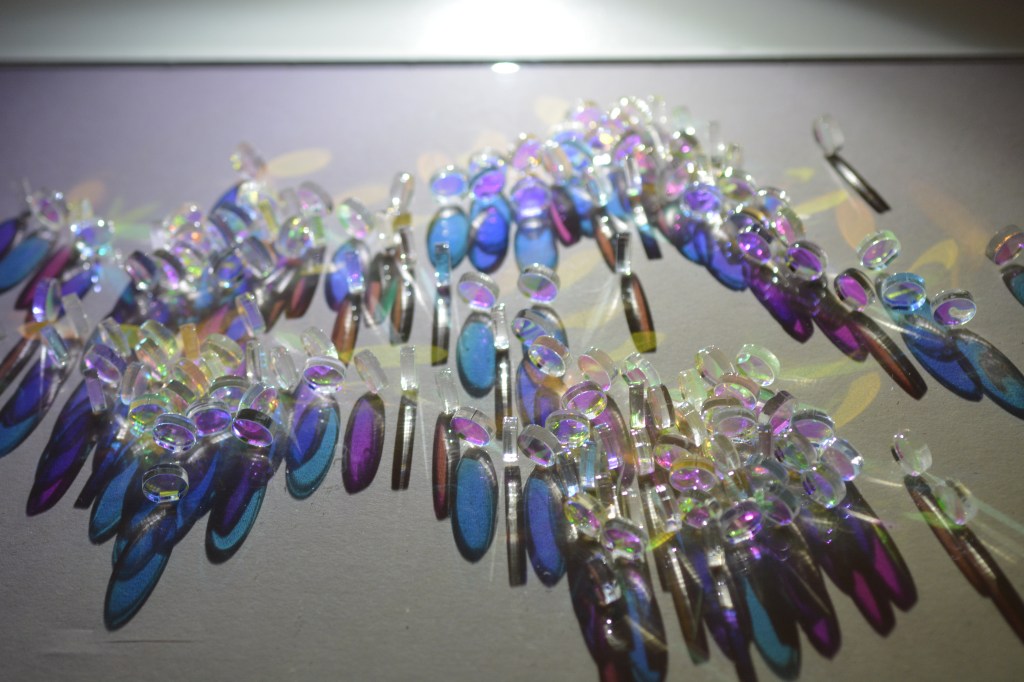
My work remains not incomplete but open to a new investigation. The scale of Eliasson’s work and the viewers direct involvement has encouraged me to consider the effect of scale in my own work The Murmuration (above). I proposed a larger piece that I felt confident in both making and considering its possible effect on the viewer. The use of light was strongly influenced by Eliasson’s work.
The understanding that the work remains open to the viewers interpretation plays a key part in the ‘completion’ of the artist’s work and is something that I hope I also achieve.
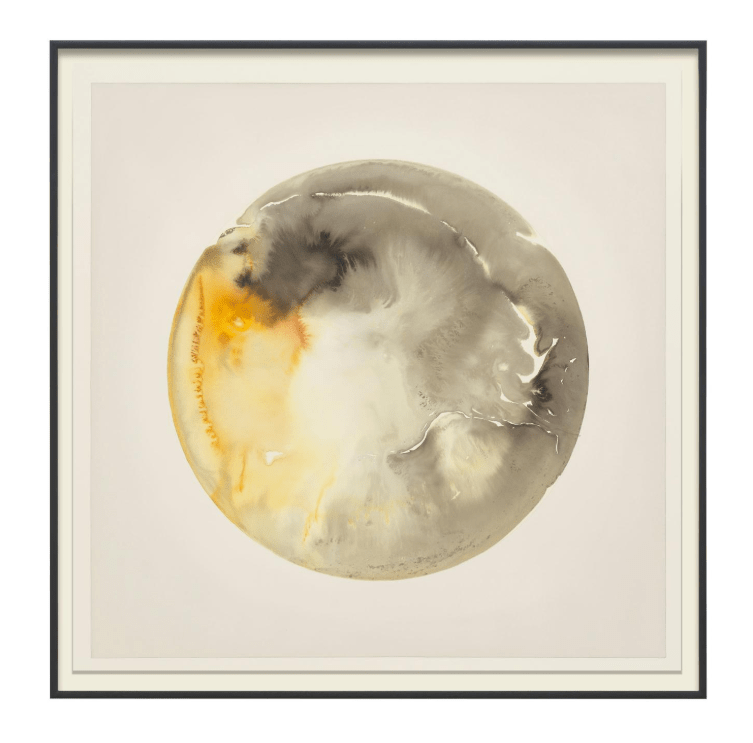
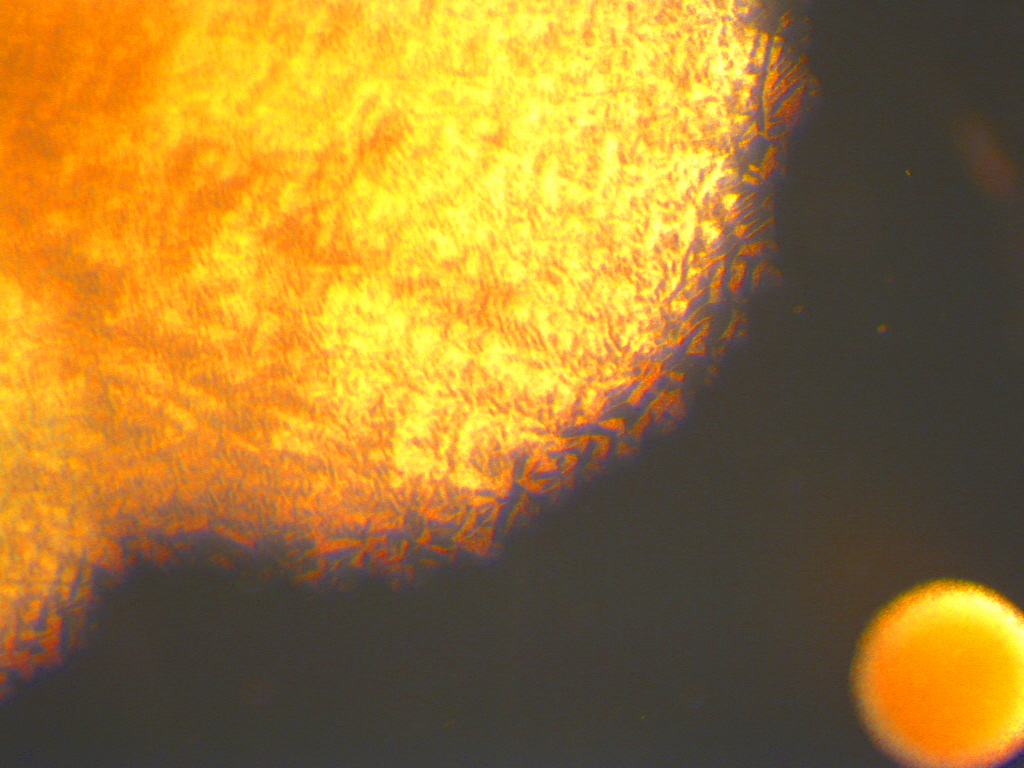
On the opposite end of the monumental scale of works which Eliasson has become known for, are the Glacial Currents made in 2018. These watercolours made from melting glacial ice feel so poignant to me. To take the essence of a global issue and capture the message in a way that prompts the viewer to consider its physical implications relative to themselves, is very powerful. This result is intrinsic to his work and is being achieved on a large and small scale. My work has been influenced by this artist, this is evident in the project Acqua Alta, concerned with the devastating rising tides in Venice which I experienced first hand during a trip to the Biennale. I collected flood water as it flowed to the door of my hostel and went on to make prints which used a photogram of the bottle. I was also able to grow the bacteria that had remained in the water and photograph it creating an array of beautiful images not unlike alien universes. There are metaphors for the destruction of the religious relics and the effect on the people within my work. These resources will continue to fuel other projects for me as we as artists play an increasingly key role in raising awareness and creating dialogue in global issues.
Whilst in quarantine I have decided to look back at the artists who I think have influenced my work. I believe influence comes in strange and unexpected ways. There are the artists who’s work ‘I like’ and those whose I respect immensely. There are those whose work resonates with me and those whose practice and methodology ring true as similar to my own. I don’t prefer a painter or sculptor for their work specifically, I am drawn to process. I seem to have been influenced by an equal amount of male to female artists which I will prove or disprove as this blog continues. I will also have to decide which artists work I can recognise the influence of in my own work or process. I imagine the method of anyalysing this influence is dependent on the degree to which I investigated them and what I was drawn to at the time. Artists such as William Kentridge who’s exhibition was all encompassing and which documents his work in the form of film and books not to mention an excellent commentary that makes all of his work ‘art,’ surly would have entered my subconsious on many levels. And then there are the artists whose work I revisit to consider new work of, or look at from a different perspective. There are also Tutors and Technicians who have their own practice and guide us to consider artists that they have been influenced by. This is not going to be easy but I hope it helps me to see where there might be holes in my research as I come to the end of the term, at home, isolated, but with a new perspective. My method of research needs to be reconsidered if I am to grow as an artist, to default to the same methods with each new project cannot be conducive to growth?

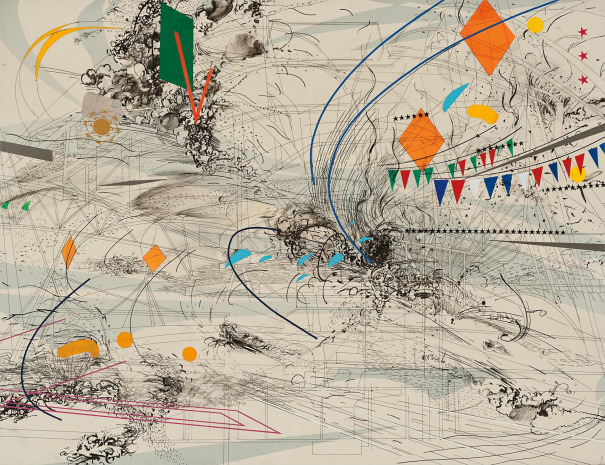
This work made during my second year, was influenced by Ethiopian born American Julie Mehretu’s Politicised Landscapes. I was drawn to her method of adding layers by using a system of shapes that had an almost scientific method of coalescing on the canvas and creating an explosive moment captured in time. The depth of the work is created with staggered movements and piercing lines on which the Artist meditates in a time consuming process of making. There is meaning in each of the marks as they represent unrest and reference specific observations: smashed glass shards, communication cables and uprooted trees observed in uprisings. I liked the scale of the work some canvases are as big as the inside of a church. I am drawn to the collaborative element such as the inclusion of a Jazz musician and his interpretation. Mehretu references David Hammond, Yves Klein and graffiti gestures on New York Trains in the 80’s. Paintings by Christopher Wool, whose brushwork and work with stencils is evidenced in Mehretu’s landscapes. The artist also mentions the sculpture of Huma Bhabha whose grotesque disfigured forms are made with found objects and whose drawings hold an energy in their thick strokes and layers that again we can see manifest itself in Mehretu’s work. Some marks remind you of Picasso and reference Abstract Expressionist Philip Guston. Mehretu points out that artists are constantly using these marks. The challenge of referencing the dangerous and the ugly provides the energy for the work. I myself am considering a geographical area in Substratum (above) that I have become familiar with and indeed fond of. I am portraying different periods of time as they exist in one place. This is a much less dangerous landscape at Salford Quays.
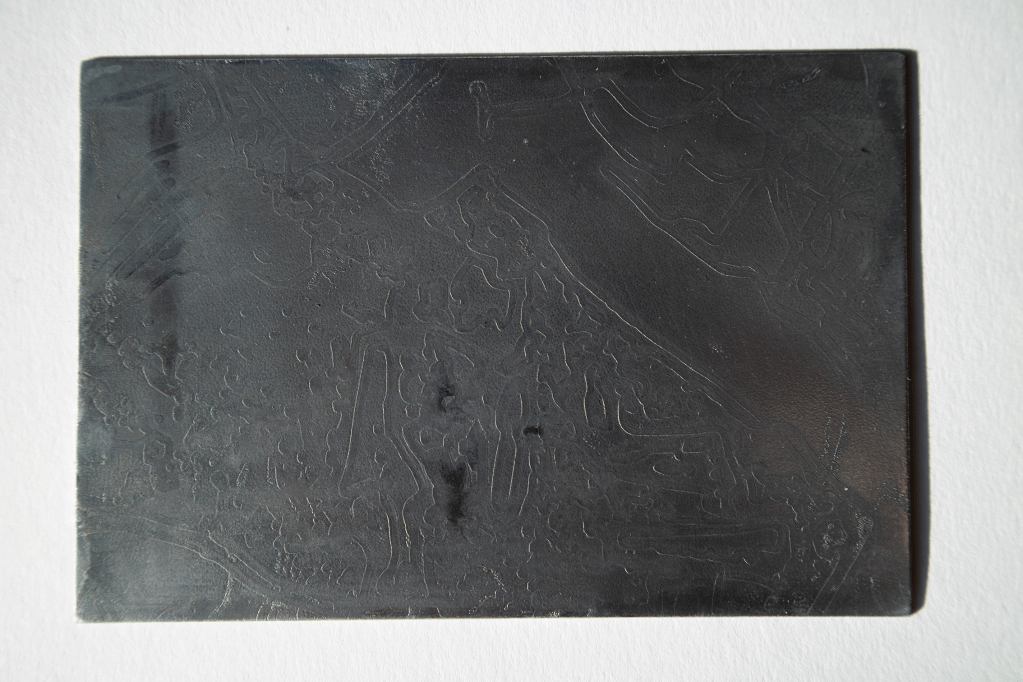
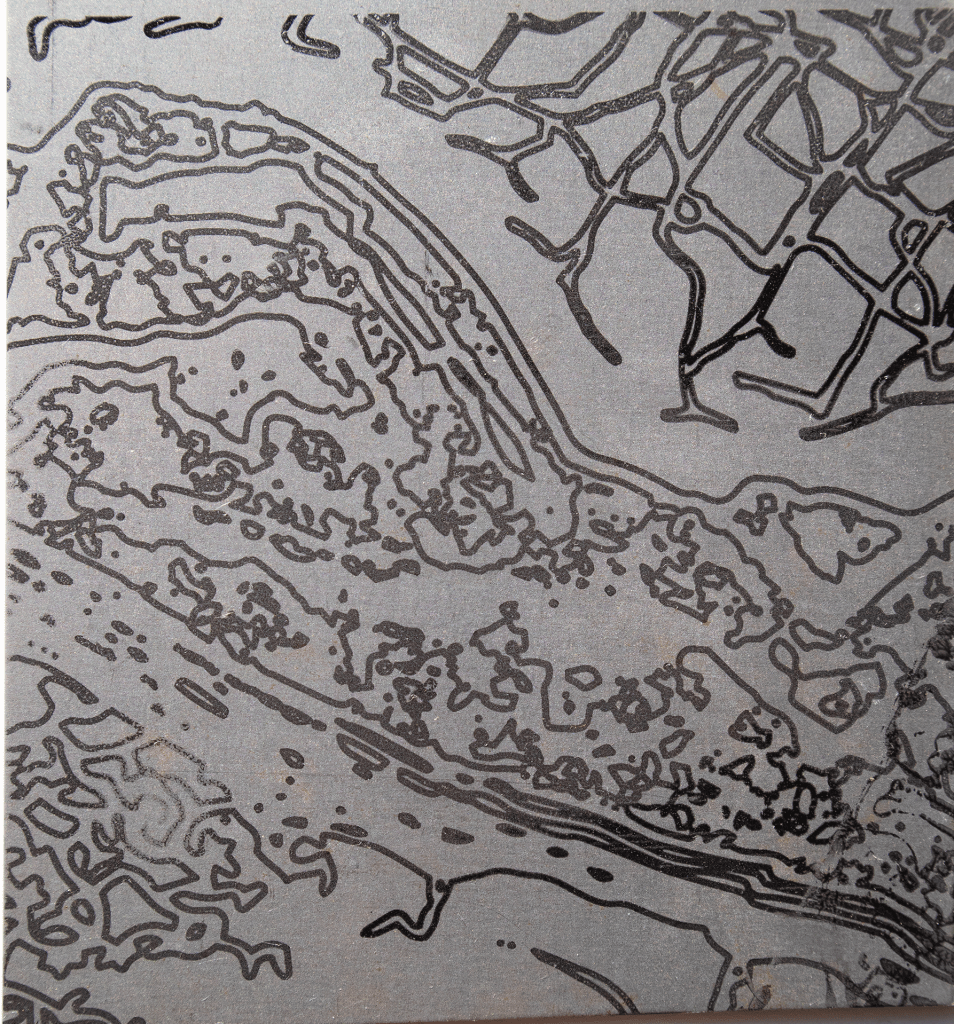
Both of the above plates were made in screen printing. The first one was etched with the ink remaining and created using an ‘open bite’ and the second left with the ink image of the tears on it with a view to marking it with a hammer and metal tools.
Both of these processes were delayed due to the virus and the early closure of the University but serve to give me food for thought and materials as maquettes in the design of the proposals for the exhibition.
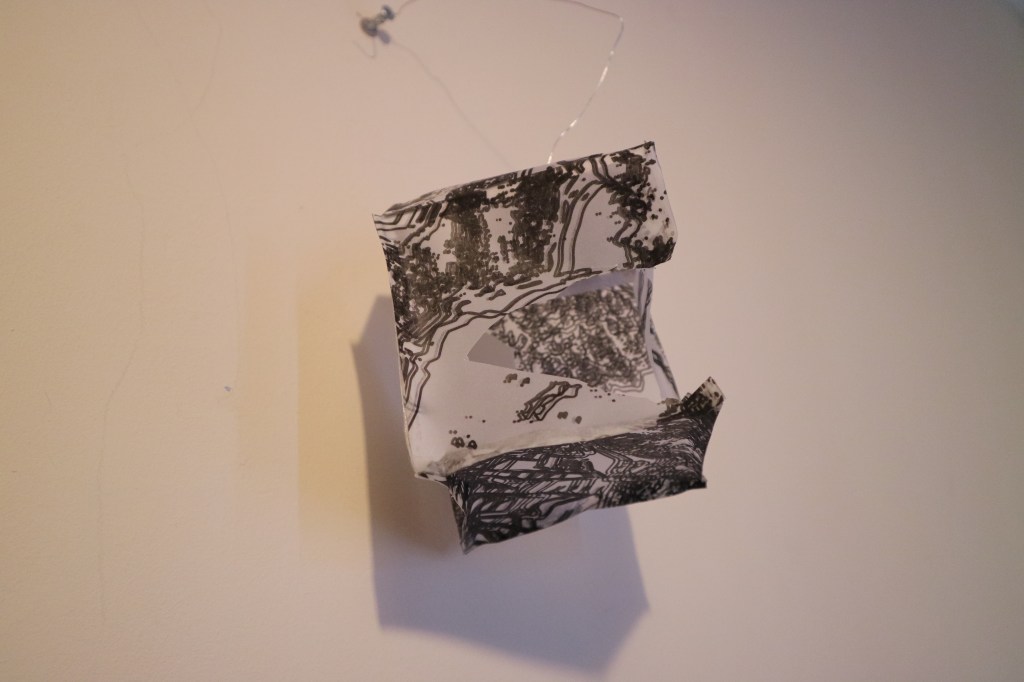
After exploring the tear images drawn and photographed from the microscope, I used prints of the tears on tracing paper to form a cube.
Materials are being chosen for their transparency as if to stay true to the salty water that formed them. Chicken wire gives me flexibility to curl and bend the material easily and flow off the wall as I recall the movement of the crystallisation as it occurs.

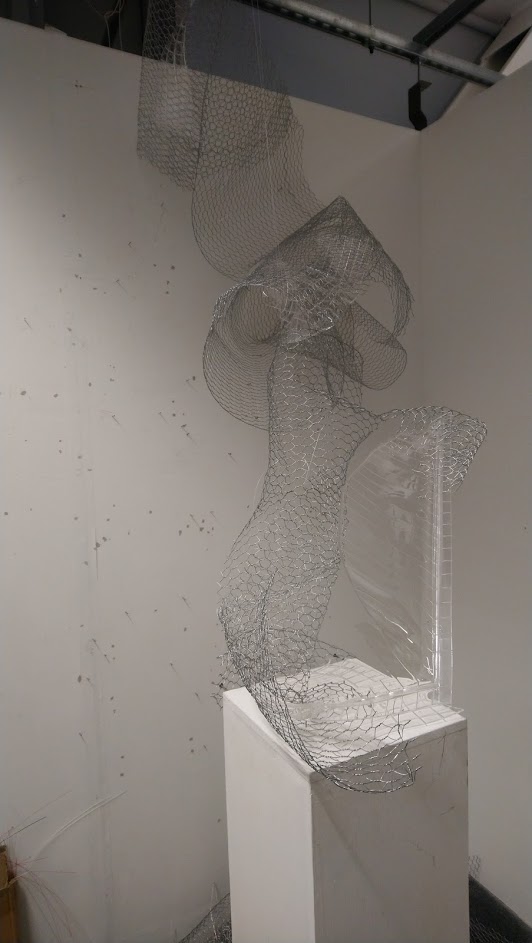
Both of the above sculptures make a historical reference to the period in the 1960’s when art work came off the plinth. I attempted to touch it without relying on it so that the weight could be shifted. In the first attempt I used fishing wire to move the sculpture off the wall and then the plinth to demonstrate the movement and see the subject in 3 dimensions.
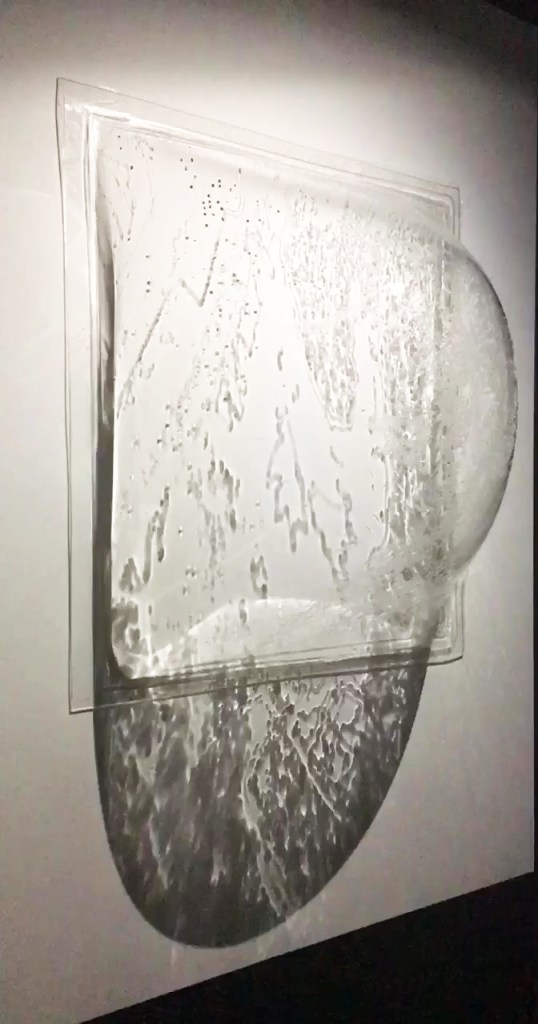
This was the first attempt at creating a shadow of the tear in movement. I am interested in the movement of the process and the shape of the tear with its outer tension holding its shape. This may form part of the final installation and as a video could be played or the action could be repeated through the perspex.
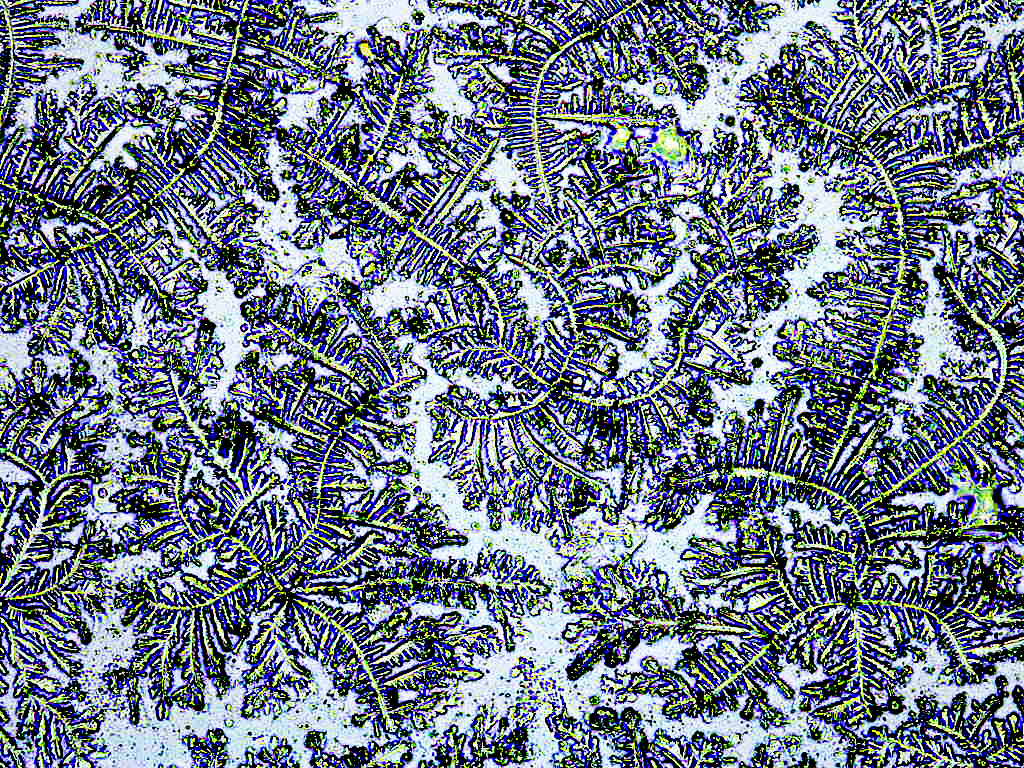
About the Project
The tears project began with Voyager’s iconic image of earth as a tiny spec of dust suspended in a beam of light. Now 30 years old the image made headlines again recently as it was enhanced and republished. I showed this to my friends and was interested in the feedback of awe, overwhelment, insignificance and even magic.
I felt at this time of uncertainty in our world that the reactions united us in a oneness of our humble existence on this planet. I have used tears as a metaphor for the physical reaction to these emotions as they are a visceral response on which I can explore the connections and friction that exists epistemologically.
Artists have looked closely at tears under a microscope and studied their beautiful and unique crystallisation which creates a fascinating imagery almost like a DNA profile. The reason behinds the tears changes the makeup of the liquid, for example tears of pain have proteins in them that cause the tear to roll slowly down the cheek and be noticed by others.
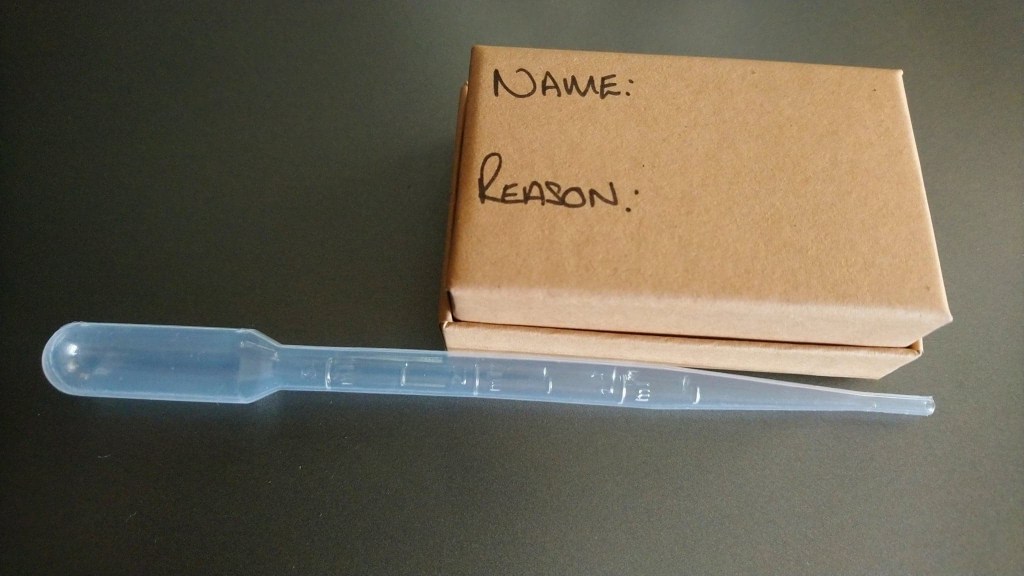
I collected my own images by creating a ‘tear kit’ made up of a slide and pipet in a small box and an explanation sheet. I left the option open for the donation to be detailed with the persons name and reason. I received six back all labelled with both and sent the recipients a copy of the microscopic image.
Having a microbiology department on campus gave me the opportunity to photograph the tears under a microscope.
The reasons for the tears I received were mostly sadness and not pain which in my research seems to form a very abstract crystallised paths unlike the images below which are not dissimilar to snowflakes. This would obviously be much more difficult to collect.
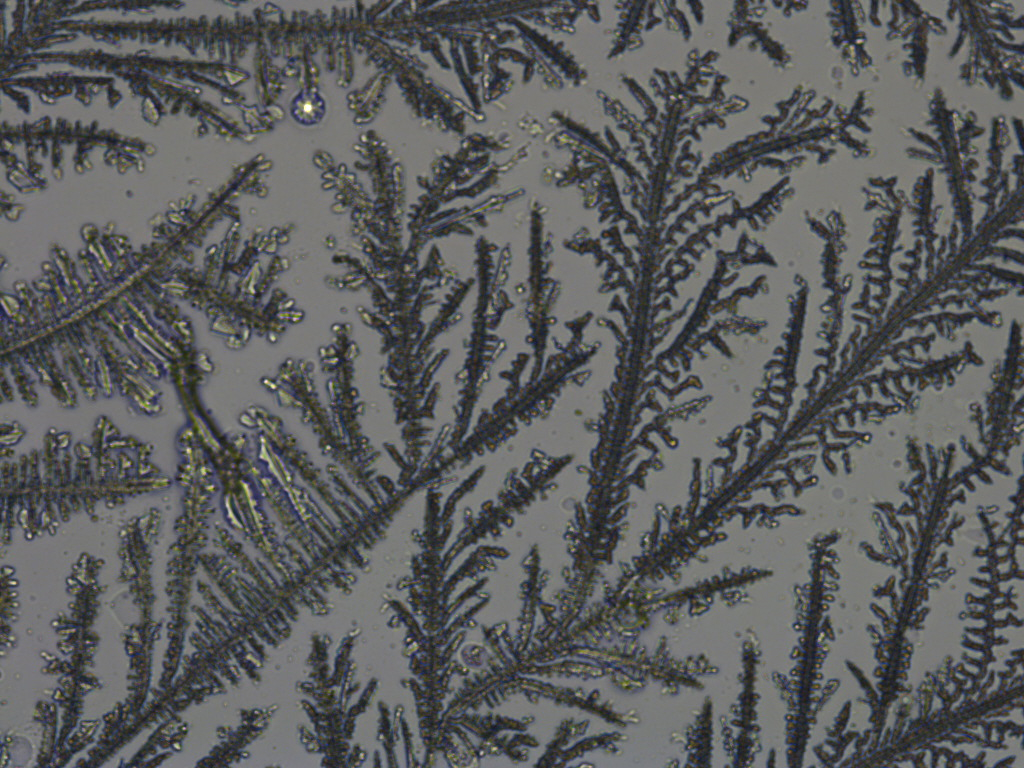
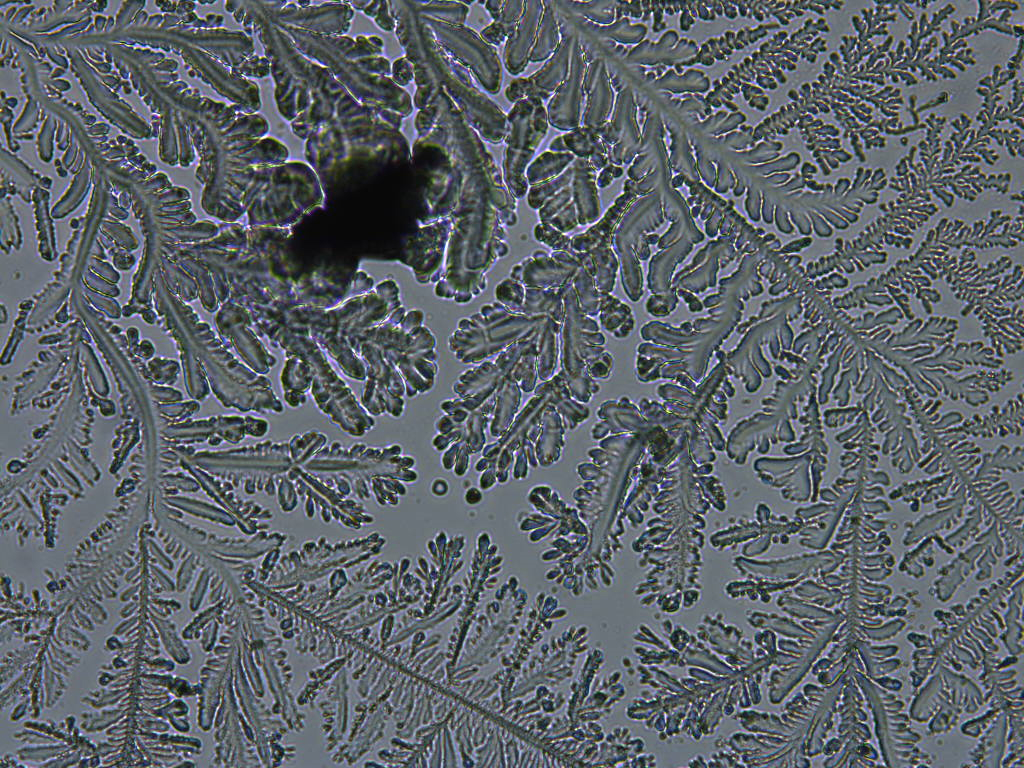
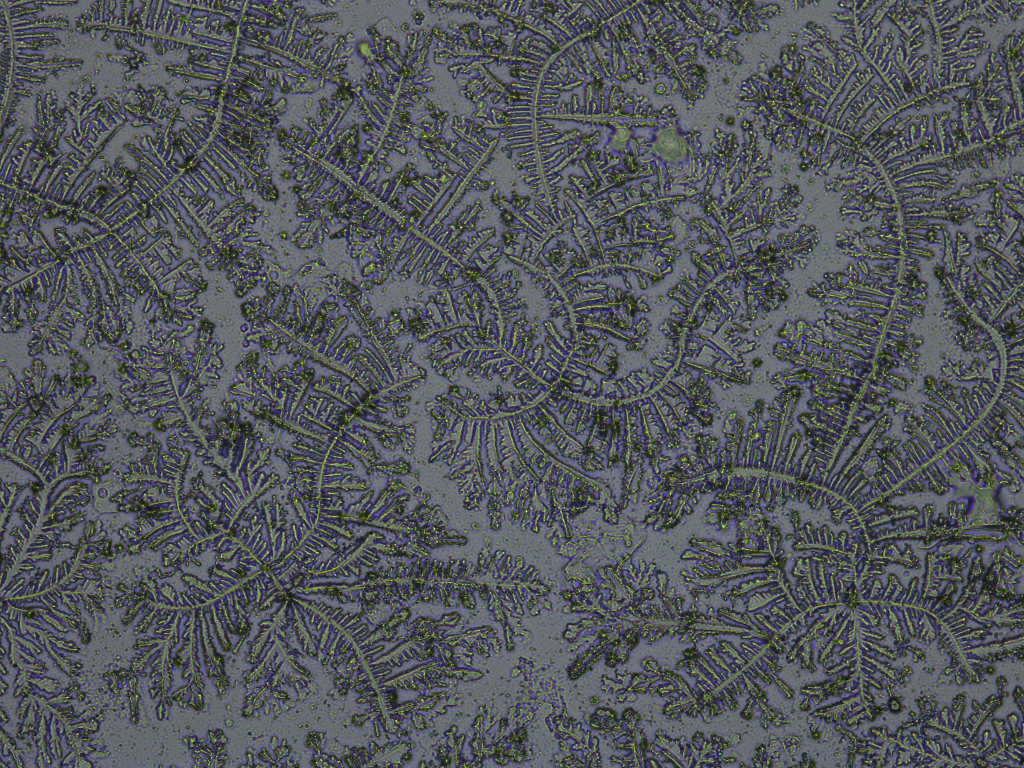
Three of the microscopic images collected
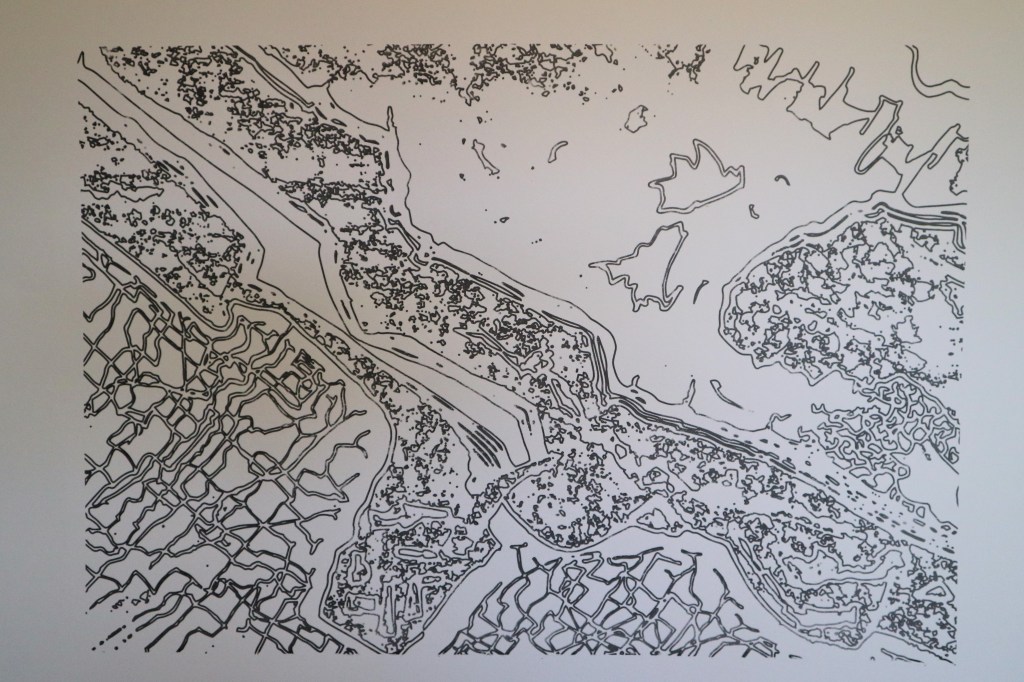
I began studying some of the material I had collected on line and in my own images and with charcoal created an Illustrator document which I made into a screen to print. This helped me to explore the shapes and simplify them.
Lasercutter
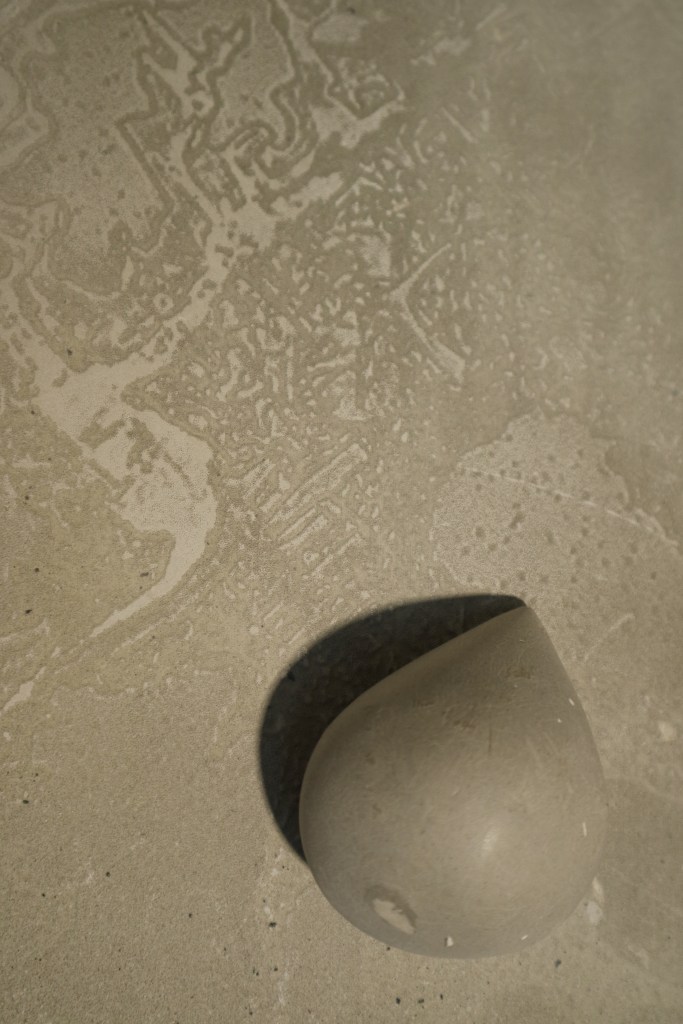
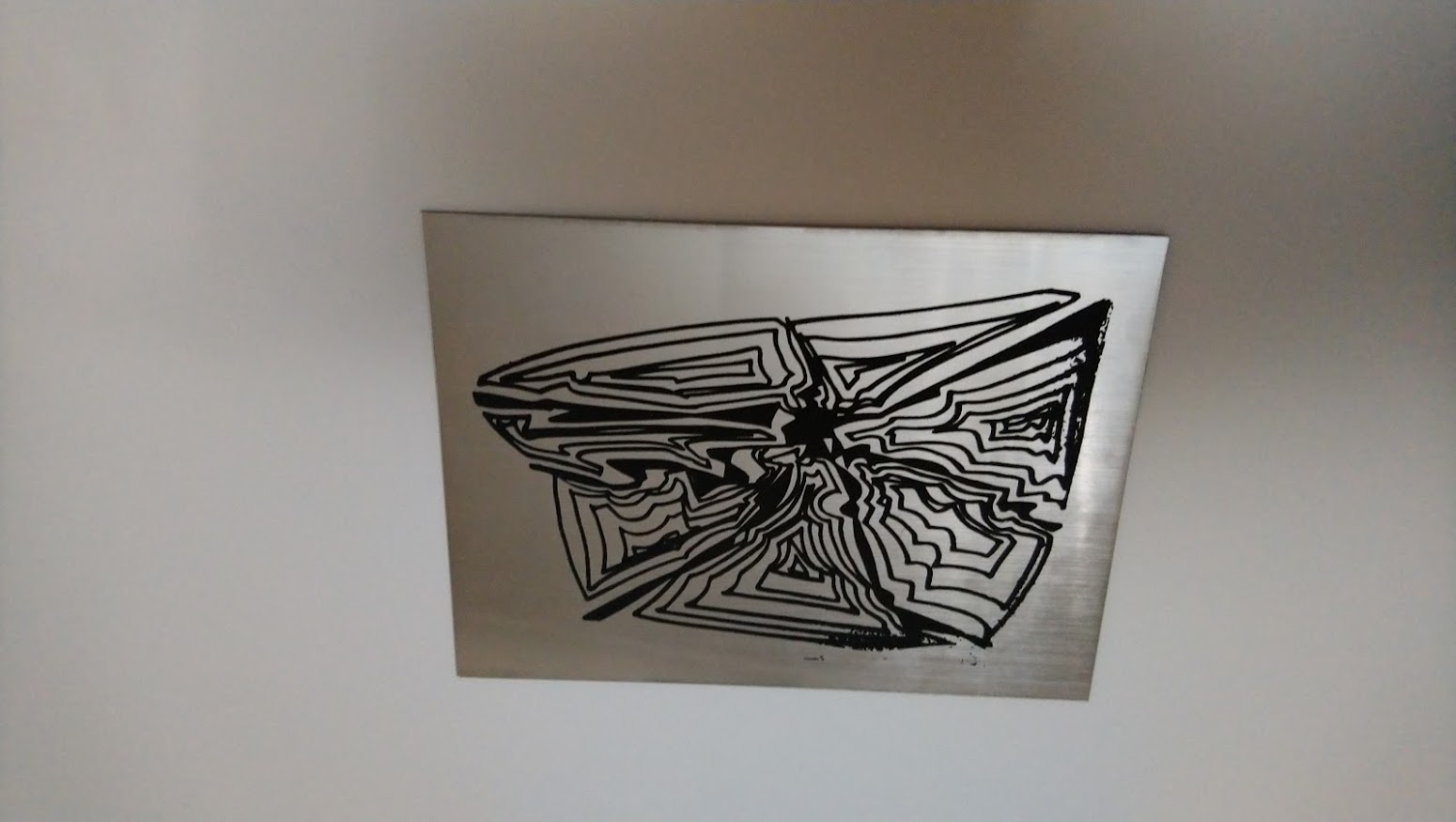
The file was adapted for use on the lasercutter and I made a plaster/stone mix in an a4 size approx 1.5 cm deep. Once dried this was lasercut in an attempt to begin to see the image as a 3d object.
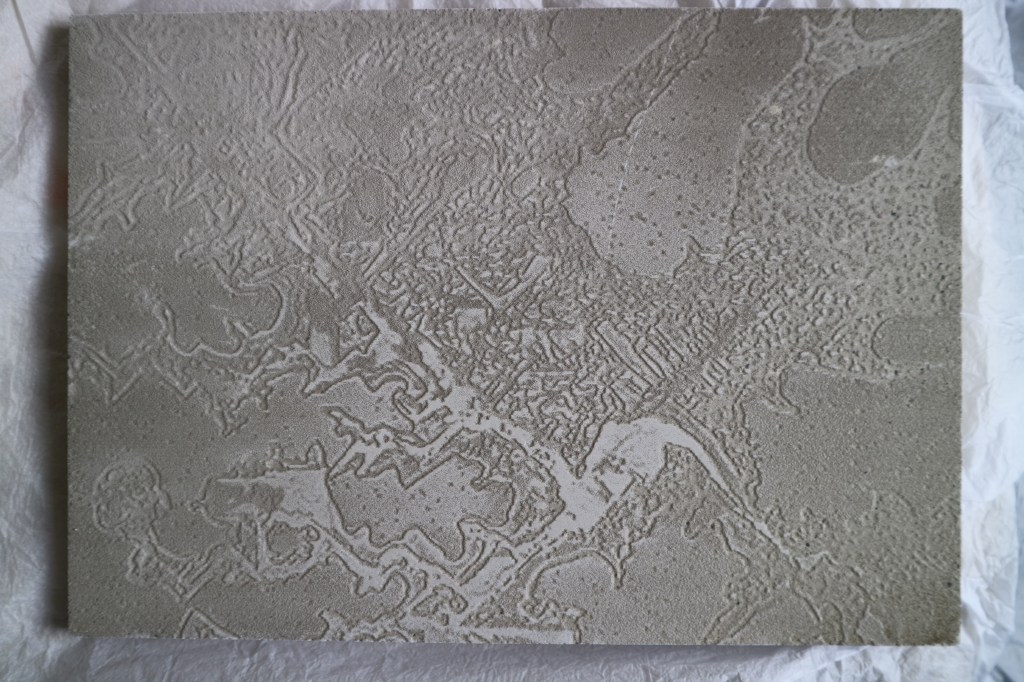
The hard cold surface was an interesting contrast to the human subject. The image was shallow but clear. It is possible that this could be made on a larger scale and form part of an installation.
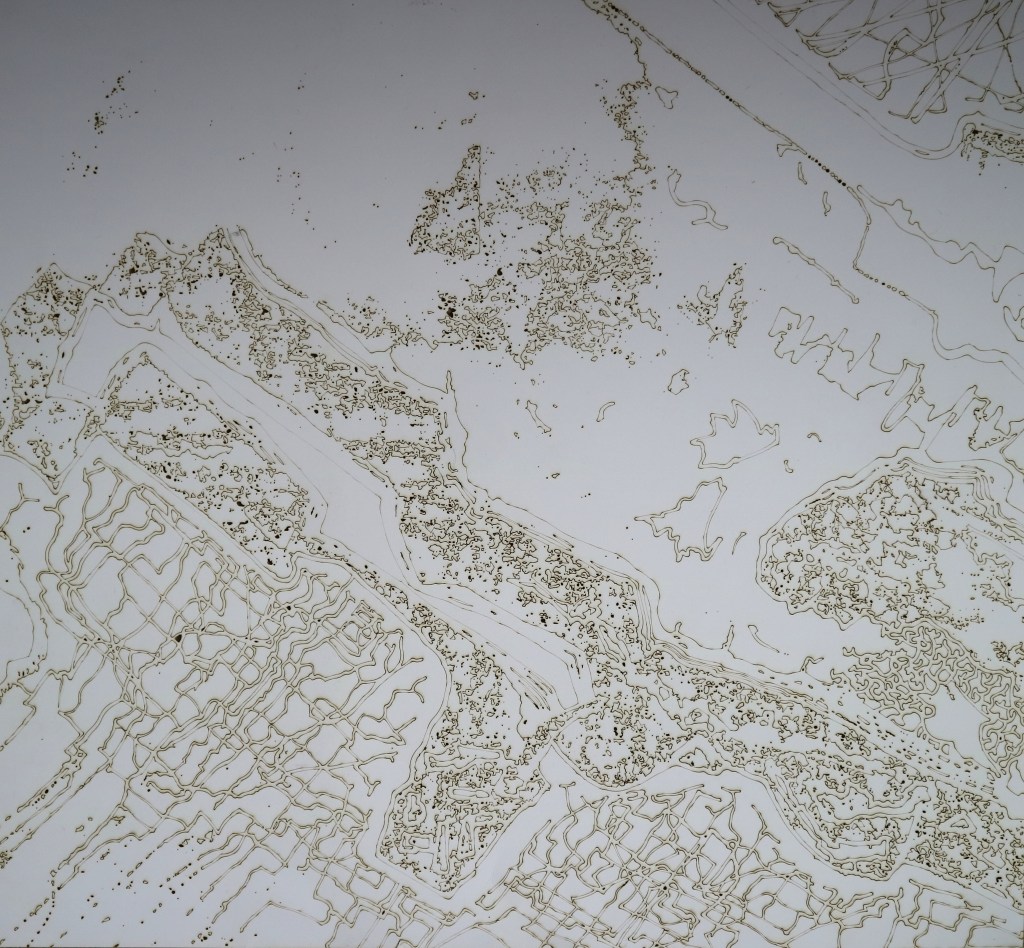
The card showed more detail and appears much more like a map. When putting the file through Illustrator to change it to a bit map the changes in the lines and shapes that i chose made the image seem more like the crystallisation that occurs. This has prompted my thoughts further on an installation that includes a number of different materials, each presenting the viewer with a context – paper’s fragility and the tiny holes that let in the light as opposed to the hardness and permanence of the plaster.
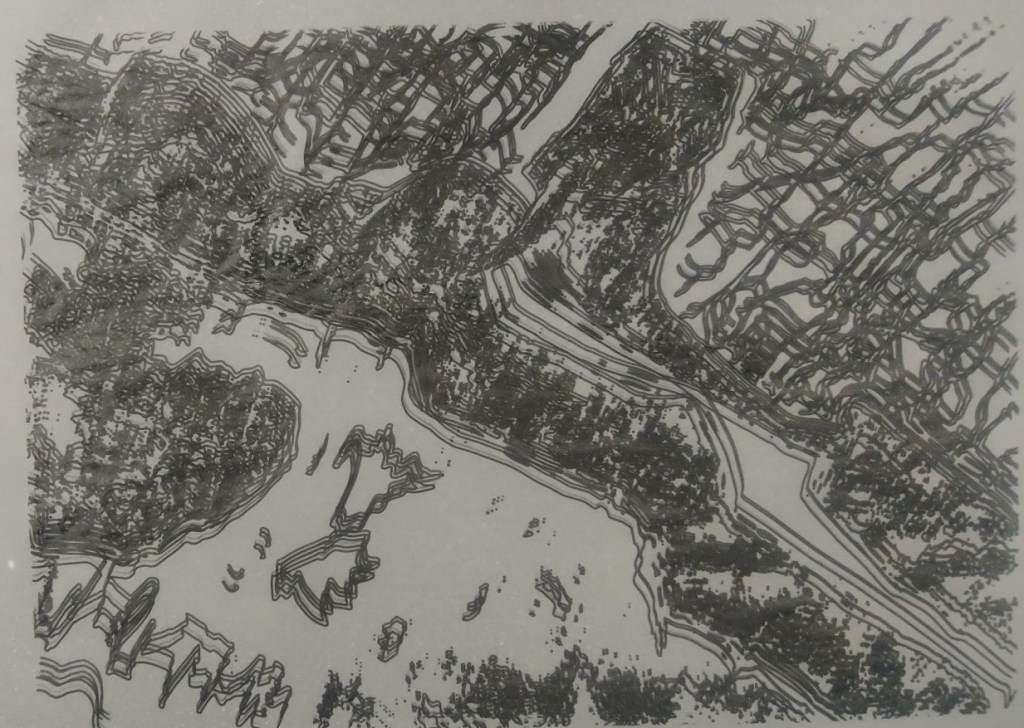
The movement only served to make the image seem unfocused .
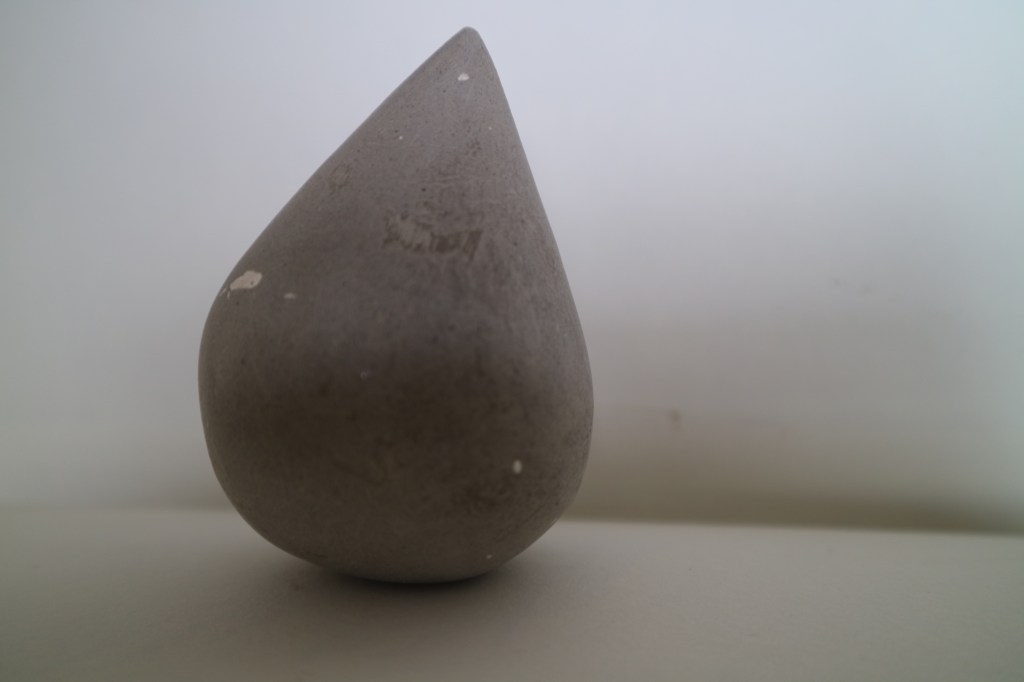
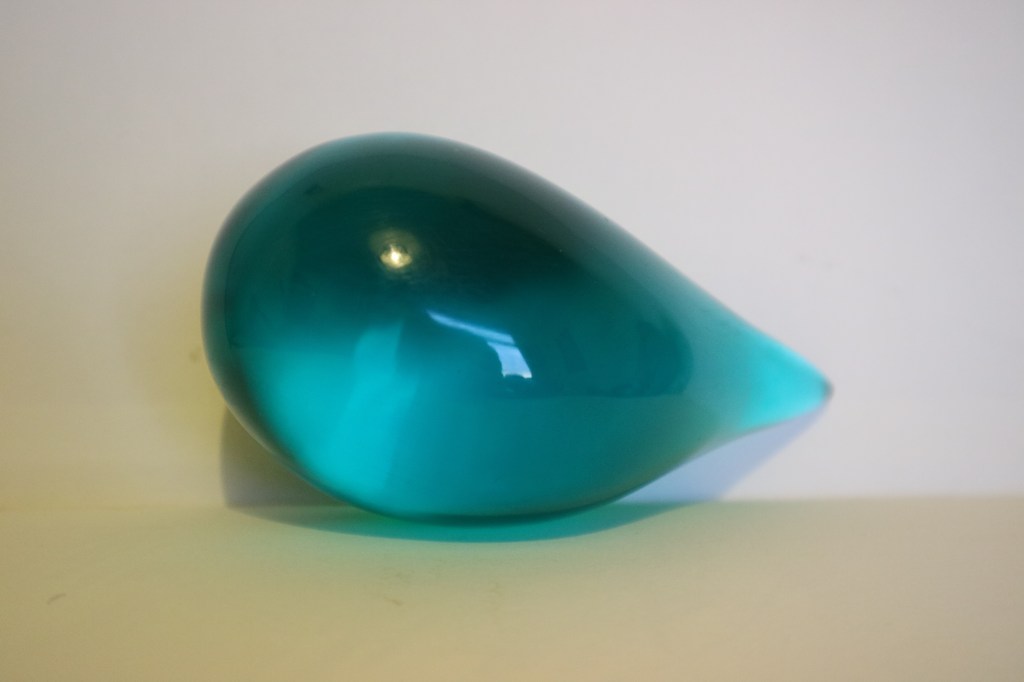
The tears (above) were the first objects I made in this project but a little too obvious to pursue. However they gave me ideas which will fuel another project and collaboration with a scientific researcher in relation to patient pain. A Pint of Science is taking place later in the year and will involve patients writing on small wooden lasercut tears, descriptions of the experience of their conditions. These often include invisible symptoms. The exercise will inform researchers and the event will deliver information to keep patients abreast of current research into their conditions into which this information will be fed.
A Commission for work for the meeting room of The Autism and Criminal Justice System Salford

The Brief
The brief was to create a piece of work in any medium, measuring up to 6 mtrs long by 2.5 mtrs deep. The challenge came when I visited the site and began to understand the diversity of the users of the meeting room: lawyers, students, police, social workers and clients – people in the criminal justice system who are on the autism spectrum. Uncovering a subject that would interest and not offend, provide a talking point and not be too distracting. I visited Venture Arts and began to research and develop an understanding of autism with the aim of find a common thread to expand on.
The Narrative
A common theme that occurred in the research, especially when I spoke to artists at Venture Arts, was story telling and the reliance on this to relate to individuals, time and society in general. According to writers there are only 7 basic stories in books and films etc.
Using different types of Perspex and card, both drawn and lasercut, I explored images in the form of symbols that represented each story with a view to layering them and overlapping between stories and events. This is to consider the effect of one story on another as we move through our lives into and out of different phases.
The symbols were: rags to riches – roses around the door, tragedy – a broken mirror, rebirth – a burnt feather, overcoming the monster – a black hole, quest – a maze, journey – a mountain path and comedy – an award.

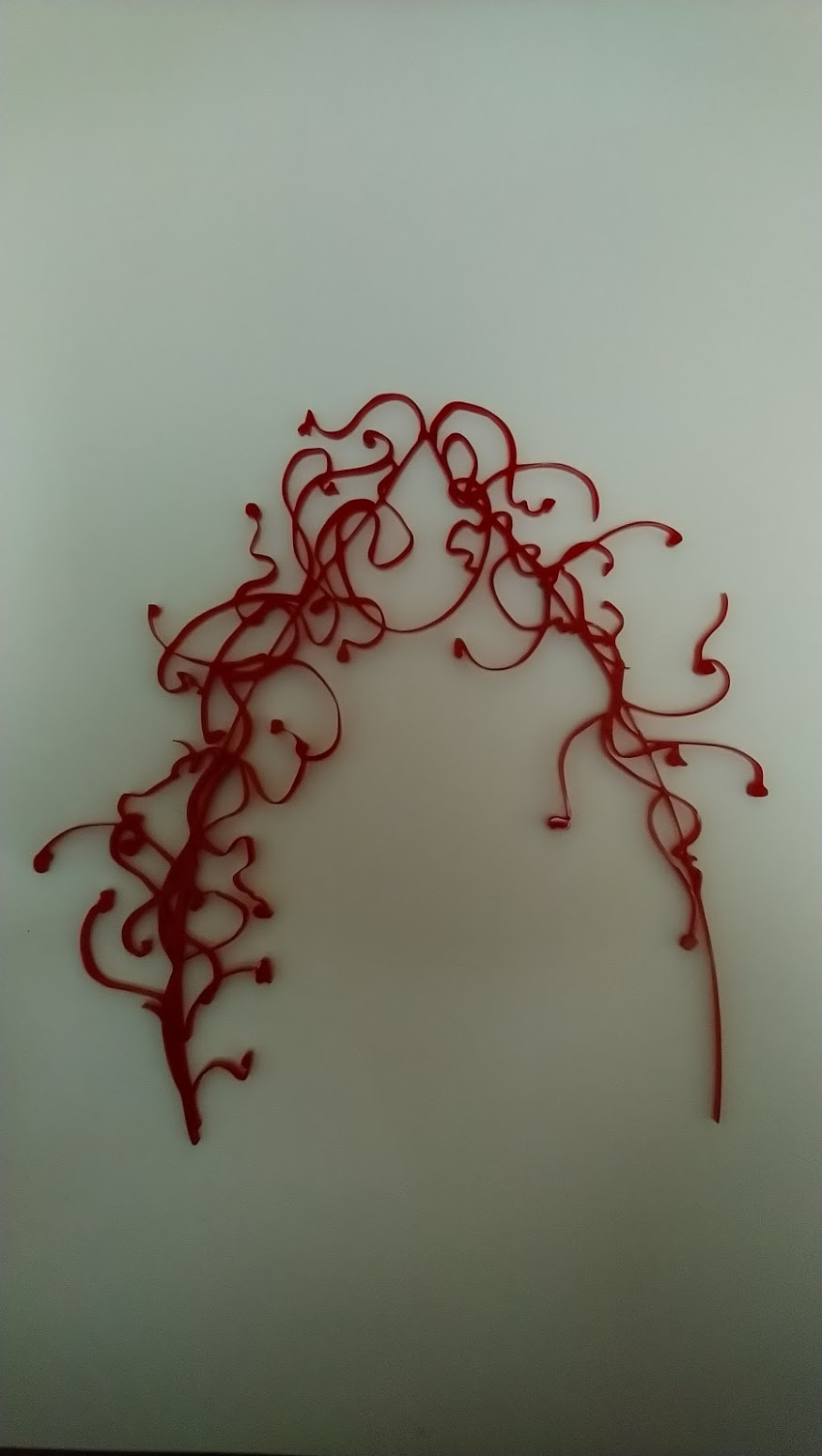
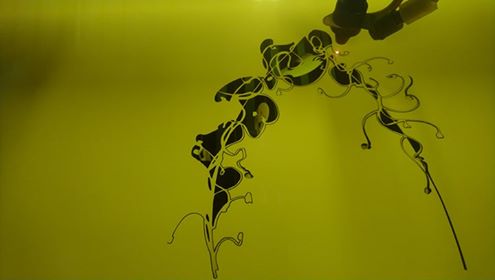
Asking for input from other artists regarding the symbology and testing out the shapes together the work developed into combinations which I subsequently took to the print room to explore further. Print has always given me the opportunity to explore and test ideas without the restrictions of weight and space normally attached to a 3 dimensional work.
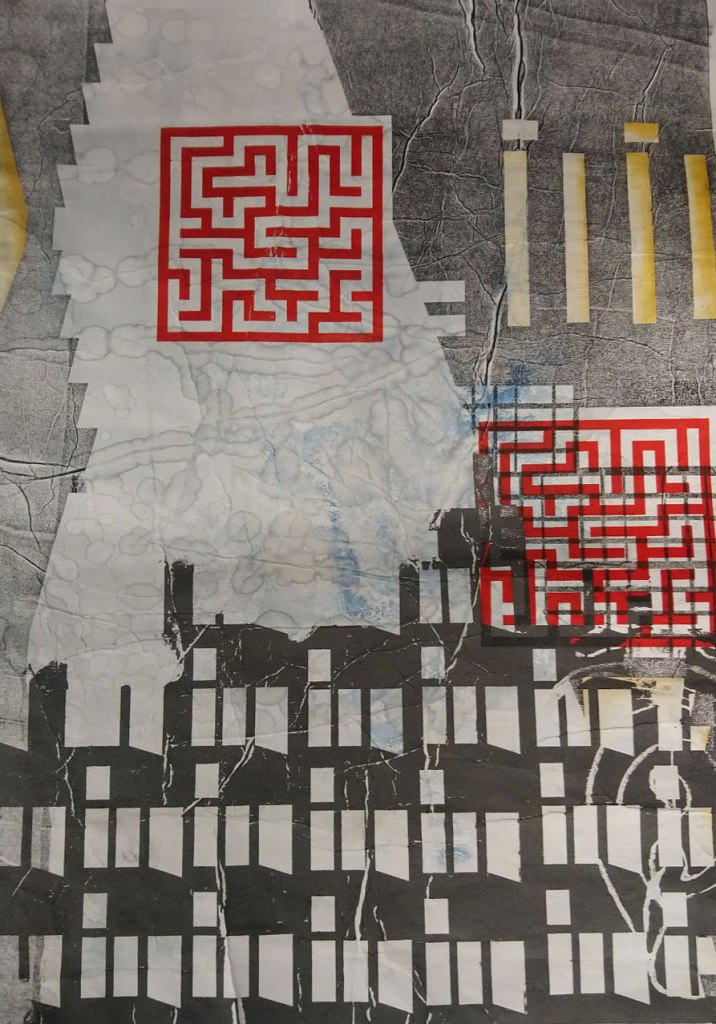
I printed on the heavy weight blotting paper that is used in the print room and had been kept for its beautiful marks left behind forming stories from artists making prints such as cyanotype. The paper was difficult to handle when wet and I had to wet it to print the etching plates. Some were able to go through dry as the Takach press is very powerful, it is also large enough to take the almost A1 size paper. I also used the negative spaces formed by architects when creating models to print blocks of area in which I could recreate the combinations of stories in a 3 dimensional format. I worked with the existing marks on the paper and over-laid 8 prints, working on one while the others dried over a period of two weeks.
Deciding when to stop was difficult as I was tempted to include each story in each piece. Finally the decision about when to stop was made when three of the prints seemed to work well together forming a tryptic. At this stage the prints were quite abstract and viewers saw their own stories in each which is more than I could have hoped for!


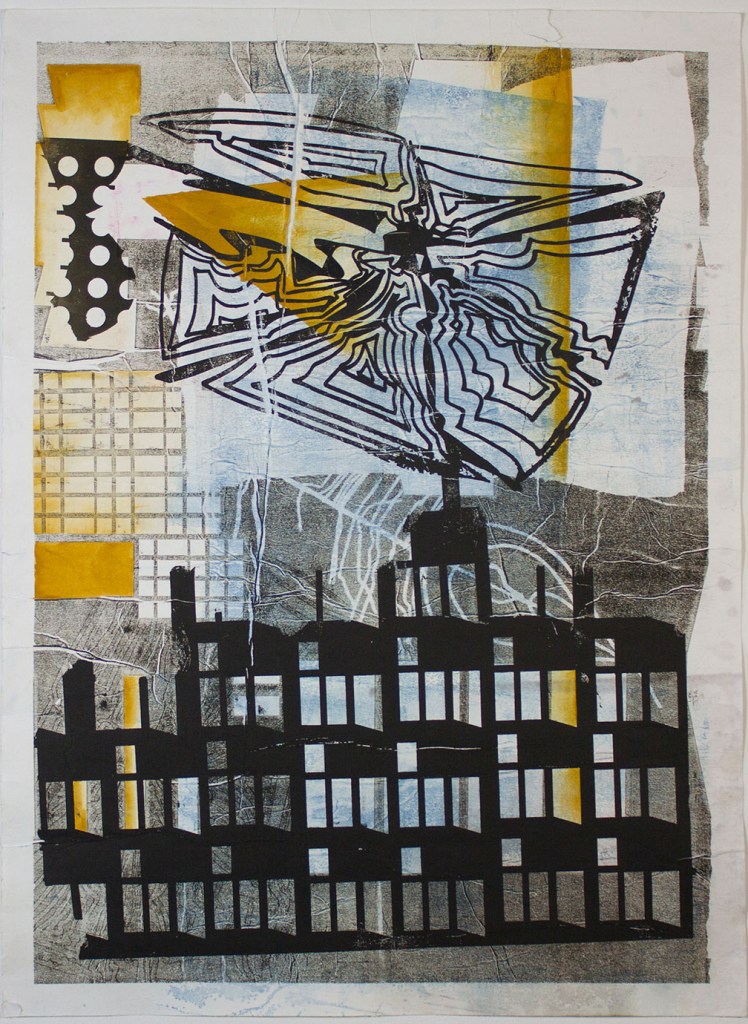
This brief is to respond to an artist exhibiting in the exhibition, I chose Takahiro Iwasaki Out of Disorder – Clothes, Acrylic Cases, 2017
My response to Iwasaki’s work is based on his use of everyday objects to render an impression or sculpture of a scene or object affected by catastrophe such as the disaster in Hiroshima that changed its landscape for ever. Iwasaki was inspired by Otomo’s Manga comic, Akira. The comic’s Cyberpunk genre was known for its depiction of an oppressive post-apocalyptic version of Tokyo.
As a child Iwasaki used household objects to create robots and toys from materials he found discarded in his environment, he drew inspiration from artifacts housed in The Hiroshima Peace Memorial Museum. Iwasaki uses hair, towels, thread, duct tape, dust and other mundane items. This appealed to me as a truth to materials that creates an opportunity for the artwork to be more than just a representation.
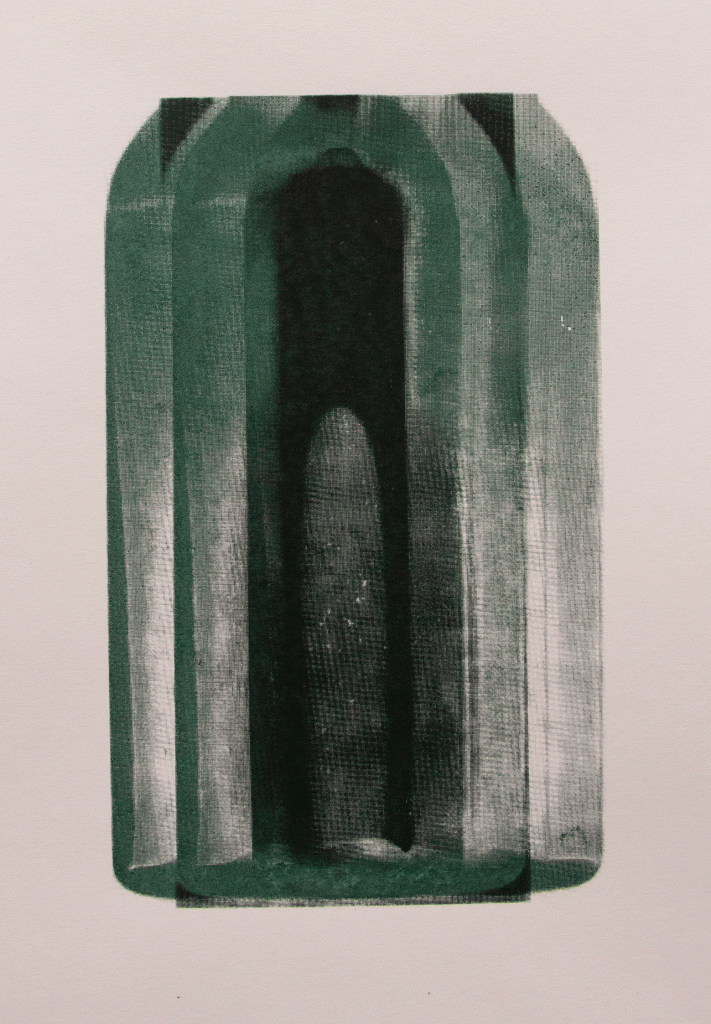
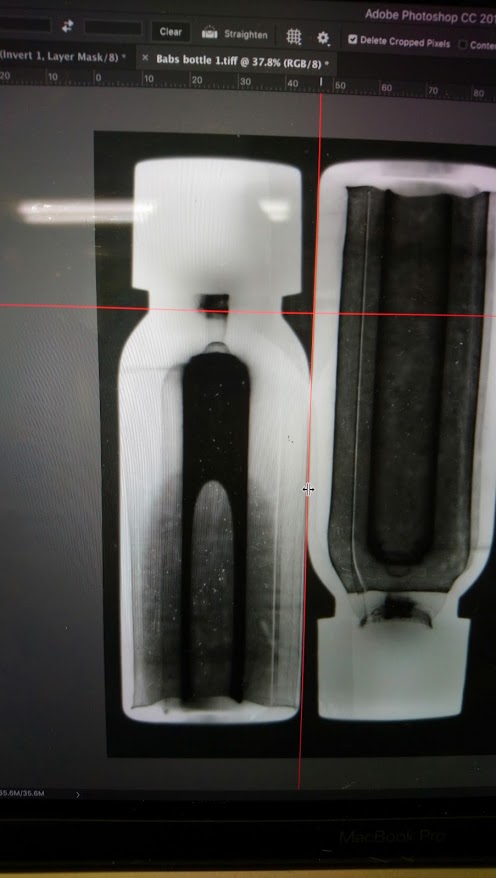
The small bottle of flood water that I had collected from a recent trip to Venice was photographed with a Photogram using .5 of a second of light to leave an impression on the paper. A fraction of time can create an image reminding us that a small change in sea levels can have a devastating impact on the world and particularly the beautiful city of Venice. Water and plastic (an everyday material) created the image which I reproduced in the form of a screen print. I chose the bright dayglow orange to represent a warning and contrast with traditional renaissance style. The cathedral like image formed by the water in the bottle reminded me of the city’s priceless architecture and everything that is at stake in this moment in Venice.
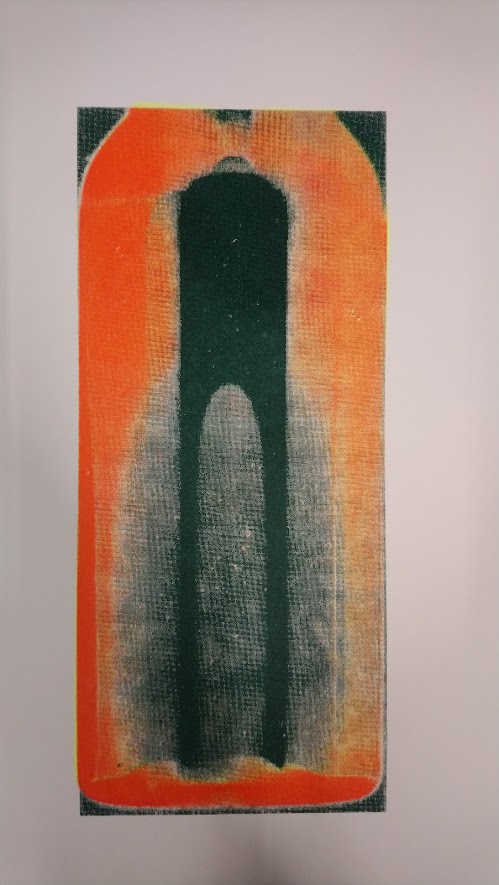
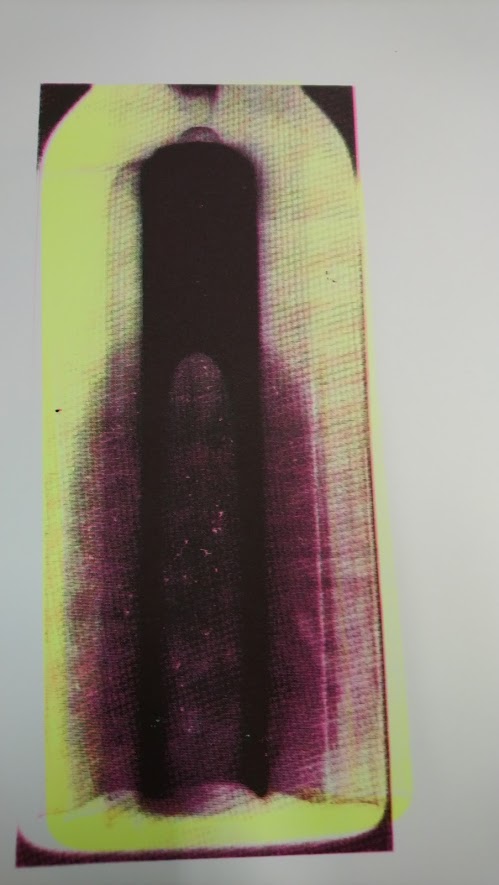
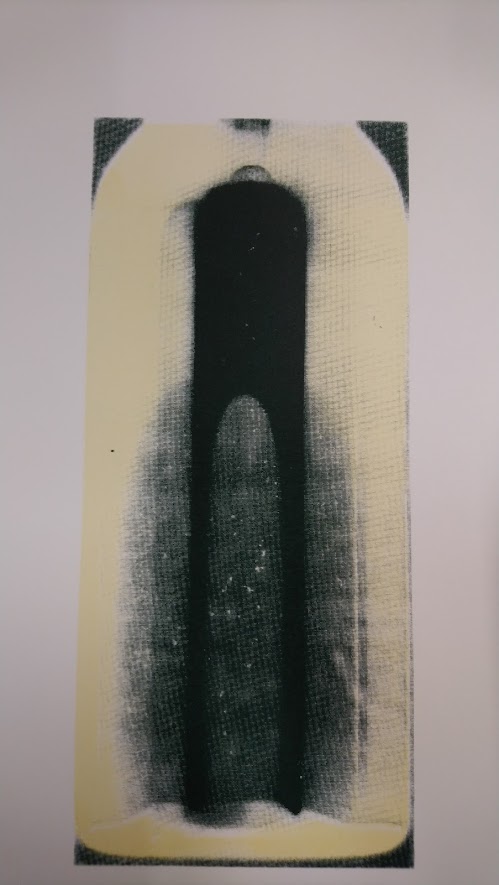
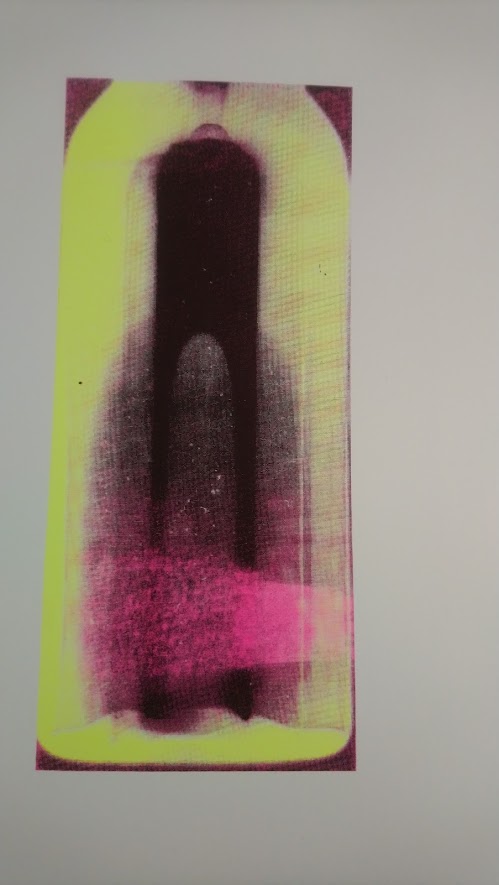
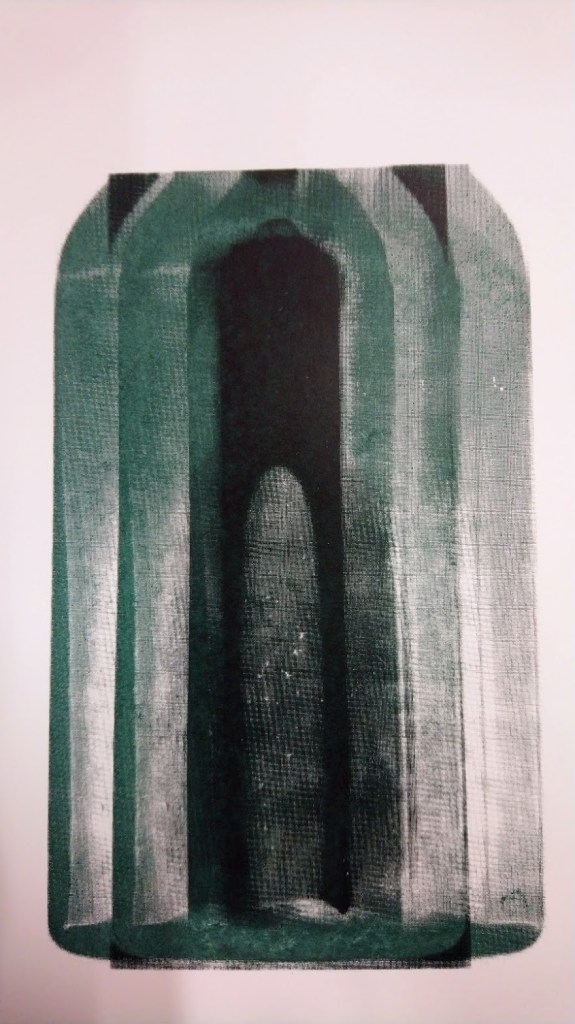
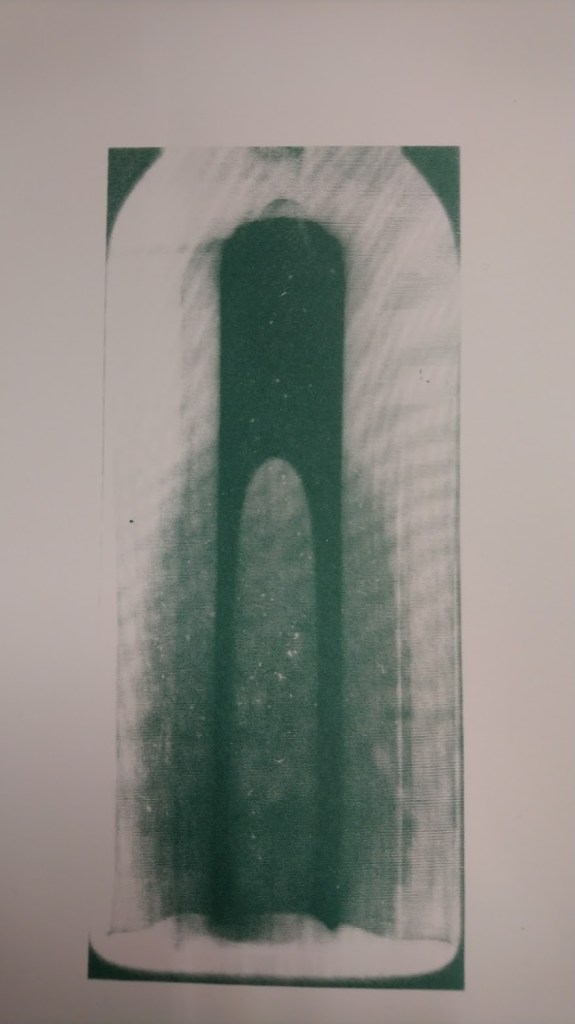
Work on this print produced many different copies each with its own meaning. The repetition of the shape was reminiscent of the arches and domes of he architecture of Venice and the black/dark green acrylic created a feeling of sadness at the loss of this. The layers of luminous paint created a feeling of alert and danger. I used red over the black to emphasise this. The harder I pushed the paint through the silk screen the denser the image became. The less dense ones showed clearly the shadows and edges of the bottle.
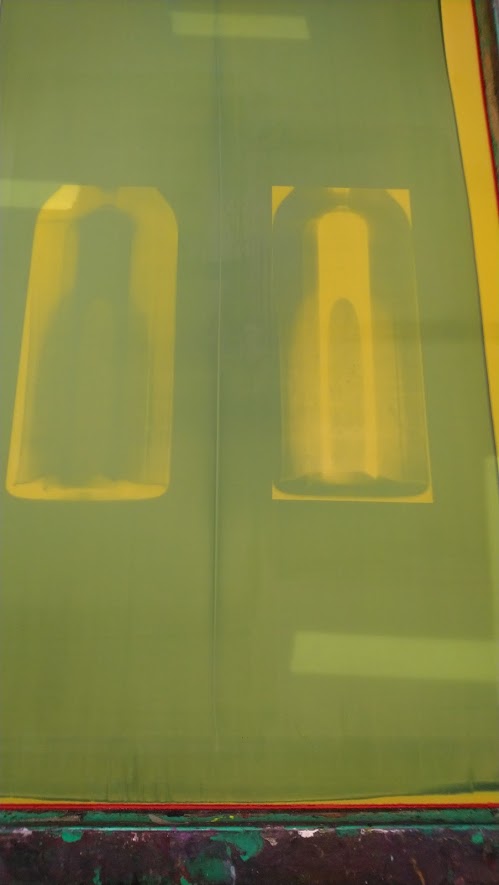
It was interesting to try a 100 mesh screen as it seemed to collect finer detail but also created a wave of lines from the photogram that I did not anticipate. This created a different texture and feel to the print and one that I personally liked. However the bright orange of the one that I chose for the exhibition is a call to action to address the issues of rising sea levels and the loss of priceless architecture and art in Venice.

This blog will explore some of my favorite work at the biennial…..

Working with a scientist and researcher of Scleroderma and the more commonly known Reynauds Syndrome, has uncovered interesting similarities in our practice and fed my studio practice this semester. Looking closely at the magnified flow of blood to the very tip of the fingers presented some beautiful and interesting shapes. A big factor in this condition is the unseen symptoms.
I have been interested in artists working alongside and being influenced by scientists such as those at MIT and CERN who’s programs of collaboration have been established since the early 60’s.
One artist in particular who has inspired me is Annie Cattrell. Specifically I am interested in the artists work with neuroscientists mapping the brain with MRI scanners and creating beautiful resin and perspex recreations with the intention of dispelling stigma around mental health.
I began this project exploring the images in print, I mixed acrylic to develop a stone colour, some patients describe the effects of this progressive disease as ‘turning to stone’. And worked in print to explore the images.

Reversing the image digitally I was able to produce a number of screens and test different repetitions and colours.
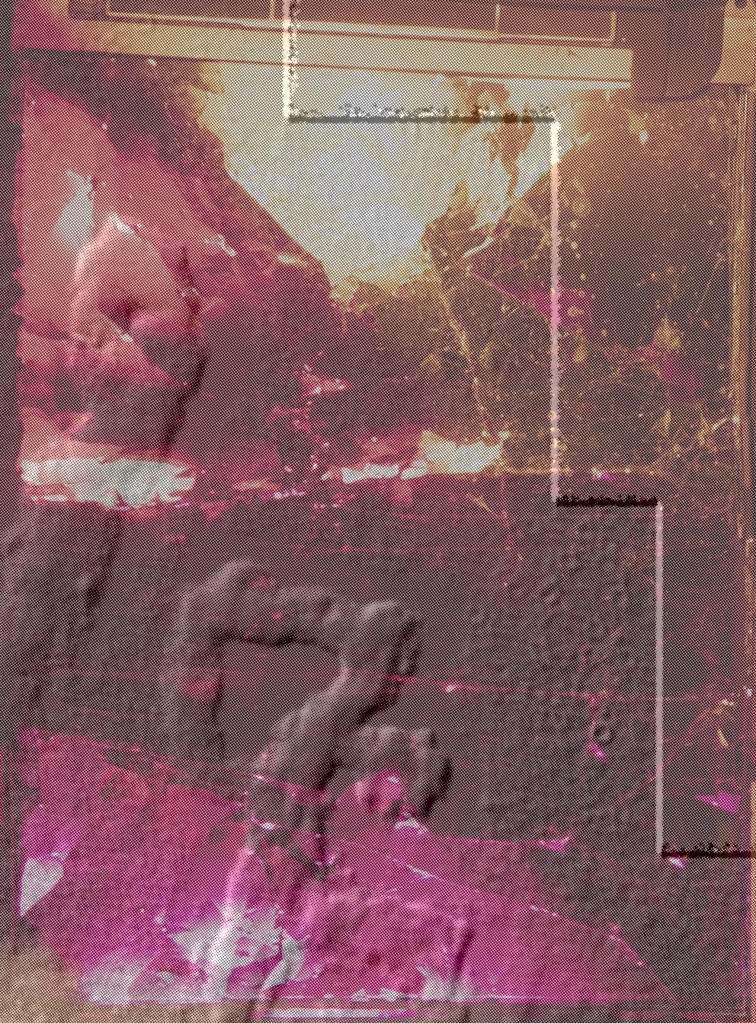

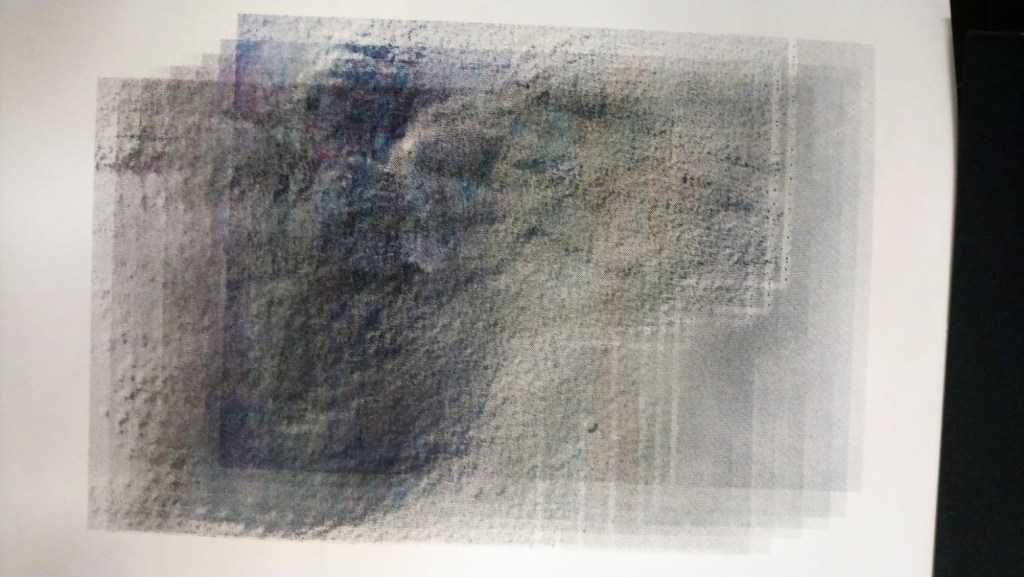
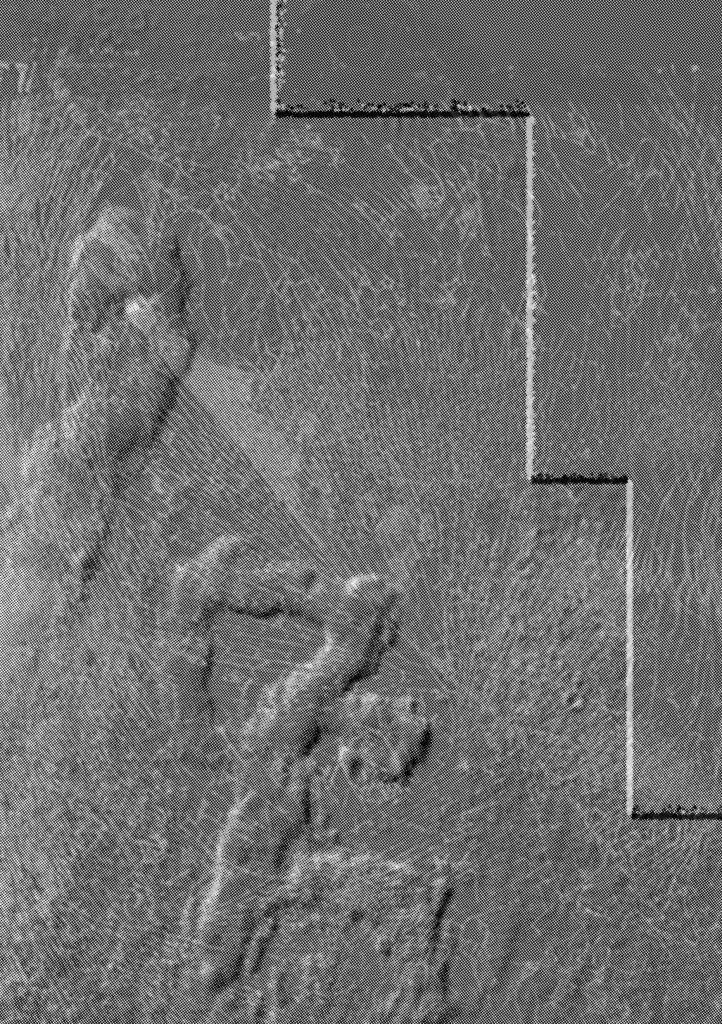
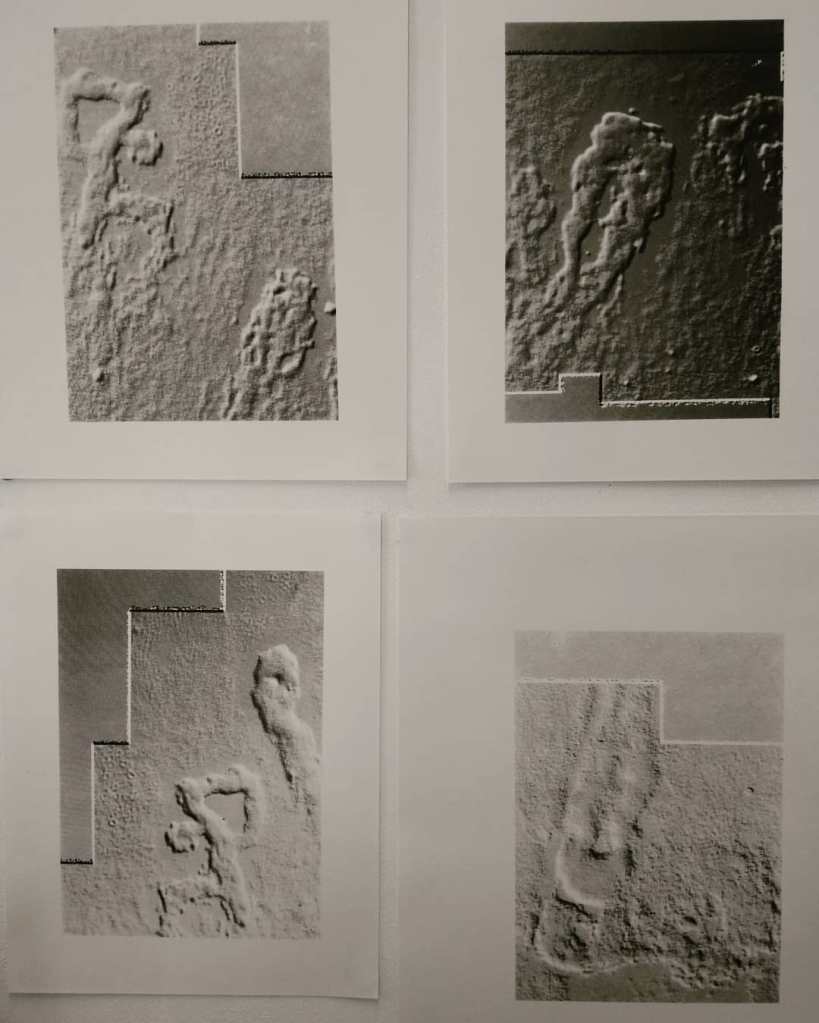
The project produced many interesting screen prints and presented the researcher as the viewer of something normally unseen by the patient that holds the information about the condition, and its progress. The researcher was able to look at her own nail folds and that of colleagues, recognising patterns and seeing images appear, the notion of the normal and the abnormal being beautiful is fascinating.
The imaging devices flatten the image so I made paper images to try to imagine the depth between the shapes.

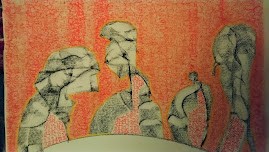
This began to introduce a human element which is important to the researcher in all aspects of recording and writing about the work. The sketches that I made subsequently were recognised by the researcher as human beings in pain.

I went on to reuse these images but for now I am not sure where I might go with them. There is also the consideration, as an artist of the difficult subject of pain to consider further.
I want to work towards a 3d image and tried to recreate the lines within the body by using a board,tack and wire.

This was not successful as the shape remained flat.
I don’t want to recreate the shapes, seeing them closely has revealed some interesting patterns but for the next step I will consider the biology and the information from the patient which we hope to gain as the project progresses and funding becomes available.
7 Stories is a project for a proposed piece of work for the Autism Criminal Justice Service at Salford University. It began with the brief to produce work for an interview room which houses many people who are involved in the criminal system from students to people with autism who are involved in crime. It was a difficult brief as so much of art is open to interpretation and could be too distracting or misunderstood.
After research some of which took place at Venture Arts, I was able to identify the subject of story telling as a common thread and a relatable subject to all possible users of the room.
Theories of 7 stories have existed for some time and are recognisable in culture, seen in film and books. They are: overcoming the monster, rags to riches, comedy, journey, quest and rebirth.
I decided to explore flat images firstly in sketches and then cut out of paper to test their construction as some shapes do not translate on the laser cutter and perspex is expensive to make too many mistakes.
I have chosen Persex as it may be necessary to move the work should the rooms use change in the future and it is sturdy once fixed. I considered images printed on large paper that would adhere to a panel but the cost was prohibitive. This method gives me the opportunity to mix the images and consider the timeline as one story changes into another and the effects of one story on another in life as time passes.
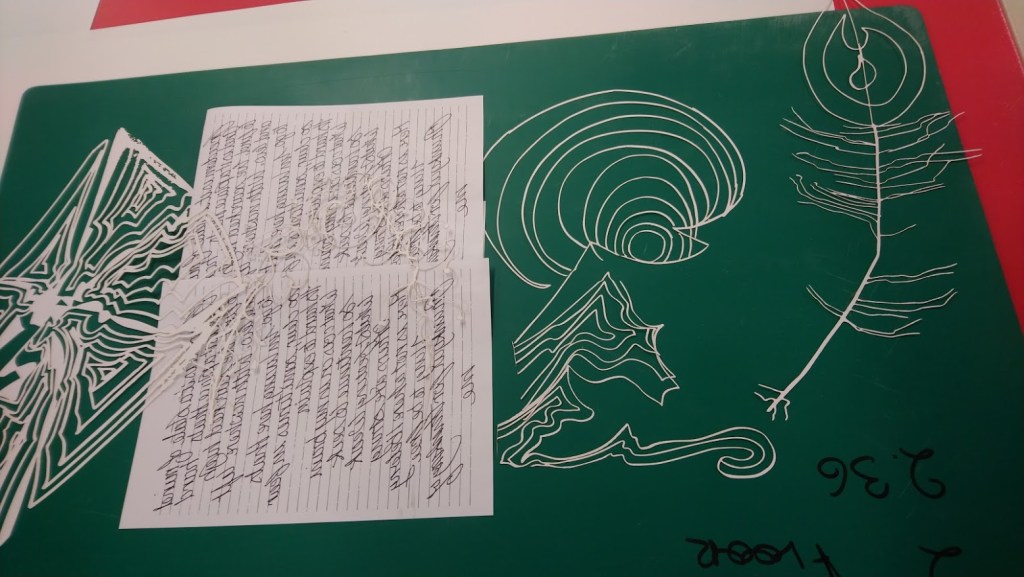
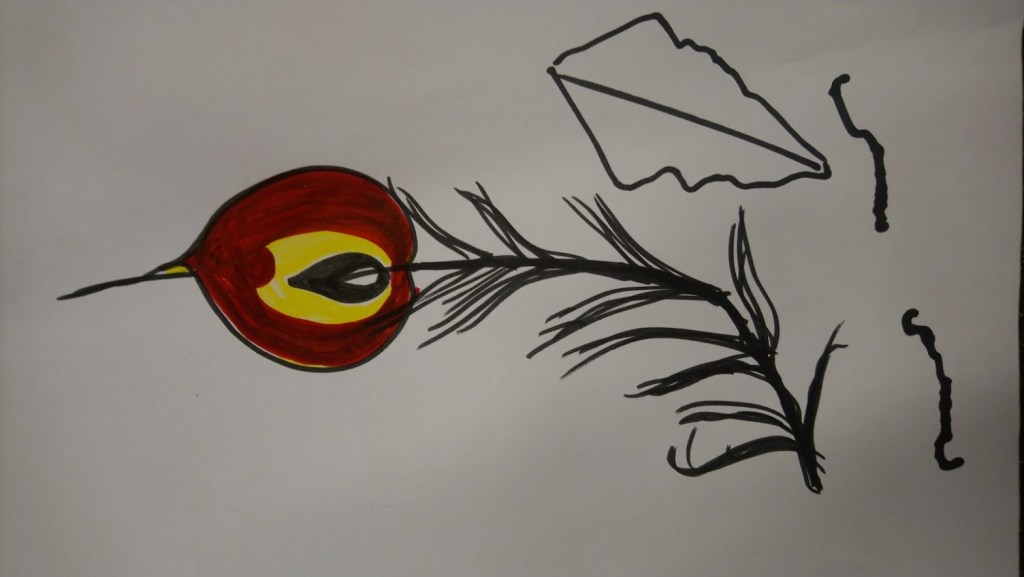
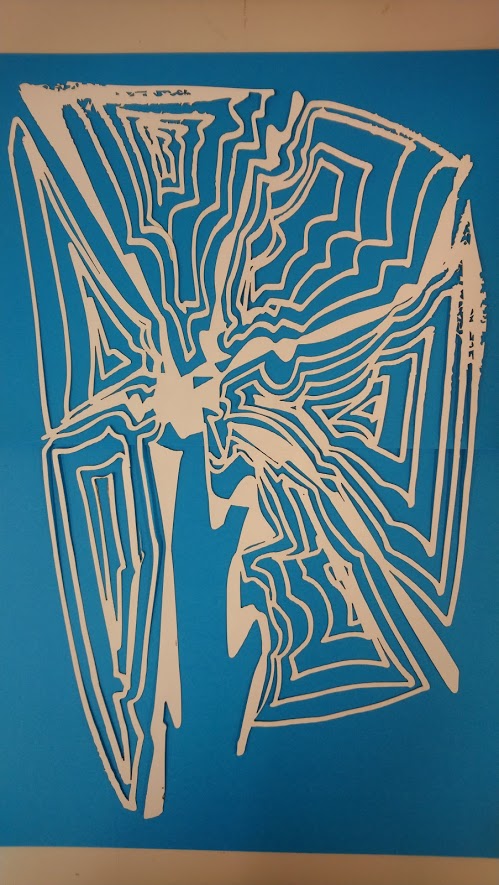


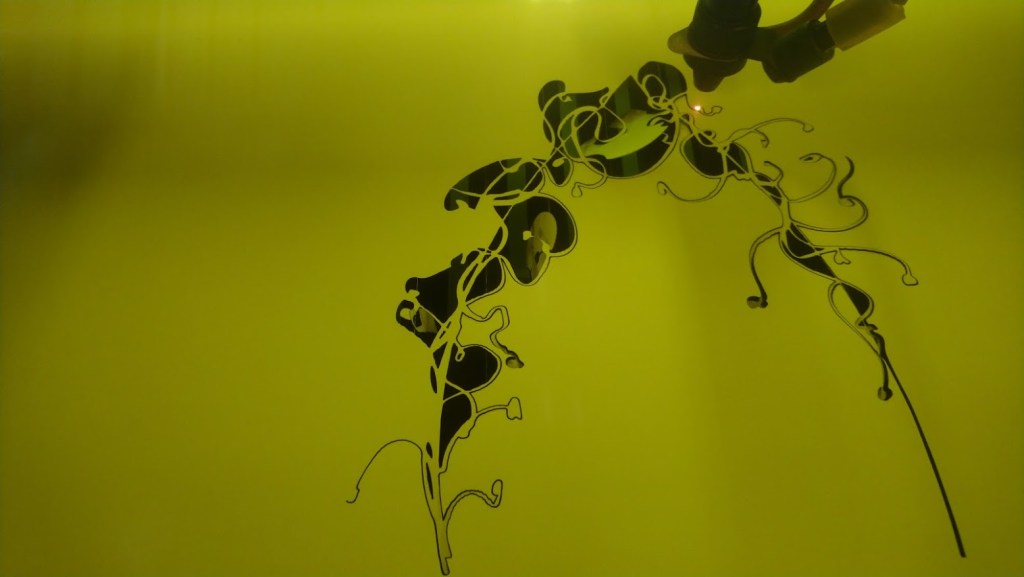
The laser cutter is a useful tool to explore shapes and although some of the images prove too delicate to stand up to much manipulation, I was able to test the combinations with a view to creating something that is moving towards abstraction. I feel that this is important as the viewer will make their own interpretation of the work and see their own stories within it. I hope that the process of abstraction will develop as the work progresses and certain elements contrast and compliment others. This is evident in the mirror perspex – reflection and the clear perspex that can be layered.
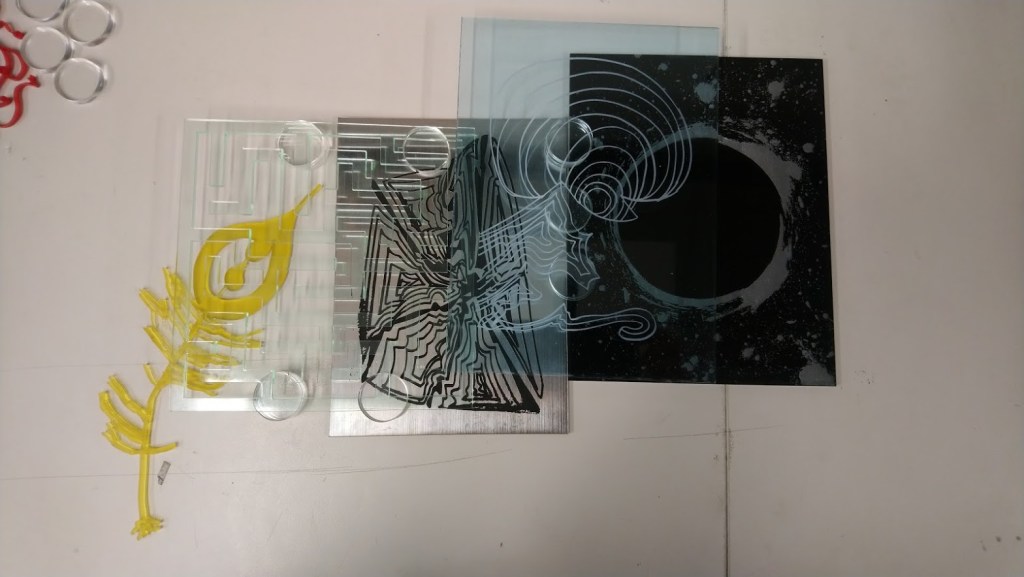
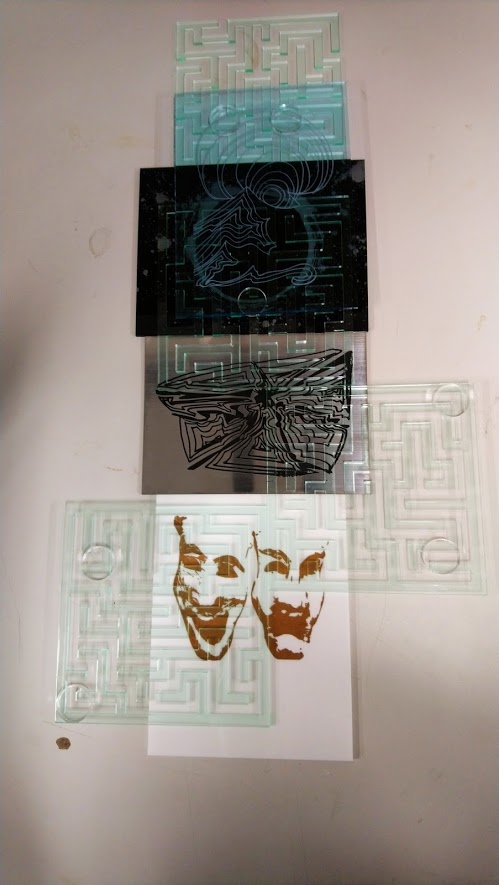
Deciding on the images has taken some time. Some are obvious and others have come from discussion with peers. All are open to interpretation. I will also consider the effect of layering and repetition. The shape of the final piece. The possibility of encasing more delicate images in two layer and the choice of colour as a tool to bring it all together. The use of mirrored perspex is an interesting concept as it creates an opportunity for the viewer to be a part of the story. I do have to return to the position of the work however and will of course check this with the ACJS before I proceed.
The nest step is to secure the funding to buy the perspex and other materials for the final piece. On reflection I have a long way to go before I have an image that will fit the brief. I hope that the process of making and considering the narrative will produce the work. It may be possible to simplify and reduce this to a more succinct image. I believe that the concept will be better served with an explanation. I hope that it can form a talking point that will be useful as well as an image to contemplate.
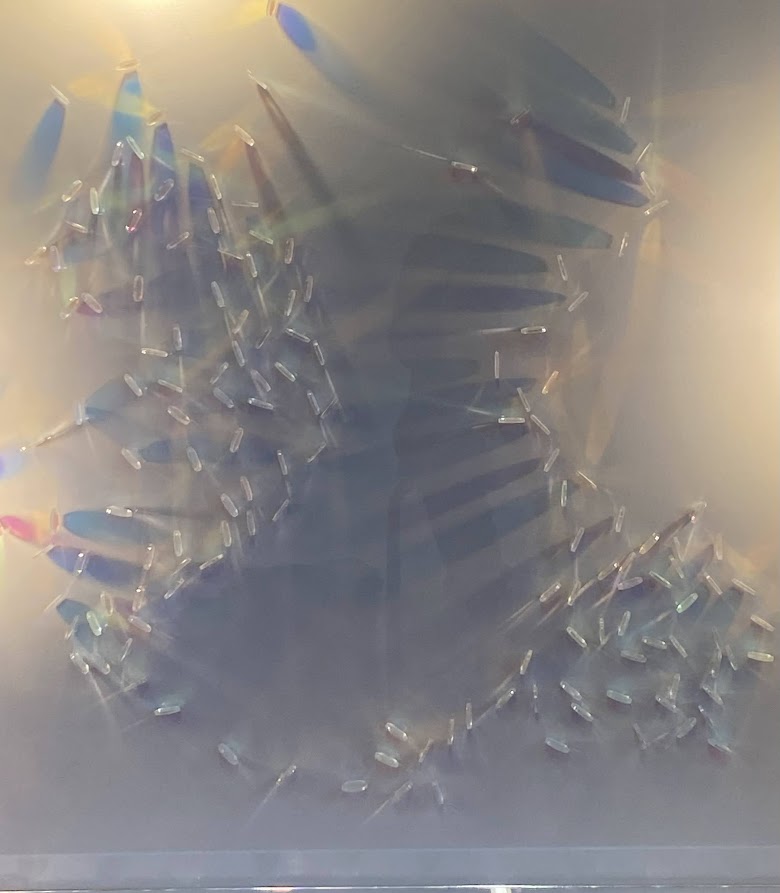
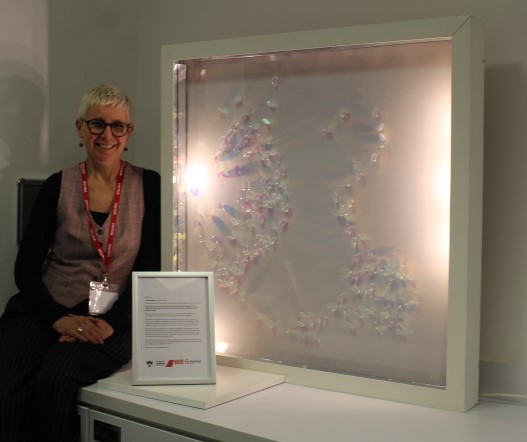
Material Description – Dichroic Acrylic with Computerised Light Sequence, Wooden Base and Aluminium Frame.
A Wall sculpture commissioned by the Data Communications Company (DCC) in conjunction with University of Salford and The Maker Space, responding to the theme of energy. This is a Permanent Exhibit at Brabazon House Concord Business Park, Threapwood Rd, Manchester.
As a UOS Fine Art Undergraduate in 2019, I jumped at the chance to respond to The Engagement Team’s open call on energy, curated by DCC who manage the critical information gathered from homes and business through our Smart Meters. My work sought to express the weight of climate change through light, energy, movement, and time. I chose to explore the powerful imagery of a starling murmuration as a metaphor illustrating how energy use and requirements on the grid ebb and flow. My passion for solar energy drove me to create a piece emphasizing the crucial role of Smart Meters in improving the UK’s energy efficiency, security, and emissions reduction. I was thrilled to be awarded the commission with financial support for materials and a voucher. Fuelled by excitement, I set forth to make my art come alive.




In early 2020 a site visit to the Data Communications Company in Brabazon house Manchester gave me a chance to assesses the site and to consider the overall effect of the work when installed: The lighting, the passing of people, the floor and wall colour and to talk to the team about the best position for the work. This area acted as a perfect frame for the wall sculpture and a plug socket was installed.
Captivated by the complex acrobatics of the starlings’ shapeshifting display in the evening sky, I sought to explore how their natural capacity for a shared purpose could serve as an inspiration for society’s data collection efforts to conserve and utilize resources. As my art piece took form, the dynamic shapes created by concentrations of birds provided a unique three-dimensional quality that I wanted to capture and immortalize. Thus, these murmurations of starlings symbolise the power of working together for a greater good.

To bring my vision to life, I chose the luminous power of Dichroic and clear acrylic. As light split into four separate spectrums, a linear beam illuminated the surface; a world of reflection and refraction appeared, allowing me to express a dynamics of movements through this medium.
Feeding off the vivid hues of dichroic acrylic and utilising the angles of small pieces cut to size on the laser cutter I placed them onto a background and the work took shape. By employing a transparent canvas, their soft colours manifested more prominently than when placed against a dyed backdrop. It was at this point I could imagine the finished piece. Drawings and prints helped me to consider the shapes that the birds make without being too representative.

Embossing, debossing and etching.


Colour gradients slipped under the clear acrylic to consider as a base made in photoshop and captured from evening skies.
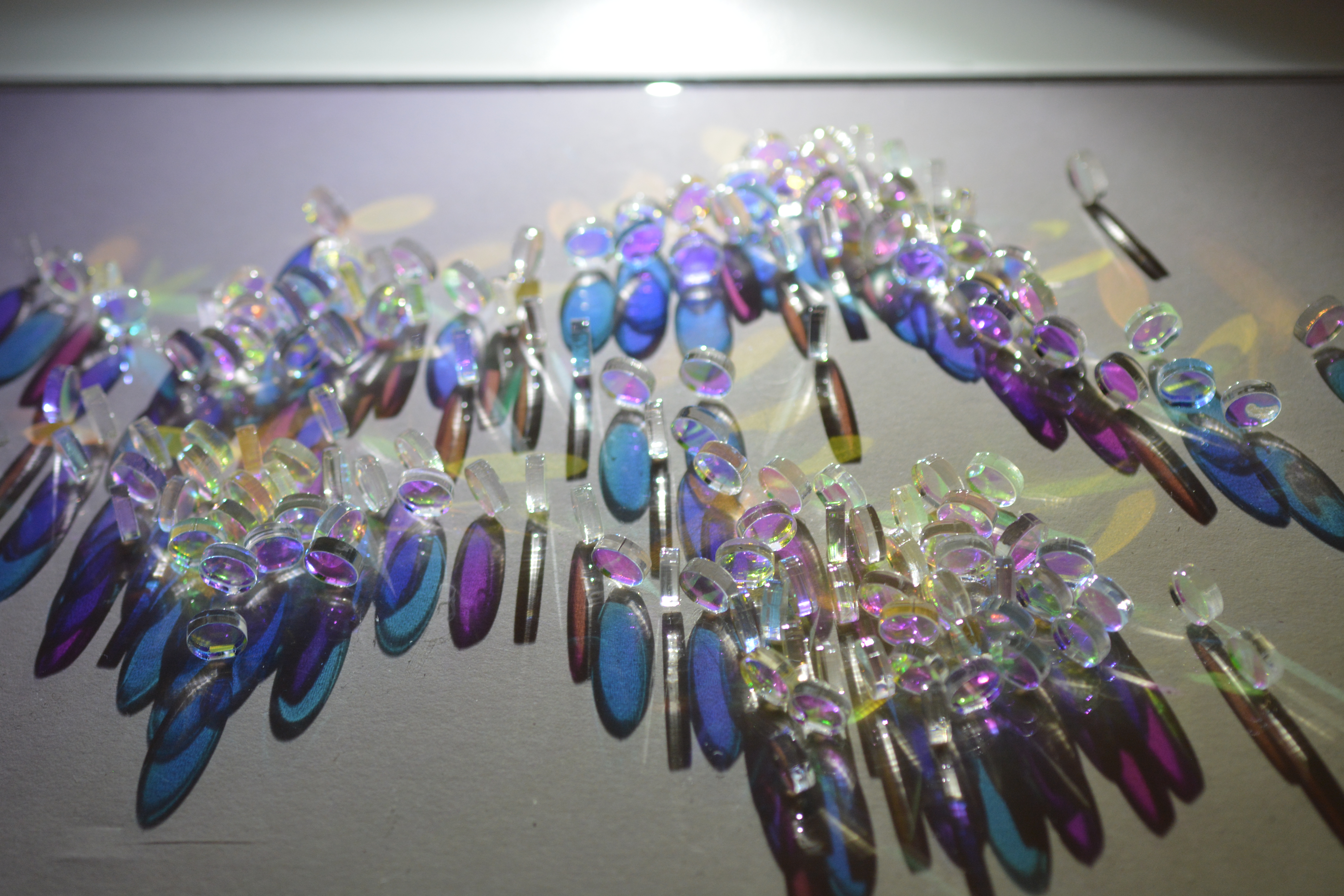
Maquette 30cm x 20cm Dichroic Acrylic and Clear Acrylic
Making a maquette of the sculpture gave me the opportunity to test the movement of light with my phone torch and see what was possible. This work formed part of my final degree submission in May 2020.
The expense of Dichroic Perspex and film limited me to making a small maquette of the intended sculpture. I tested adhesives for permanency and invisibility. Anticipating the complexities arising from enlarging the work to one meter square, I adjusted its base to a perfect square for more controllable light sequence along its edges. I originally intended to incorporate larger pieces of dichroic material than what was ultimately necessary in order to achieve the desired effect – which turned out to be more delicate than initially estimated – creating a look that was tasteful and not overbearing.

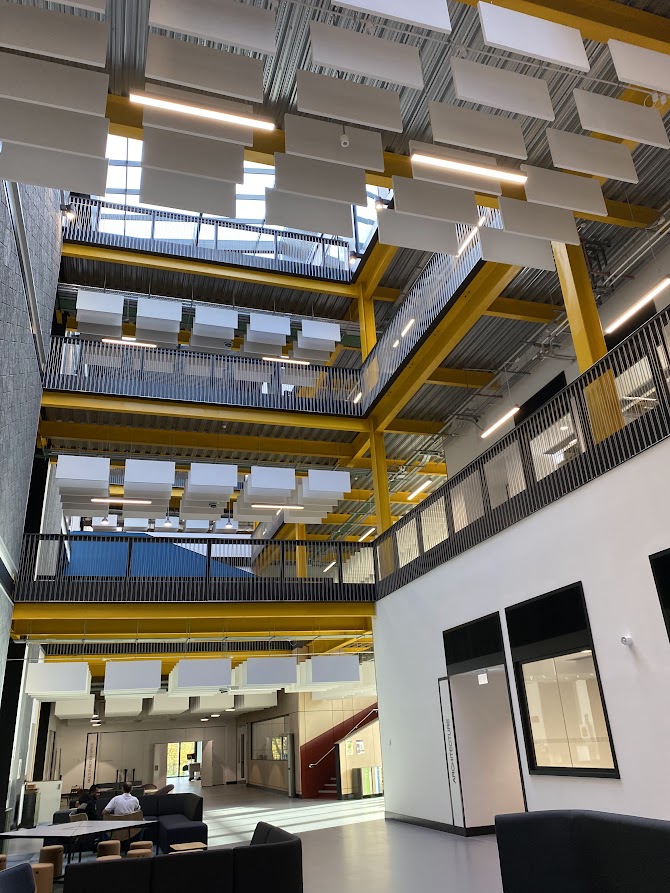
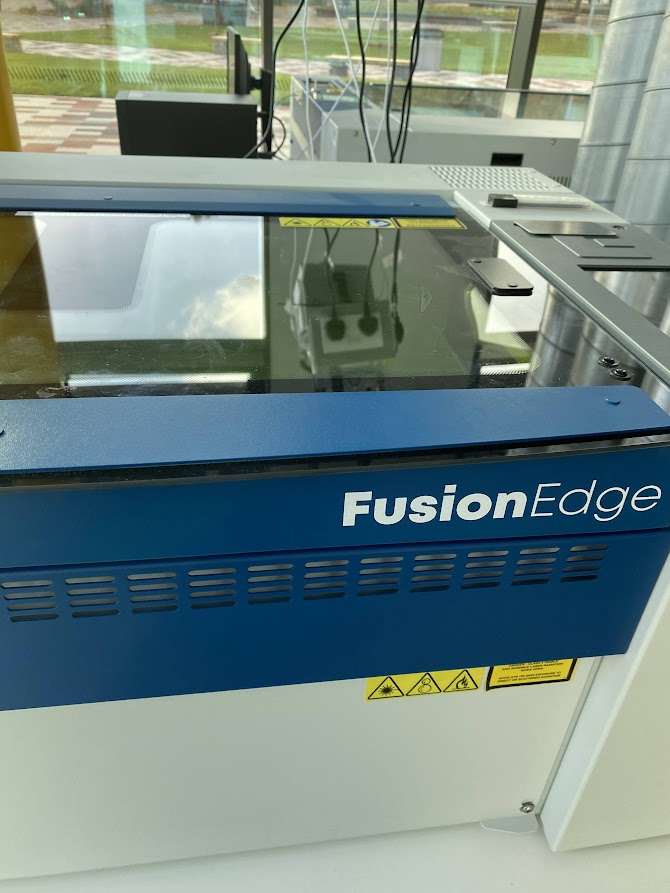
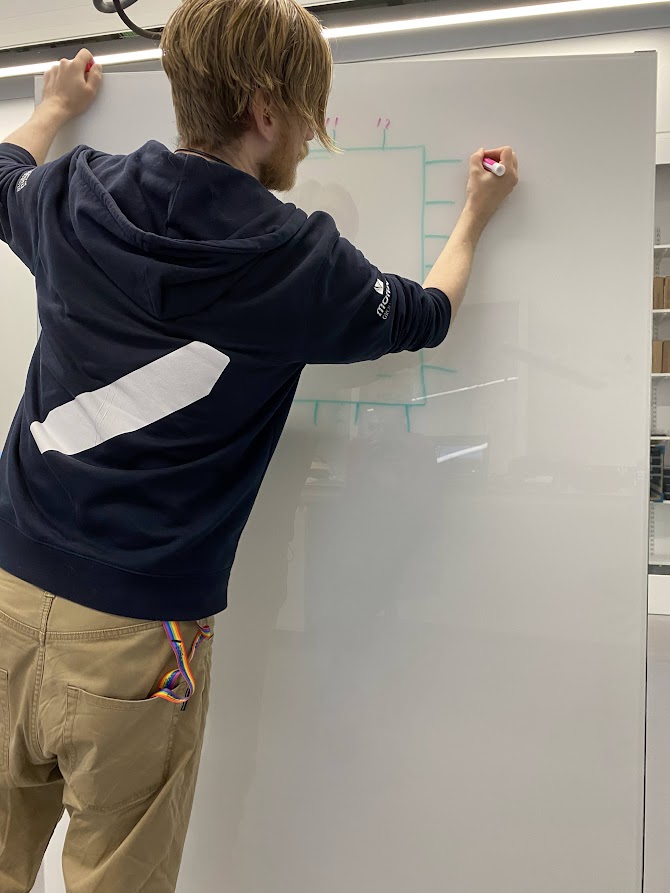
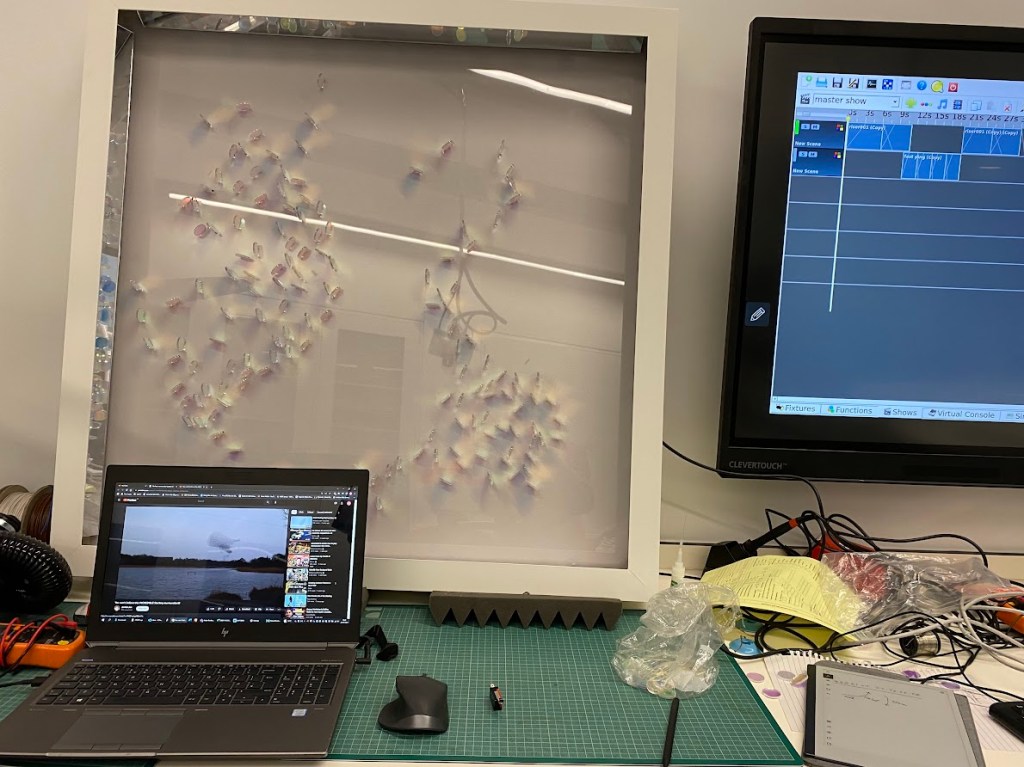

As we emerged from lockdown, it was decided for The Maker Space to take over production—a facility that is cutting-edge and specializes in digital fabrication and additive manufacturing, supported by the Morson Group. Working with George Dodgson (School of Science, Engineering & Environment) who’s experience in electronics, lighting and animation helped tremendously to bring the idea to life. These periods were interrupted by the department moving to a new building on campus and the amazing work that the team did in producing PPE. It was lovely to be back at Salford University but a very different experience as many staff were working from home, so getting deliveries to a specific points proved challenging. Also each laser cutter behaves differently so settings had to be recalibrated and tested until the small pieces were perfect. The frame was finished at the 3D Workshop and spray booth, with the kind support of Tim Bailey. Working with The Maker Space has unlocked many opportunities for creating together in the future—an invaluable resource for any creative!
As I delved deeper into the research, a mesmerizing choreography of movements was revealed, which, with George’s help were translated into light sequences with a DMX digital light controller, described as: Echo, Directional Passover, The Big Cross, Sweep and Reduce, Centre Space Emerging and 1234 data ping. These were then layered into singular and multiple combinations evocative of cinematic frames – an incredibly satisfying stage that also hearkened back to the original brief. We interpreted and pinpointed accelerated speeds as well as luminosity for each sequence, gradually merging and parting with echoing and attenuating effects. It certainly proved troublesome but exhilarating. George’s proficiency, process knowledge and patience made it all realisable.
The piece is effectively a computer and can be shut down safely with a monitor keyboard and mouse. Through continuous testing in the Maker Space we ensured that there was no risk of overheating and that the energy consumption was comparable to that of a light strip. Using a light meter, we agreed on safe levels around the sculpture that enabled viewers to experience the work in its entirety.

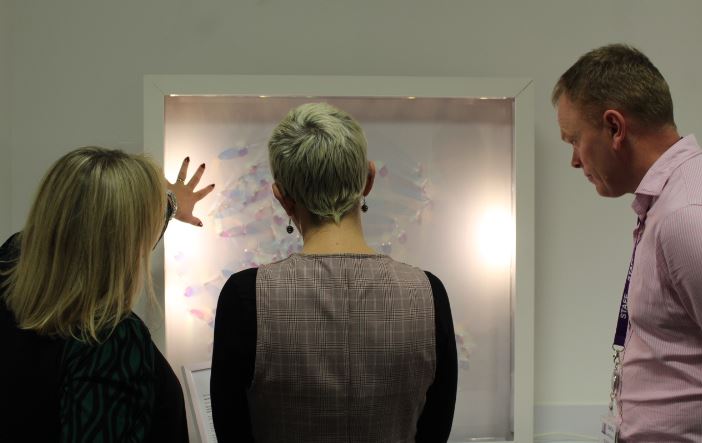
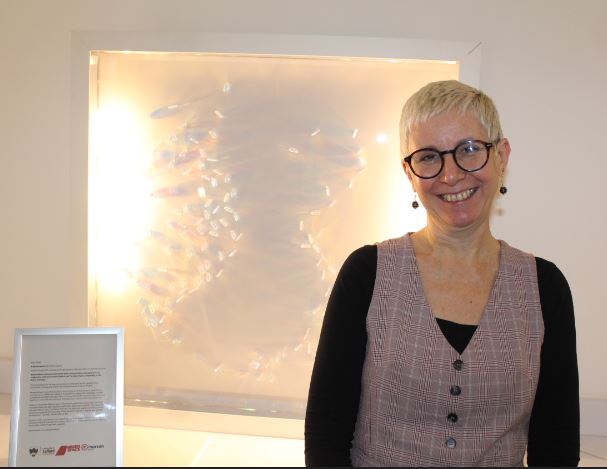

The sculpture is placed in situ ready to be mounted by the Facilities Team. The work is better experienced and difficult to photograph. I will update this blog when the work is installed and hopefully have received some feedback.
Reflection: The global landscape of energy has changed beyond recognition during these last three years. Is it still pertinent to use energy, money and time to draw attention to this subject in the form of art? In 1757 Edmund Burke coined the phrase ‘sublime’ describing it as ” a “delight”, but one that is tinged by its proximity to danger: it is “a sort of tranquillity shadowed with horror”, even “terror”. As the viewer immerses themselves in the artwork, I seek to evoke a sense of tranquility igniting a bridge of realisation leading to one’s own action. Nicolas Bourriaud curator and writer, talks about artist’s use of the sublime in Planet B Climate Change and the New sublime. He asks if the artist’s response to these issues is superfluous and bourgeois, appropriate or even useful? He raises the point that it is in the name of the ‘useful’ that we are destroying life on earth and that the antidotes to this destruction may reside in the realm of the none-useful.
Influences: Olafur Eliason, Henrich Bobst and Nicolas Bourriaud
Links:
The Data Communications Company: https://www.smartdcc.co.uk/
Maker Space: https://www.salford.ac.uk/our-facilities/maker-space
Nicolas Bourriaud: https://www.lespressesdureel.com/EN/ouvrage.php?id=9423
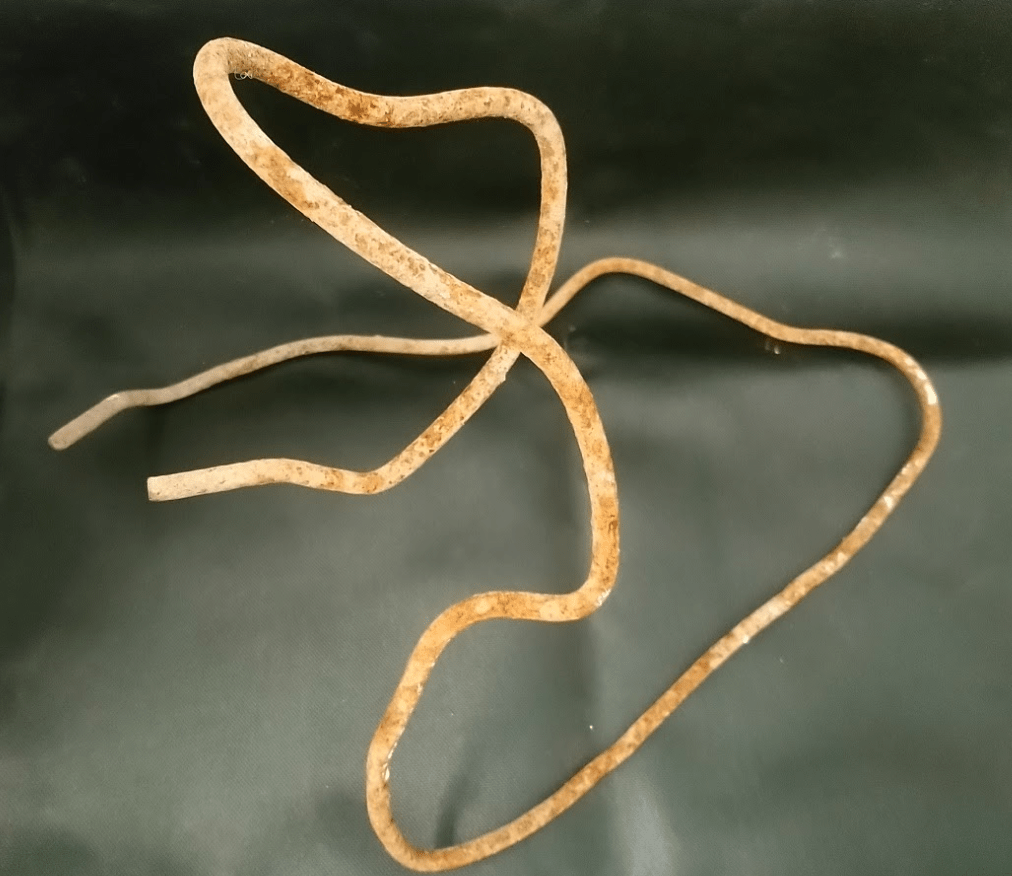
On my second trip to the site less of interest was available as new material had covered much of it. This caught my eye it is .75 meter and is bent beyond recognition but still maintains a reminder of its original use as a support of some kind for many years, then its destruction has left it bent in a sculptural way. I felt when I saw it that this energy traveled around it still and I wanted to make it into a solid unit to form something new. Cornelia Parker has utilised destruction in much of her work and the contrast of the ‘broken’. We can find beauty in destruction perhaps it is a human desire to destroy things so that we can begin again?
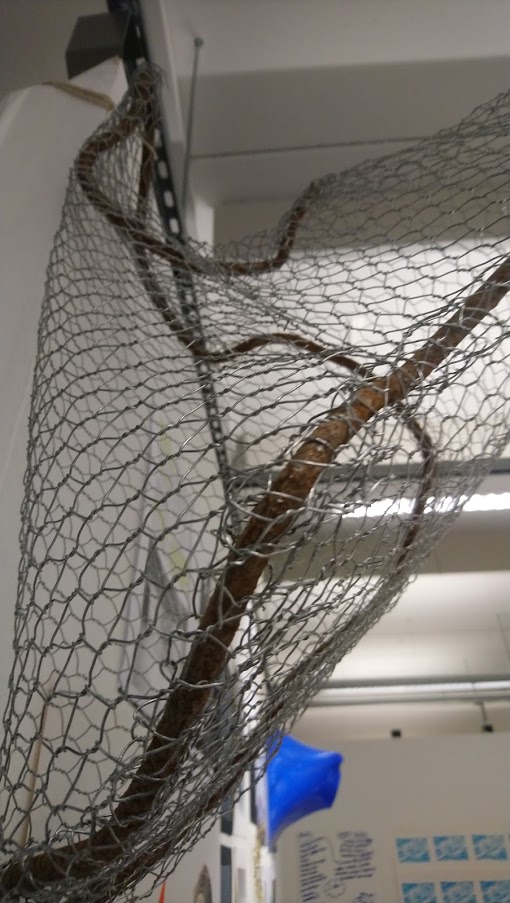
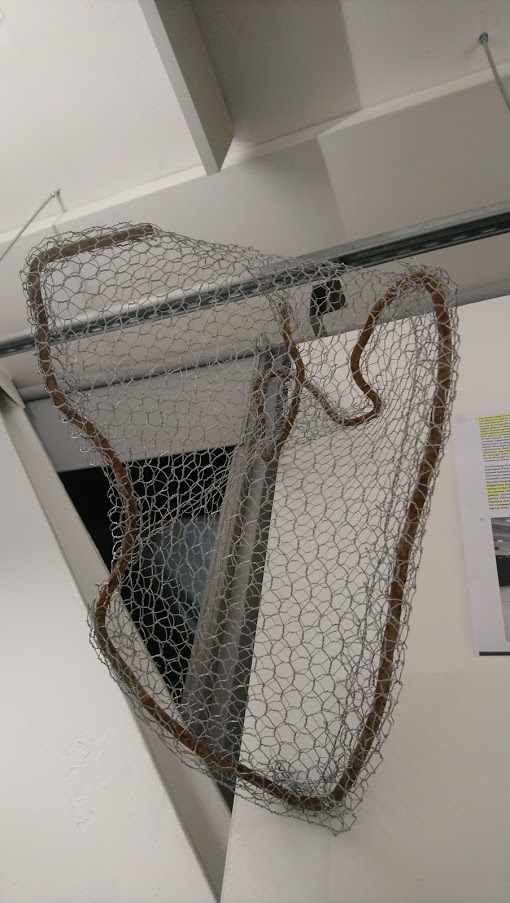
Again I don’t want to loose the object in the work. I am considering returning all of the objects back to the site. The chicken wire is solid enough for me to imagine the planes of the object as a solid. My original idea was to encase it in metal and hammer in scientific calculations.
Once the chicken wire is cut and bent around the frame, it is possible to change which planes meet. There was a lovely bend which followed the edges so I might want to use a flexible material rather than cast the objects as a solid. It is quite interesting in form because of its transparency – this is my first experience with chicken wire and I think it has helped me to imagine the four sides of the object which is always the difficult part of making a sculpture. I hung it to view it and think about the next stage as I don’t feel it has a front or back, it exists as an idea and is beginning to take shape.
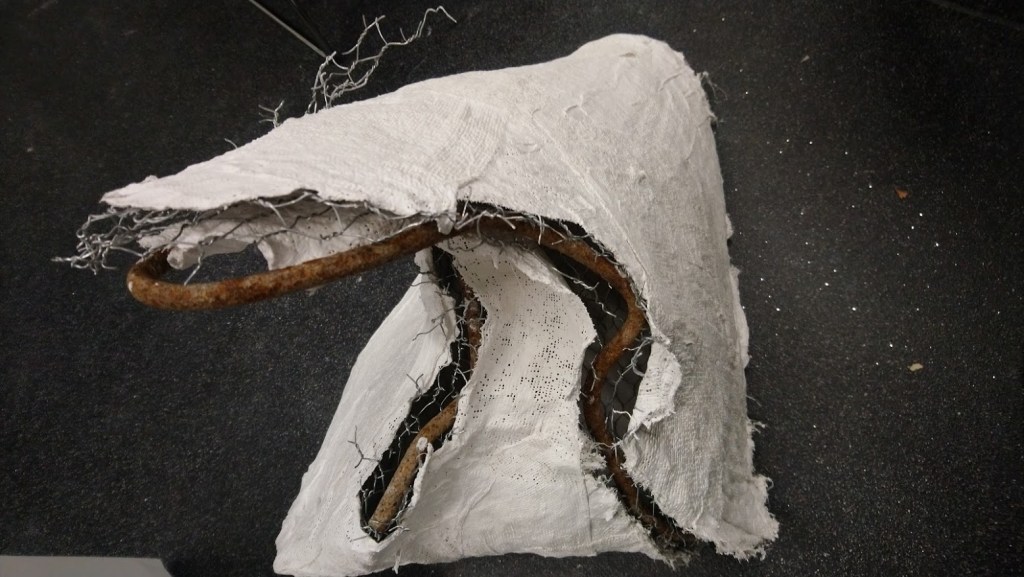
Cutting away the mudrock to remove the metal. I now have the planes in a physical form and will put some thought into how to proceed.

I returned to the photography studio with coloured gel sheets that affect the light. I used different mixes of colour to experiment with the effects and think about the energy of the object. Light is a form of energy and changes what we see from different directions. This is inspired by the work of Olafur Eliasson – each person can be have a very different experience yet be sharing them in the same place.
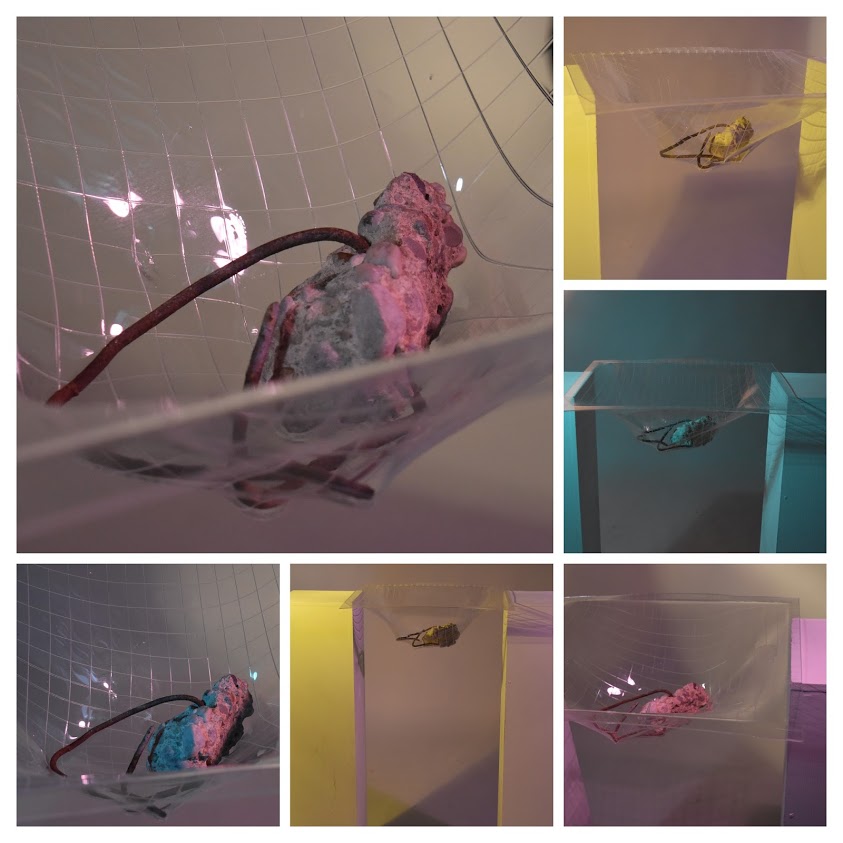
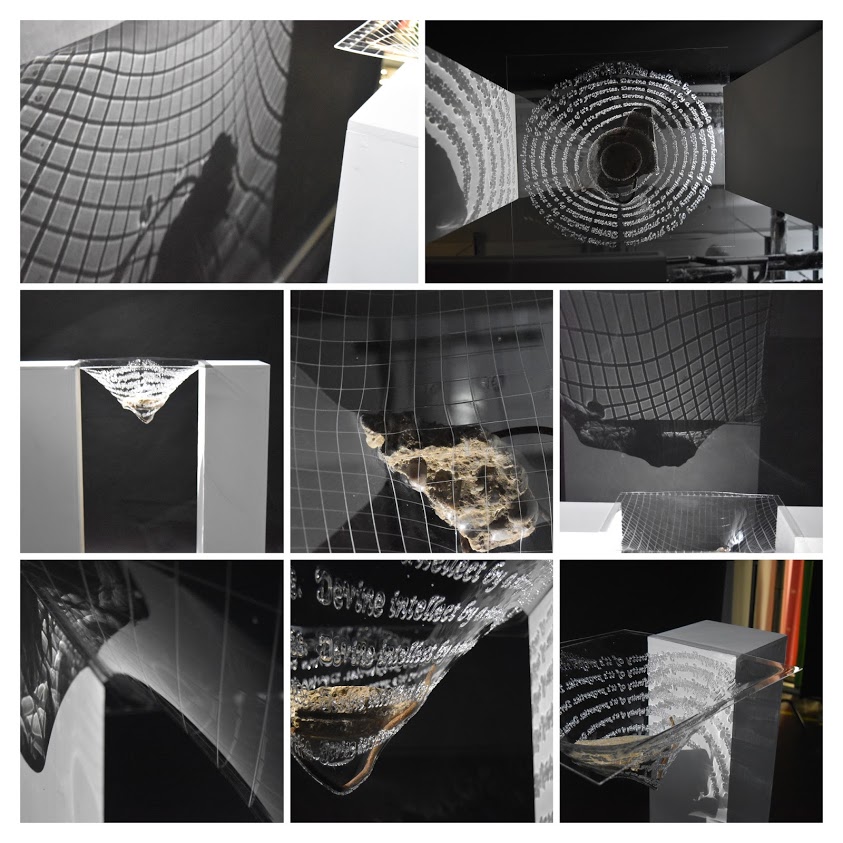
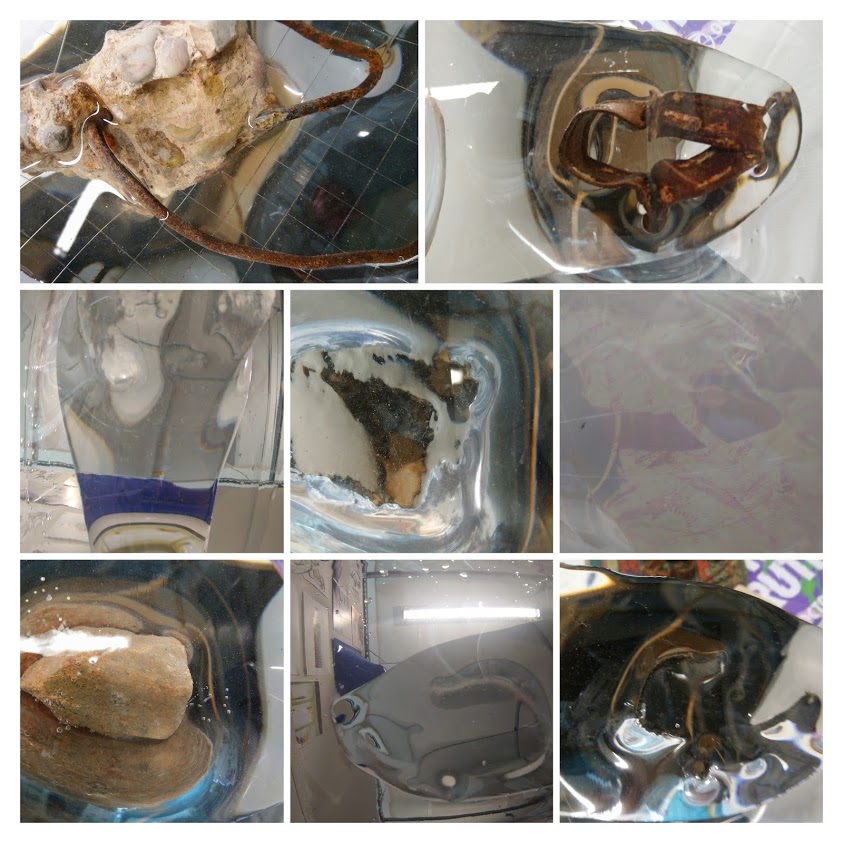
Using water with the objects and without (a void or vacuum) to explore the space and movement of light. This is very dependent on objects around in the studio which I tried to black out with fabric but did not have much control over. It is a metaphor for entropy lack of order or predictability; gradual decline into disorder.

Using the reflected light and shadow as the object but keeping the pedestals is creating new work and images that raise the question for me what is the work, the object or the light. This brings me back to the research on Eliason who supports the theory that the viewer completes the work. It is as if the camera is the viewer Understanding our relationship to the work and the space in a physical way.
The text has deteriorated into what could be seen as chaos.
Using light in this way and seeing the work in different ways is evolving as a norm in my investigations. I would like to investigate this potential further and work on a project where the light forms a larger part of the final work.
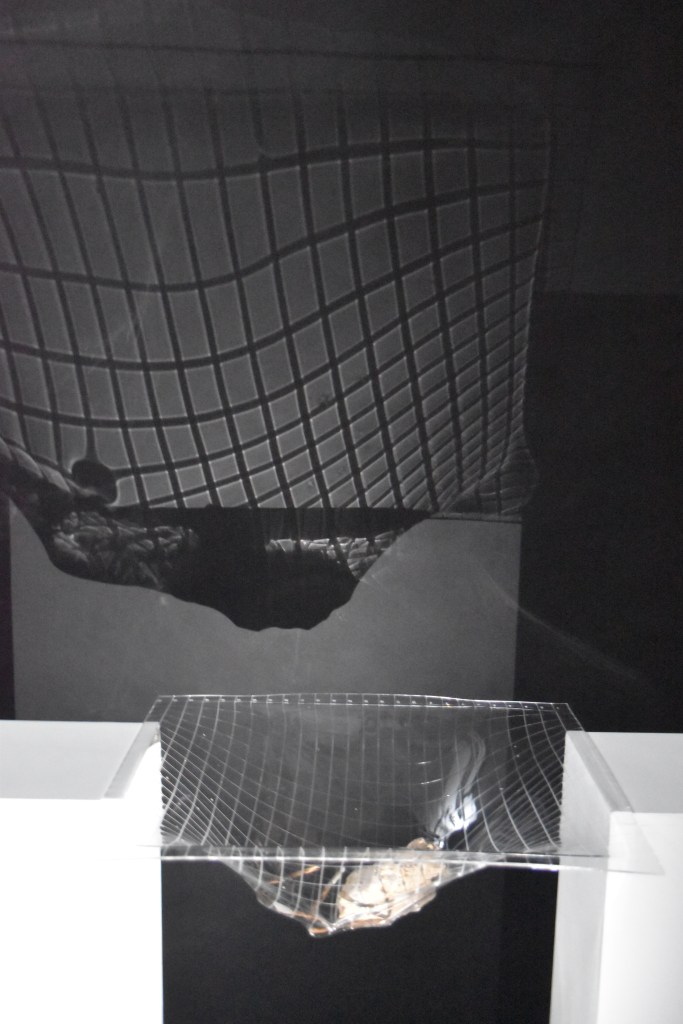
I considered concrete blocks with using clay but wanted to expand on this without encasing the objects permanently. I am trying to combine my research such as the work of Mathew Ritchie, MIT and the Broad artists who make art work driven by science and scientific research. I am considering the possible narrative and energy remaining in the objects. The Perspex is flexible and to force the object as it was when it was hit by the wrecking ball. I etched the graph paper on a laser cutter in a basic form with squares and numbers on the edge and sat this in the vac form oven without the extractor on so that the only thing affecting it was pushing down action. The benefit over the oven was the lop that held the square in place.
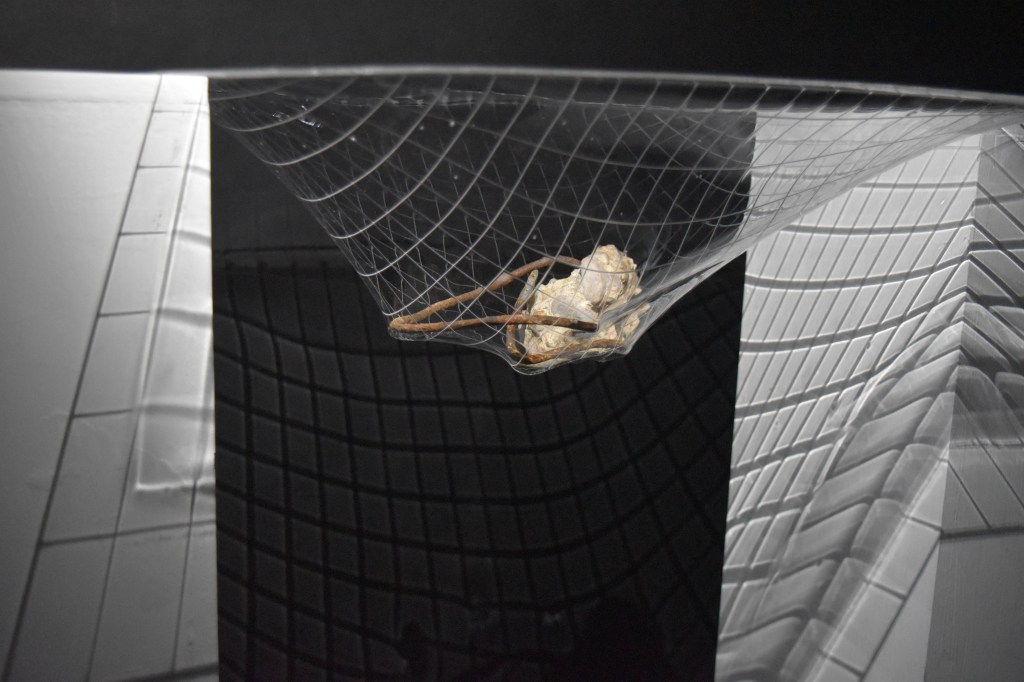
This worked really well, the Perspex bent as in scientific diagrams illustrating time bending around an object and the force was just enough to create the shape without breaking it. This creates lots of possibilities for me to develop further ideas and metaphors for the energy around the objects. The light reflects around in interesting ways. I intend to try some colour light filters and experiment further.
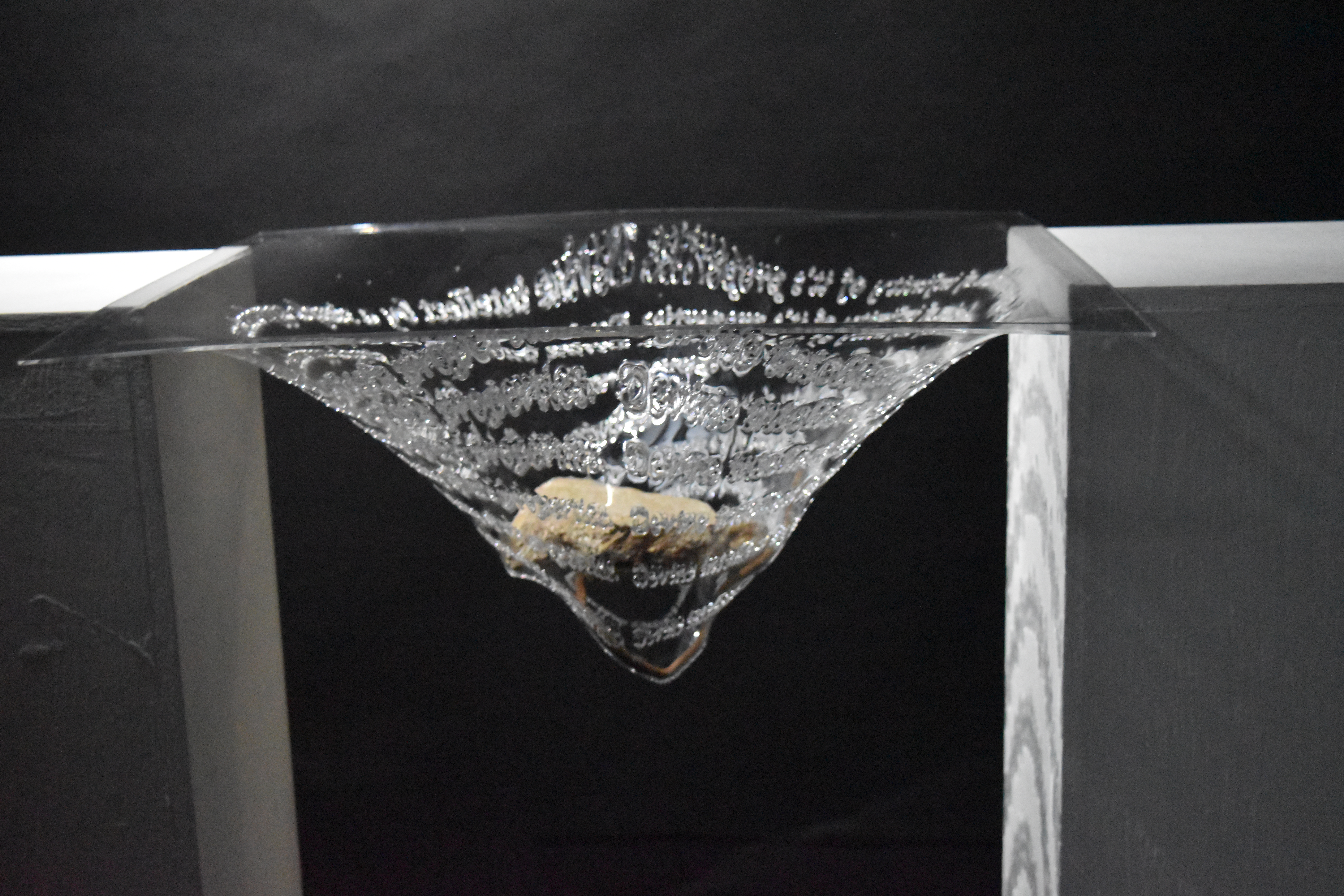
I repeated the process with a larger object and scribed text on the Perspex with the laser cutter. This stretched the words to breaking point but left them legible and I wondered about making holes in the original shape to see how they change. Pushing the object to breaking point feels like something I should try.

The text is a line from a 17th Century book by Galileo – Divine intellect, by a simple apprehension of the circle’s essence, knows without time ‹consuming reasoning all the infinity of its properties.

Two objects pushed to different levels made an interesting shape relationship that an be investigated further. Acetate is a cheaper option too than the Perspex. However I am aware of the environmental cost and would like to explore recycled possibilities.

Work in progress…..
These objects are of particular interest to me as they are sculptural, have a wonderful contrast with the stones against the concrete and steel. I felt that the energy inside these objects and the life that happened on them was still contained inside them.
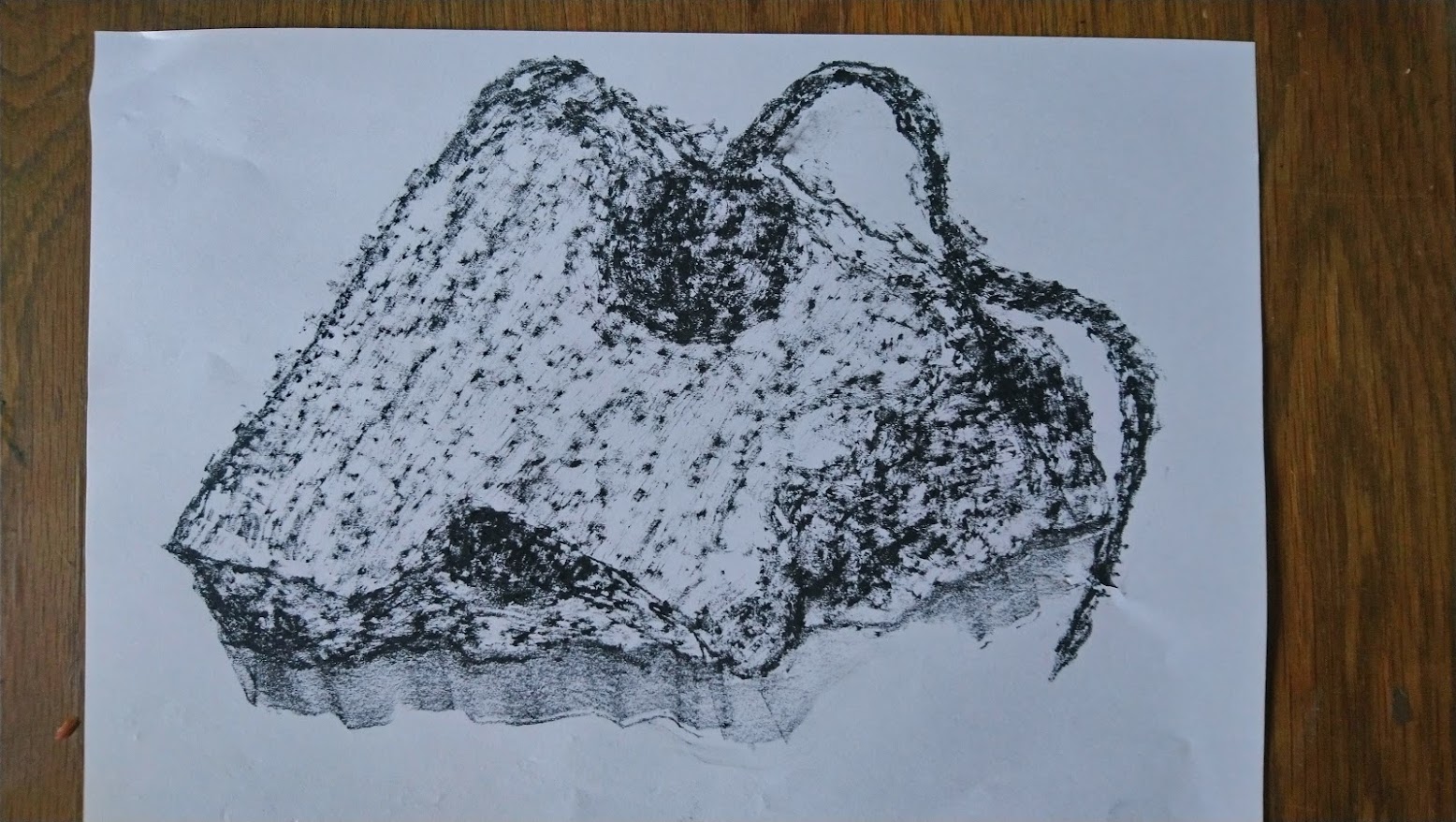
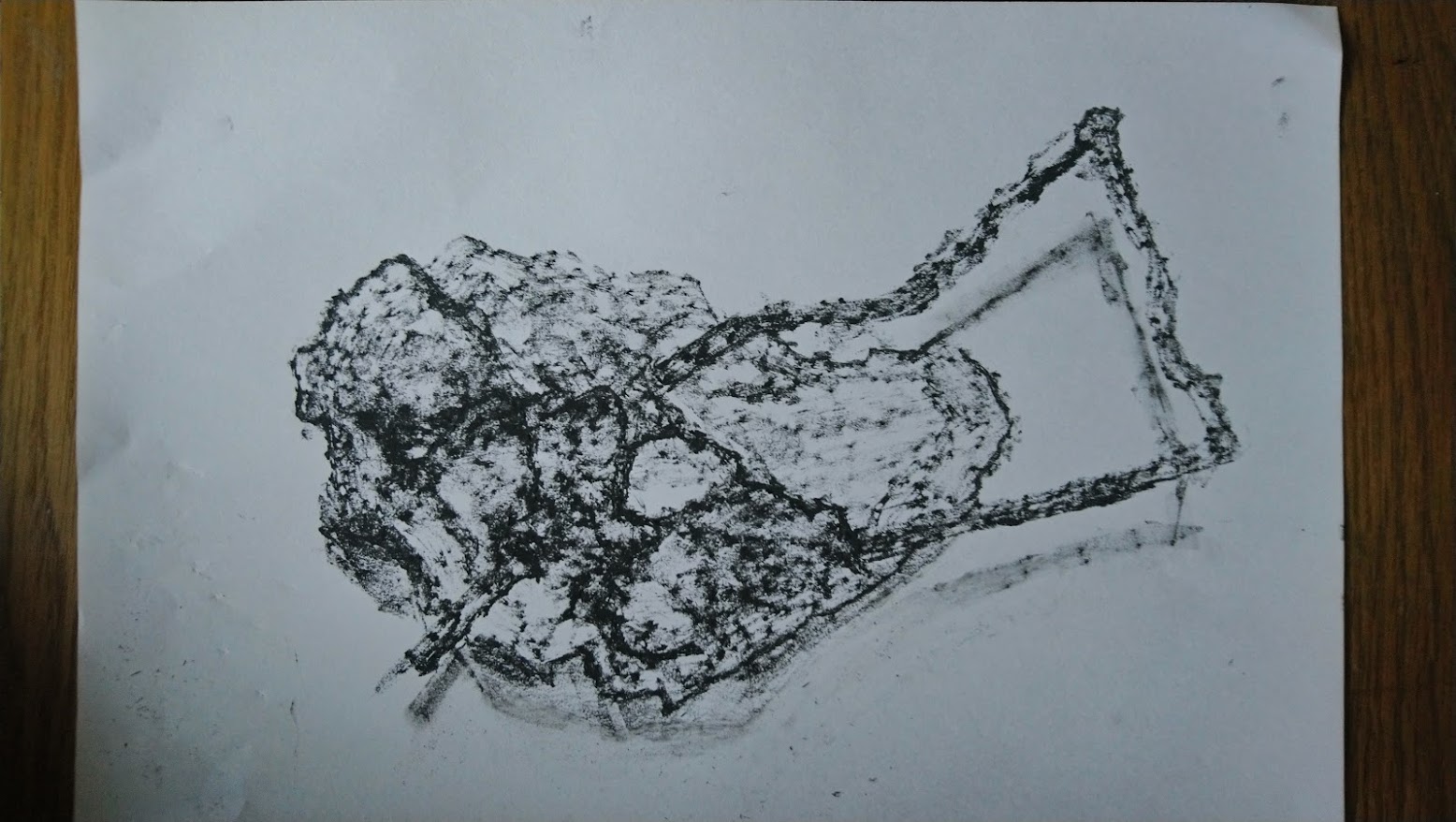
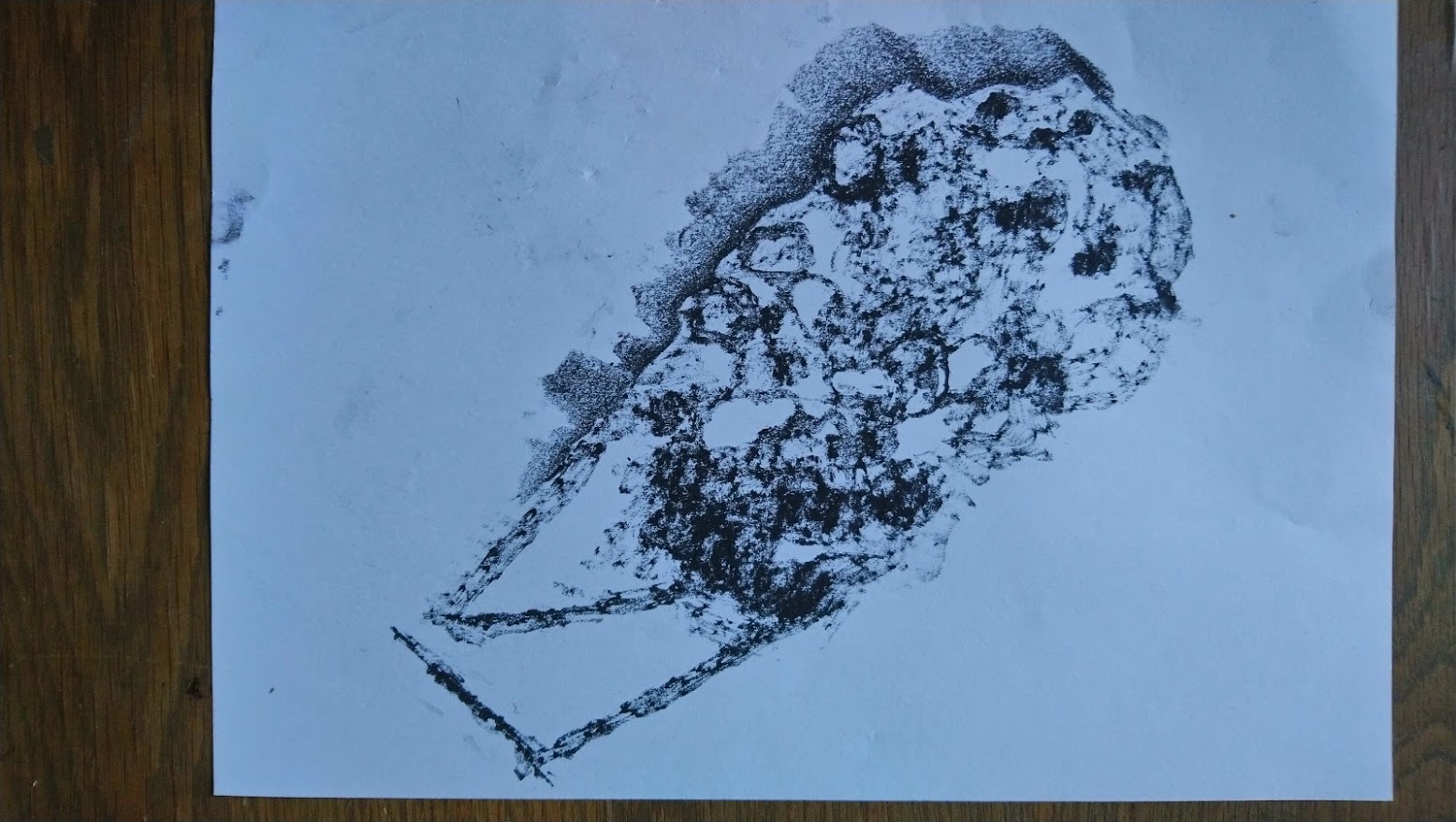
Sketching them in charcoal helped me to look at them a little more.
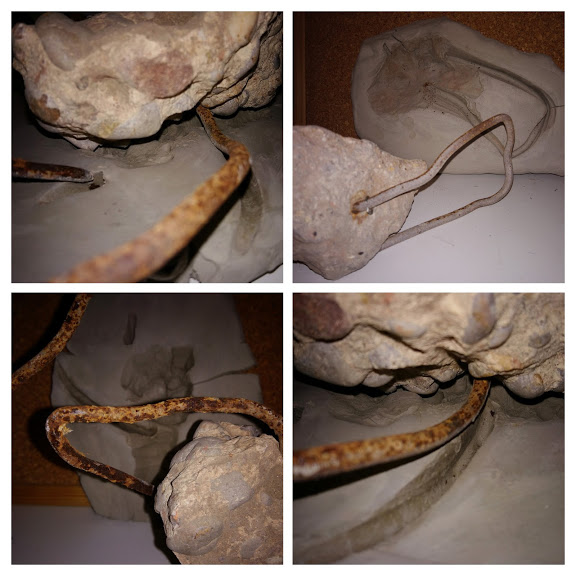
I made some impressions in the clay. This led me to think about the energy as they were forced into the air to become the rubble, forcing them into the clay. I did not at this stage want to reproduce them, just explore their shape form and texture as I considered the next step in capturing their energy.
I filmed the objects moving and still and thought about the science of the energy being displaced around them.


I rearranged the objects to photograph and sketch. Putting together each item and imagining its history – a floor painted and a light fitting that could have been used by generations, wall ties that held the house together.

Making the space negative by filling it with clay then the objects In the space are part seen and exist in a 3d shape. All related to the objects from the house. Displaying the entropy of each object The glass – seeing the before and after. To put the objects together is to disrupt the entropic process, speed it up or slow it down.
I will explore the space in and around the object and find methods of making work which help to maintain the object not encase it. This plays a part in the narrative of the object and it’s existence. It holds an energy and history of human life from the demolished house, it has a place in time as it exists in an imaginary funnel as it has a beginning middle and end.
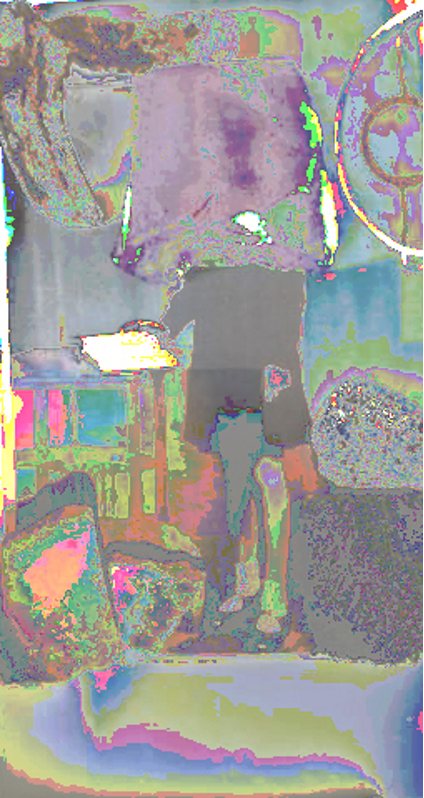
Work in progress……..
Using camera-less photography gives me the the ability to combine objects and collaged photographs. These need processing to stop them developing so have to be kept in the dark until then. I scanned them in the printer to give me the image. The paper is particularly light sensitive and detail of the features appeared. The process is known as Lumay.
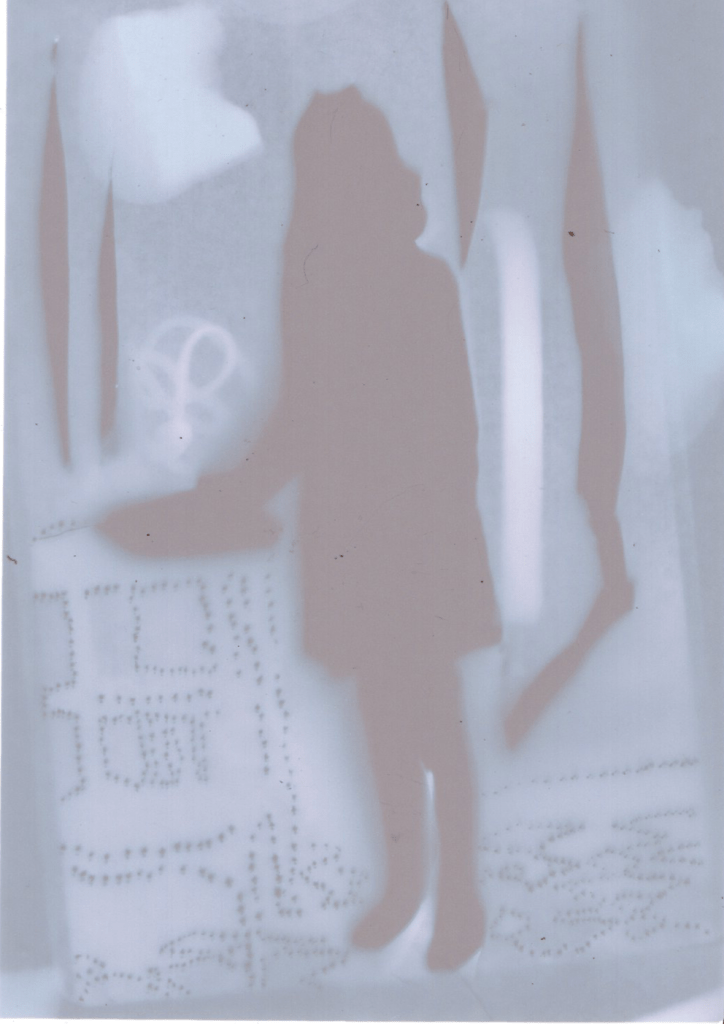
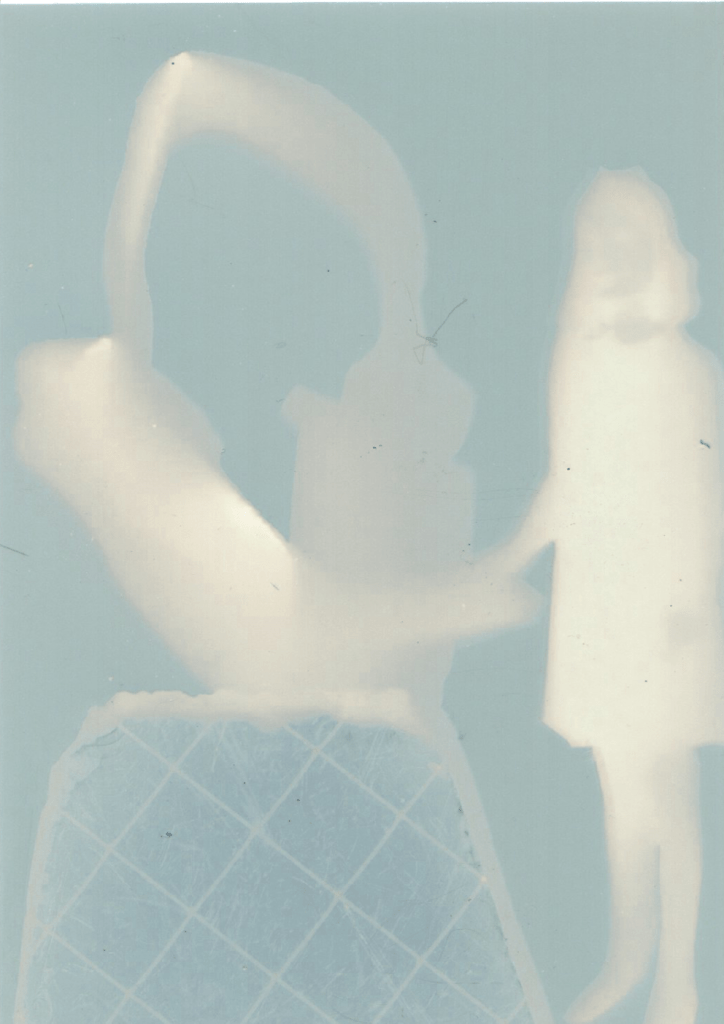
The above image is glass and a wall tie with a cut out of a photocopy of the girl in the photograph. This re-organising of people and objects presents us with size, time, the human and the fabric of buildings as they deteriorate and still exist in a different state quite beautifully together.
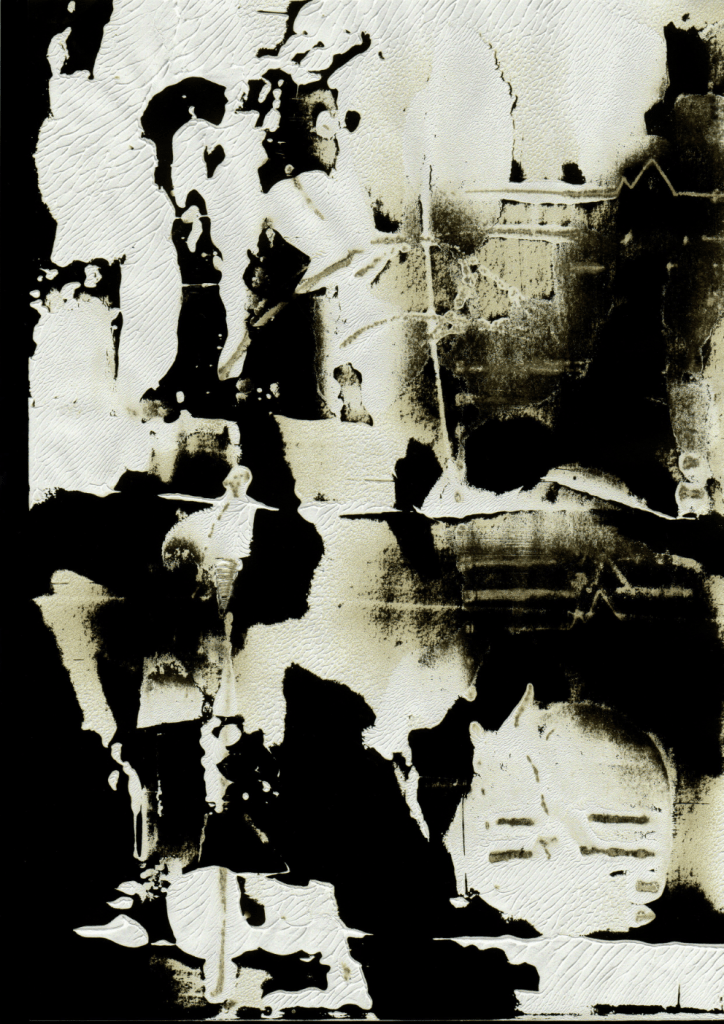
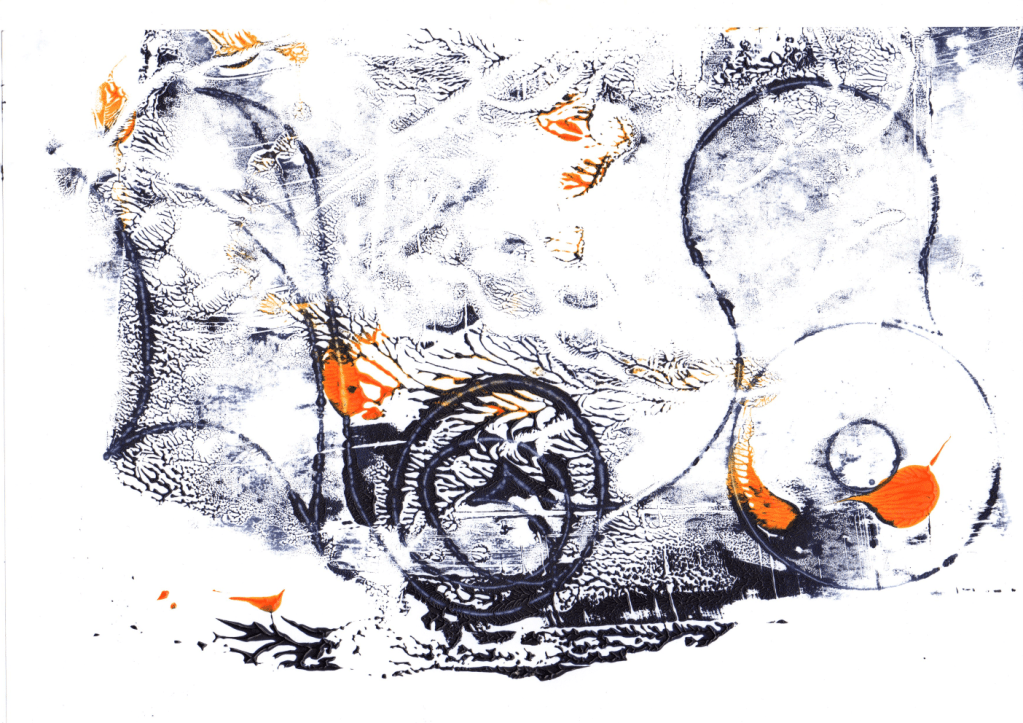

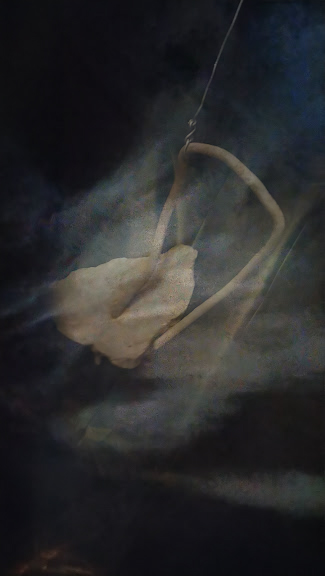
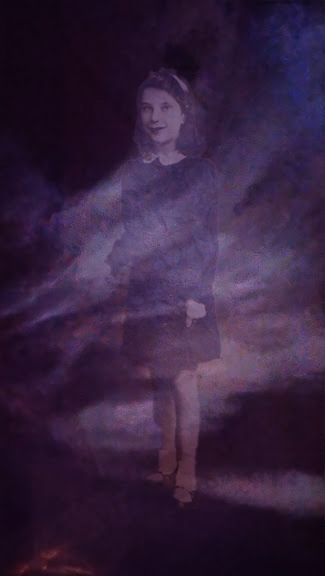
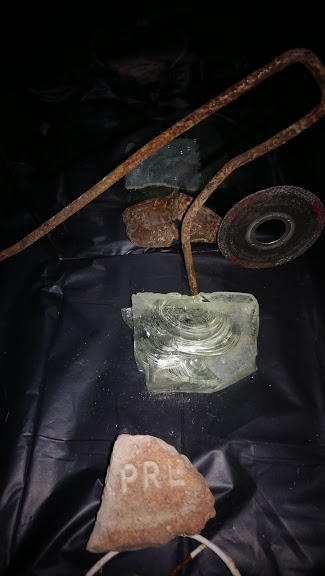
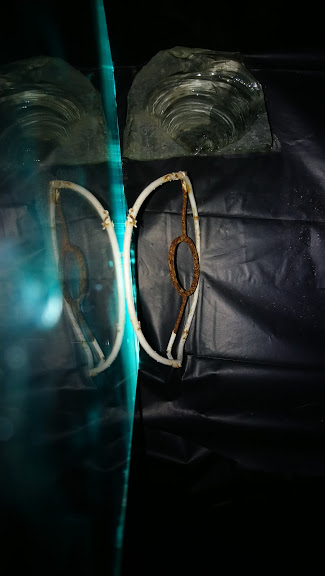
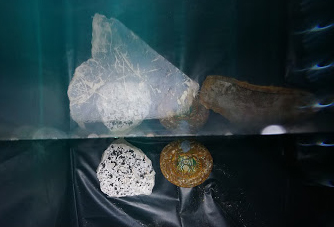
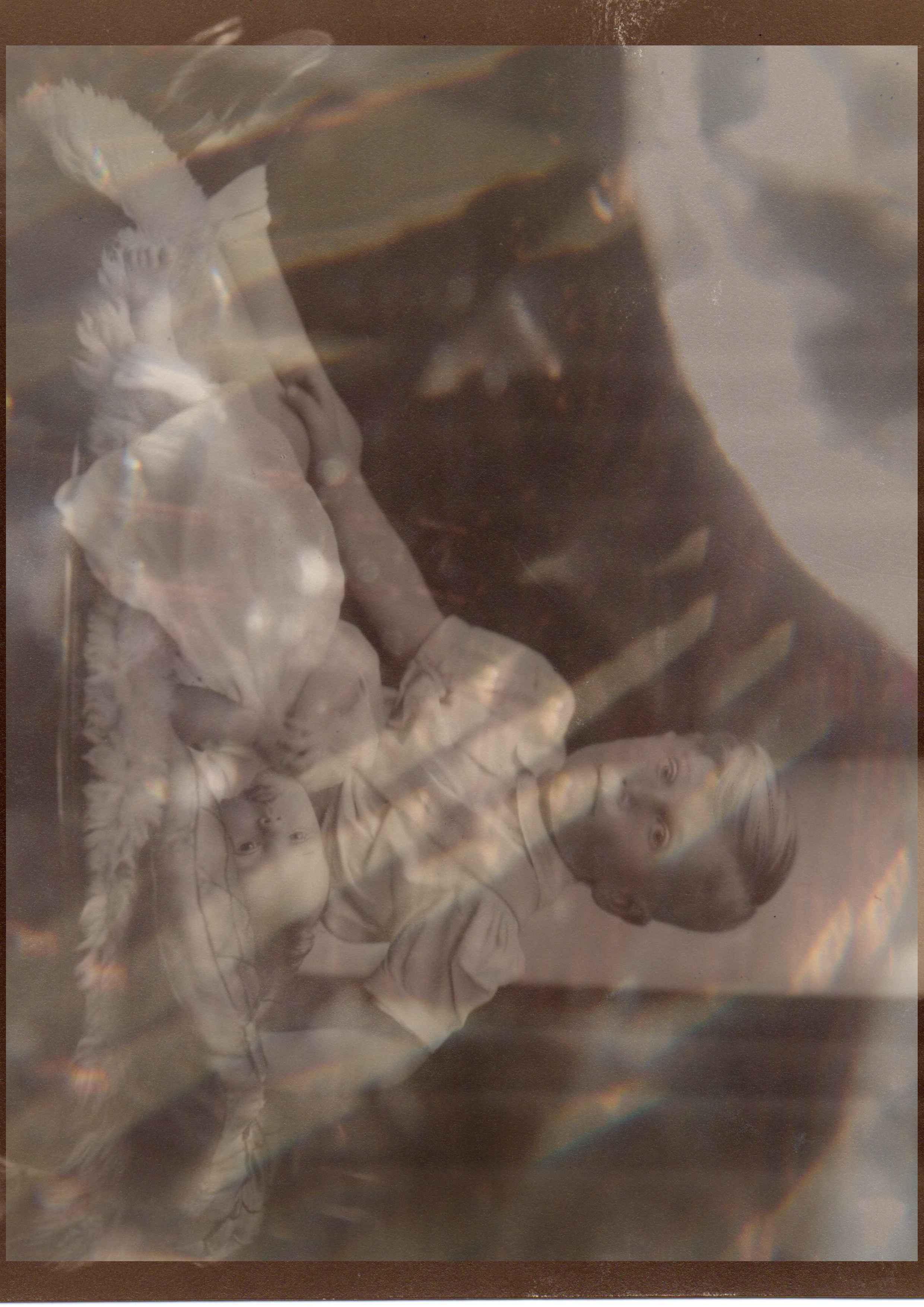
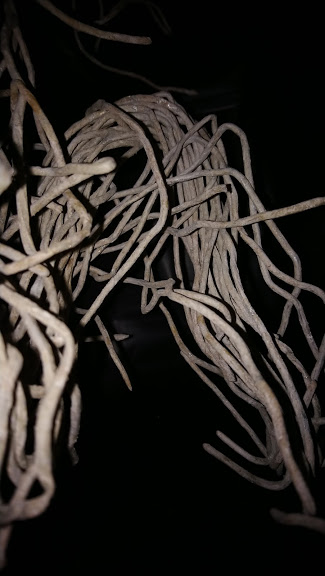
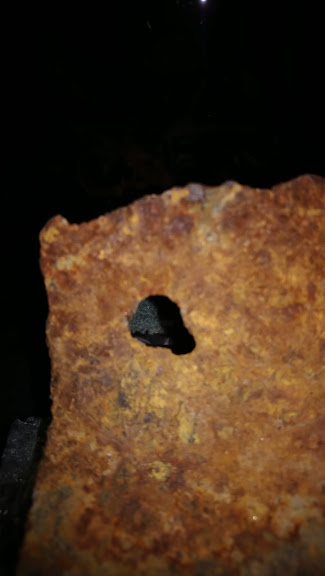
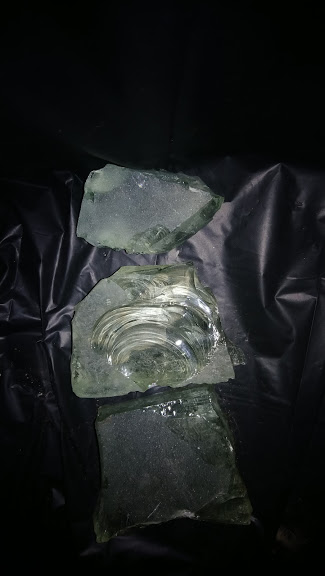
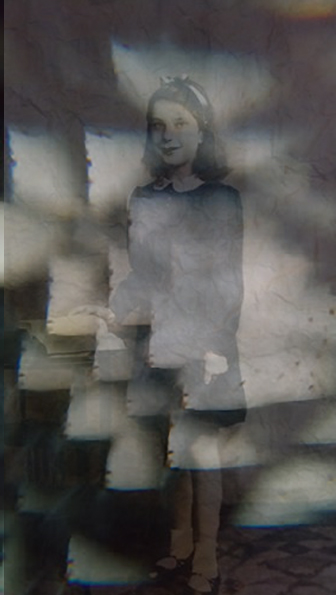
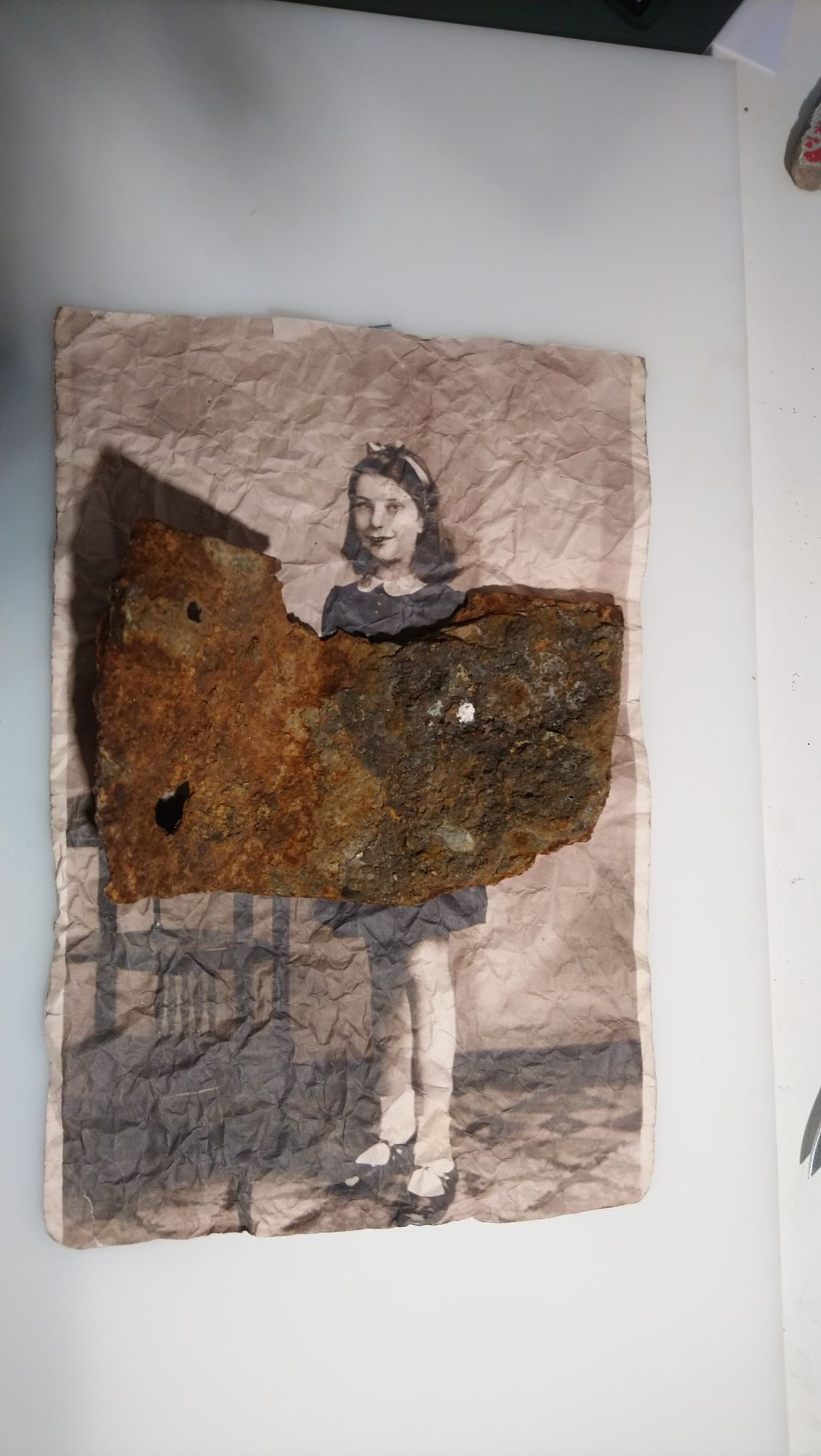
Above are some examples of working in wax, photography in a black box,Photoshop and collage.Images in repetition and layered as a metaphor for memory and the dark box was as if seeing where we should not see. The top left image was moving, this was to emulate the movement of the objects hit by the wrecking ball and the kinetic energy withing them.
Work in Progress……..

Above is a collage of a piece of the smashed floor containing concrete,pebbles and bent iron. This was then expanded backwards with transparent paint and forward with solid sections to describe the hold time has on the object and the energy from the wrecking ball breaking it up violently and maintaining its effect kinetically.
As I search for signs of life in the pile of a demolished house, I find delight in random objects and the opportunity to look at them further with a view to feeling their presence and connection with the past and present. I am interested in the decaying of the objects and their temporality within an entropic system and the now chaotic state it lies in. This coupled with the history of the object the relationship to the people and activities lived around them creates a furtive ground for discovery and imagination.
The photos I use are from a local friend and so don’t have the direct connection but it is not relevant as to consider the facets of the human element and my own memories of my childhood here. These introduce possible new narratives. Can the object be representative but stand alone? Are they are noticeable because I have chosen them.
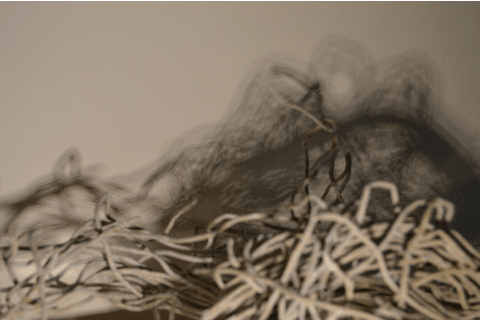
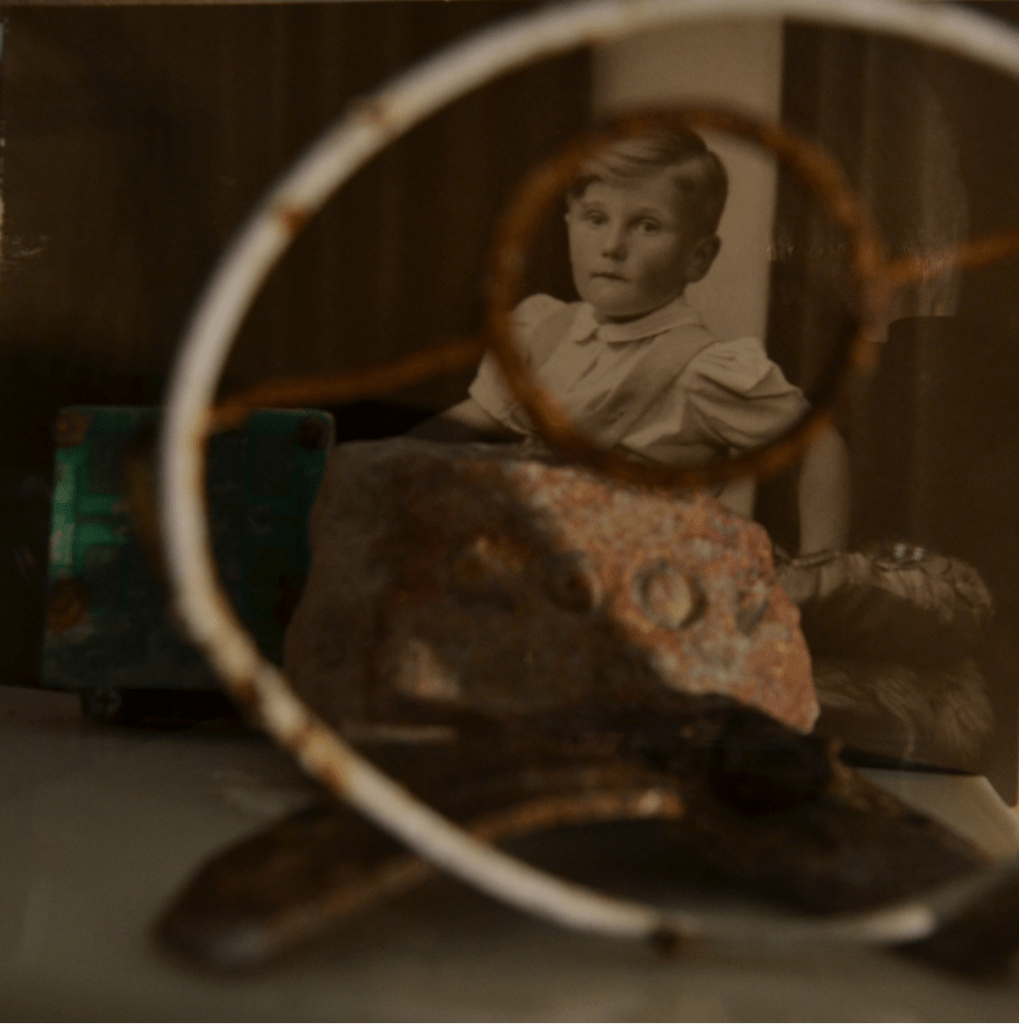
I used Photoshop to work on the objects and combine them in unusual ways with layers of colour that pushed the images backwards and forwards.
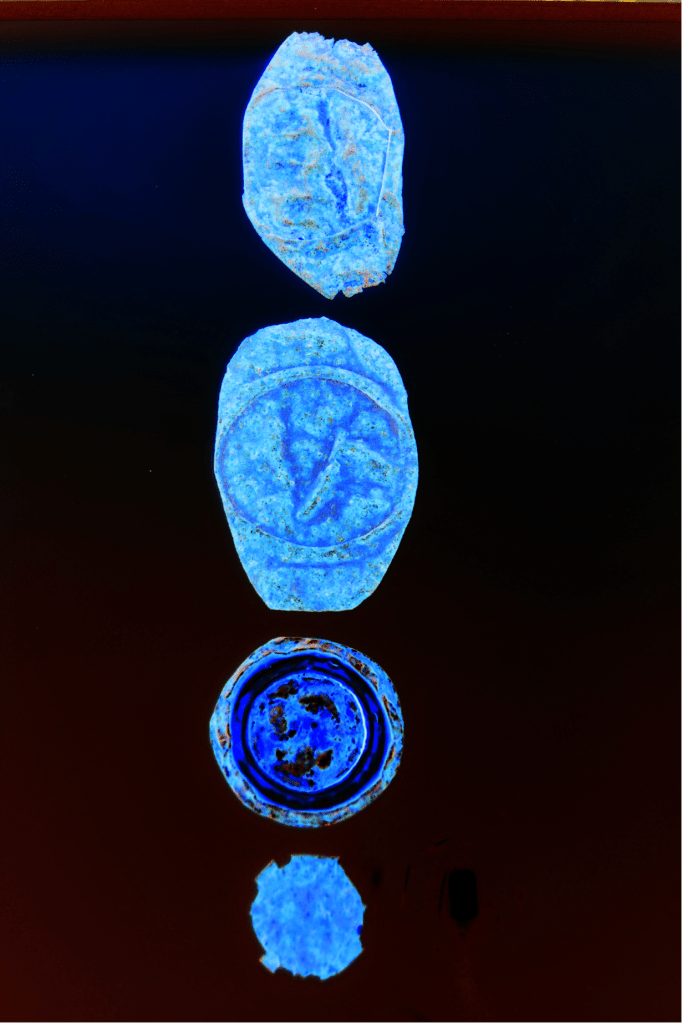
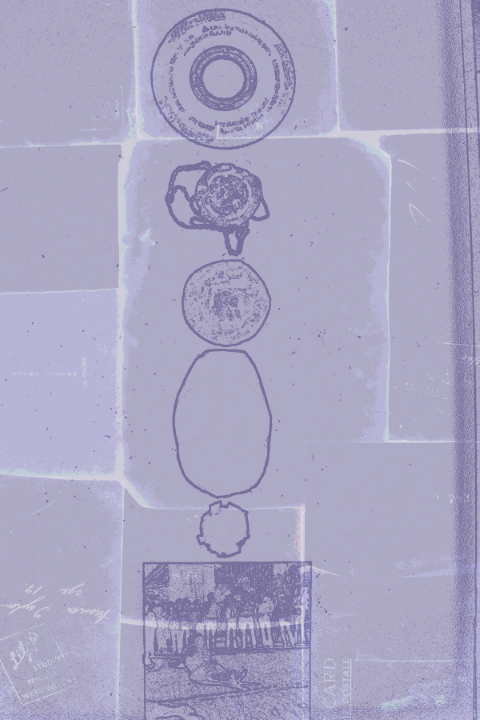
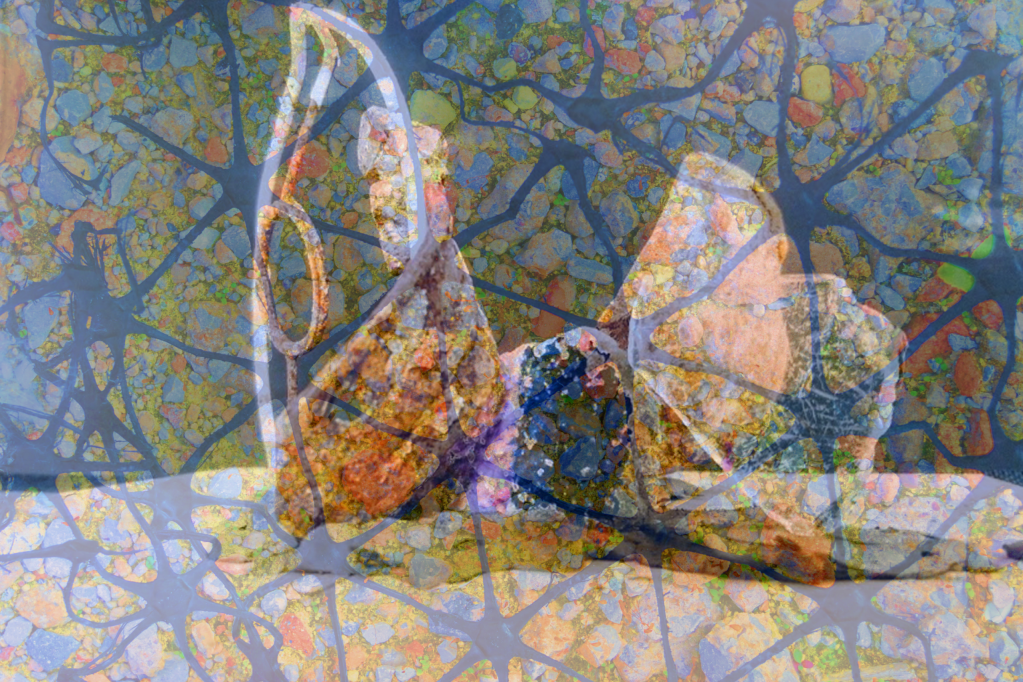
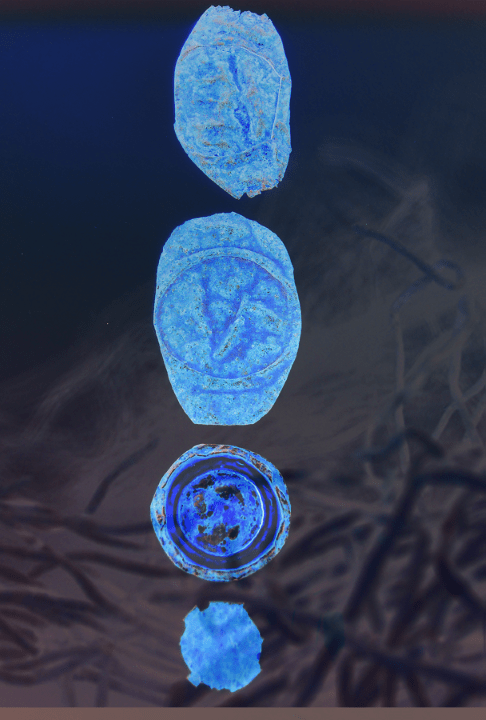
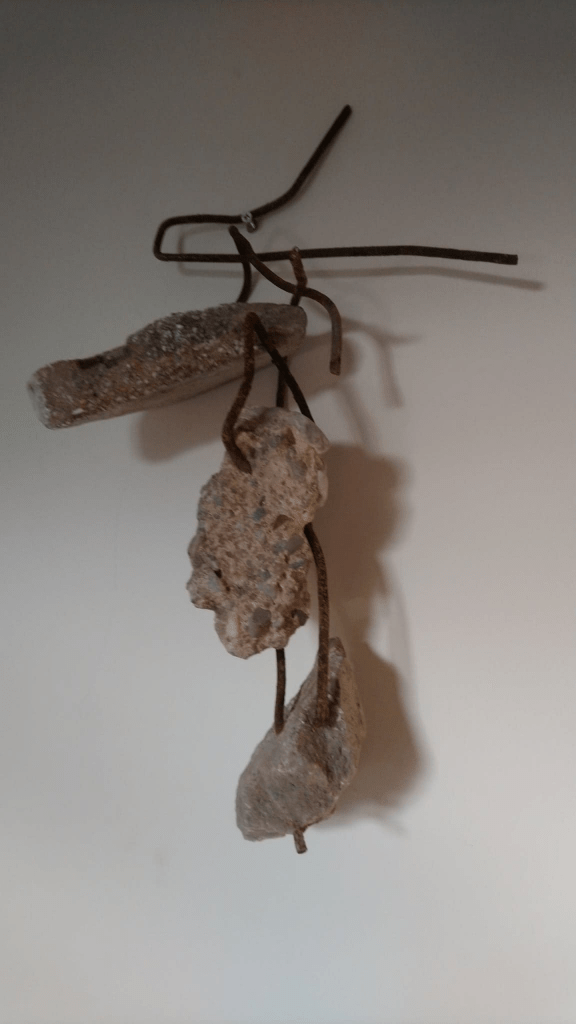
I explored the smashed concrete with images, clay and painting. Using these mediums to think about the objects and how I might proceed.
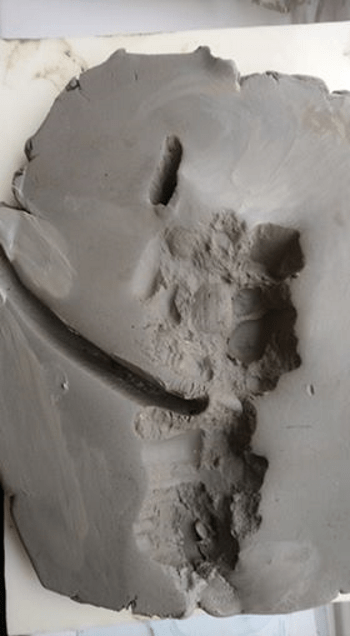
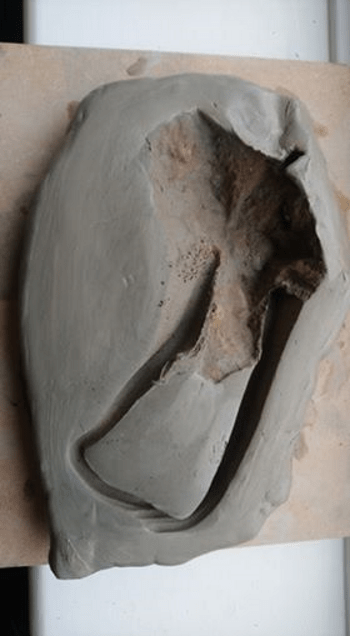
The forcing down into the clay (as it is quite old) is recording a movement because the there is no flat edge. This movement might be something to continue with – the violence of demolition as these pieces would have flown out and landed once as the house was hit with the wrecking ball and later as it was piled up. If I can seal the clay once it is dry I might be able to pour into it or print from it. It is not 3d as it is only recording the top and the sides as it is forced down.
As I gathered images and objects in SC3 from the Signs of Life project which is basically my observations and interpretations from a demolished local home, I used a crystal to create photographs of the objects and surroundings that investigated the human memory and the fact that we remember our memories and that this repetition distorts the facts creating our own world.
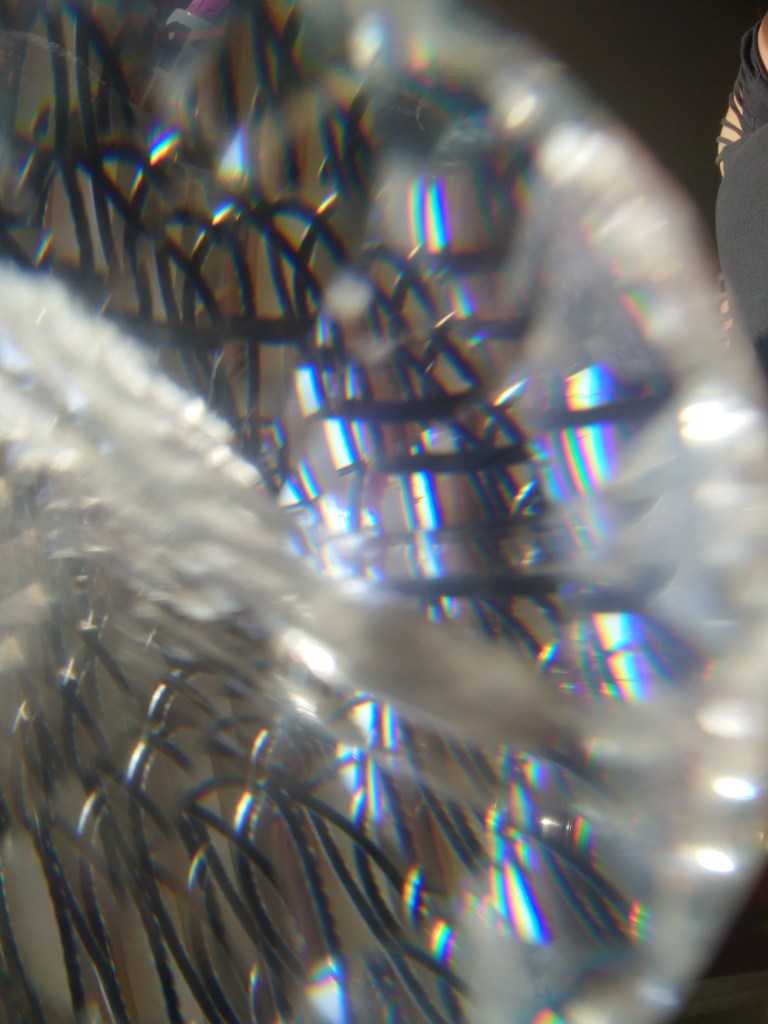
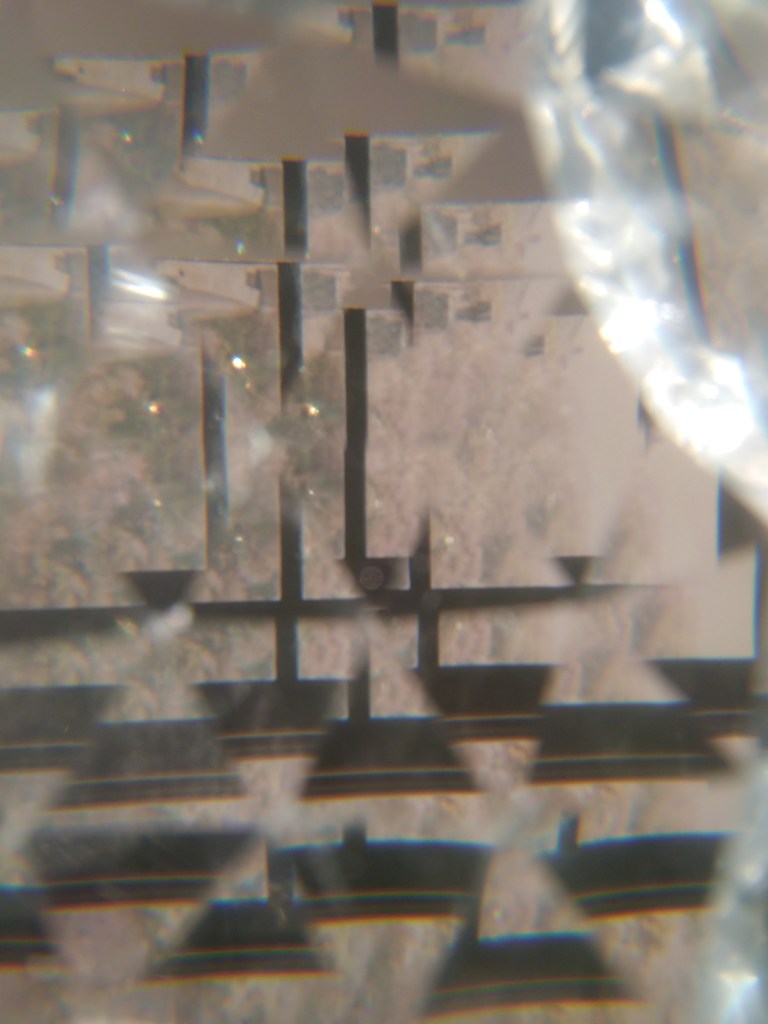

On reflection this method has created a new way of seeing that introduces questions about the new meaning held when an image when repeated. It is aesthetic but fun.
SC3 Working with Scientist Dr Andrea Murray as she researches Raynaud’s Disease and Scleroderma. Discovering the cross disciplinary process and discovering the beauty within. The aim of our collaboration is to increase awareness of the research that is taking place and making our work accessible to patients, researchers and artists.

Working in Audition I have recorded sounds with a Zoom H6 Handy recorder from underneath a viaduct. This will form part of the final audio sound that will contain a double base melody identified from the image above by Mike Gray a level 4 musician. This collaboration brings together, in the context of the laboratory, a narrative of the Researcher’s endevour to find new ways of seeing the condition, stages of recovery and effectiveness of medication on Raynaud’s Disease and in particular Scleroderma. Scleroderma is a rare disease that causes a debilitating thickening of the skin and much more. Patients have reported the symptoms being akin to turning to stone. I have interpreted the stone theatre of the viaduct as a metaphor for this and as described above an audio description of the blood cells indicating the shape of the capillaries in the finger tips.

Curious campus is a chance to work experimentally across different levels and introduce level 4 to a community of work. Be safe respectful of others and property. All art made must be dismantled. The session started with a rundown of local history and sculpture by Brendan Fletcher. Mentions of Robert Peel, Marx and Engels and Emily Pankhurst. Their sculptures, interpretation and an understanding of the campus and Park. We worked in groups to explore these areas and using found objects we created our own narrative and work. Our group discussion was based around what Marx and Engels might say about Capitalism, consumerism and their effects on the environment. Our understanding was that a statement was necessary and so we created our work around the visual and sound elements of pollution to make this statement. We focused on microbeads being released into the ocean and made our statement on a pole something ling a line of text. Using phones with sounds of the ocean and Greta Thunberg’s speech, the viewer could experience the elements of each part of the statement. Each group presented their work with descriptions and film. The response from the viewers was good our point was made and the chance to get to know each other much appreciated. We also felt strongly that the work resulted in a piece that was more than the sum of its parts.

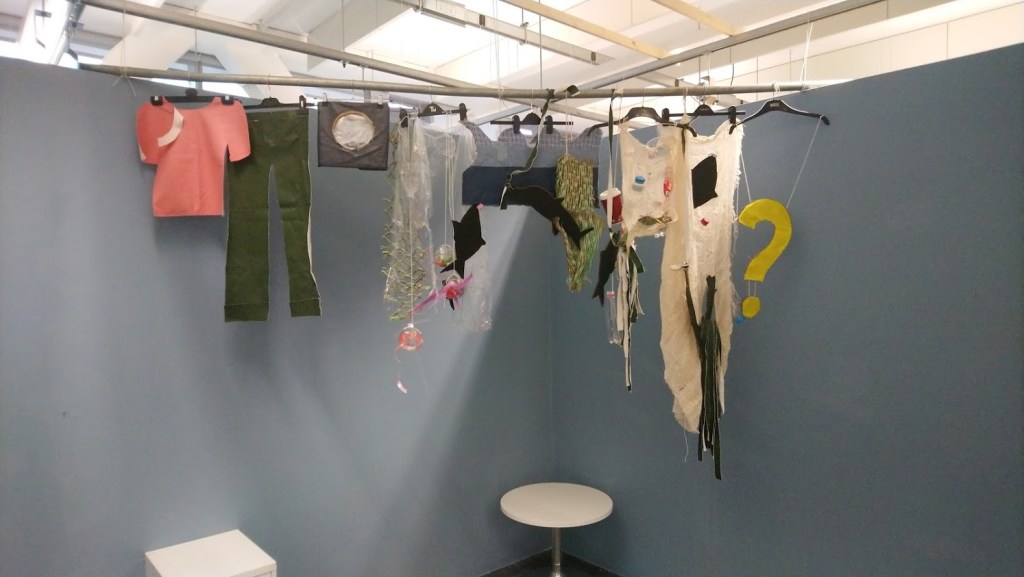
Fine Art Student level 6 BA(Hons) University of Salford
Have a WordPress.com account? Log in now.


