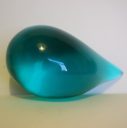
To understand the work of Eliasson I listened to interviews, presentations and introductions to his exhibitions, mostly while at the Gym in Salford University. I subsequently followed this with study in the library when I had an over all view of the artist and an idea of what work that I am particularly interested in. This was important as there is so much of Eliasson’s work to consider during his long career. Eliasson looks for inspiration in science and uses his own intuition to develop work pragmatically through the process of making. I describe my response to science in a similar way. I was struck by his regular reference to the fact that each viewer’s beliefs were welcome in the arena of the work, especially those in opposition to each other, this could facilitate discussion and progress in Studio Eliasson or the exhibitions themselves. For art to be a leveling influence and facilitate conversation is a wonderful thing! In The Riverbed project (2014) at Denmark’s Louisiana Museum of Modern Art, the artist talks about the statistics which give him an overview of the numbers of viewers passing through and the busier times. Eliasson couples this with listening to comments and feedback. He experiences the work as it continues to evolve within this commentary, that appeals to me. My subjects can continue for over a year and I ask for feedback and input as part of my process.
Influences on Eliasson are installation and environmental artists such as Robert Rouschenburg, James Turrell, Bruce Nauman and Gordon Matta-Clark.
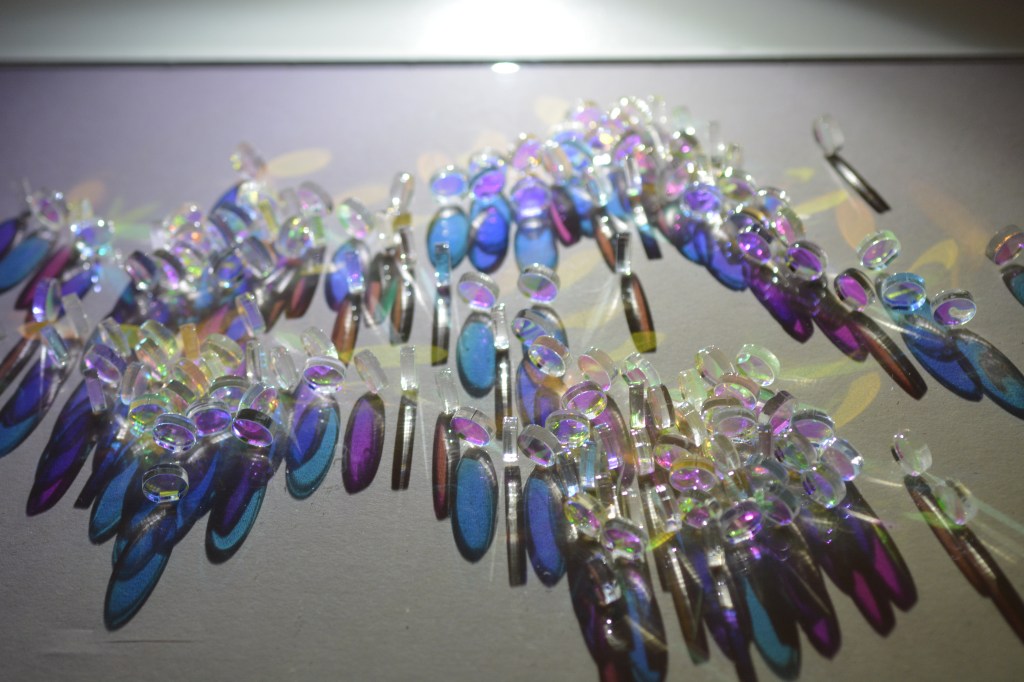
My work remains not incomplete but open to a new investigation. The scale of Eliasson’s work and the viewers direct involvement has encouraged me to consider the effect of scale in my own work The Murmuration (above). I proposed a larger piece that I felt confident in both making and considering its possible effect on the viewer. The use of light was strongly influenced by Eliasson’s work.
The understanding that the work remains open to the viewers interpretation plays a key part in the ‘completion’ of the artist’s work and is something that I hope I also achieve.
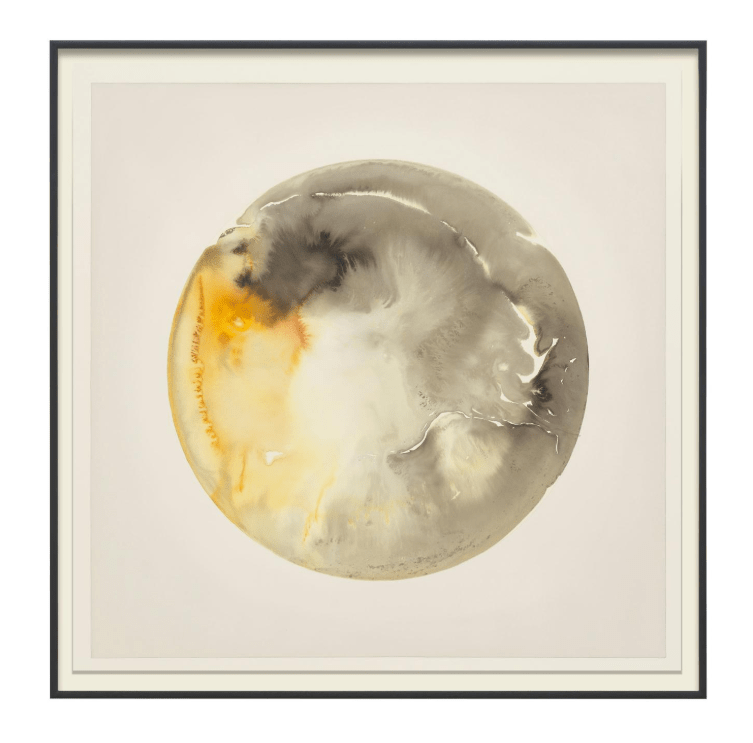
Photo: Jens Ziehe
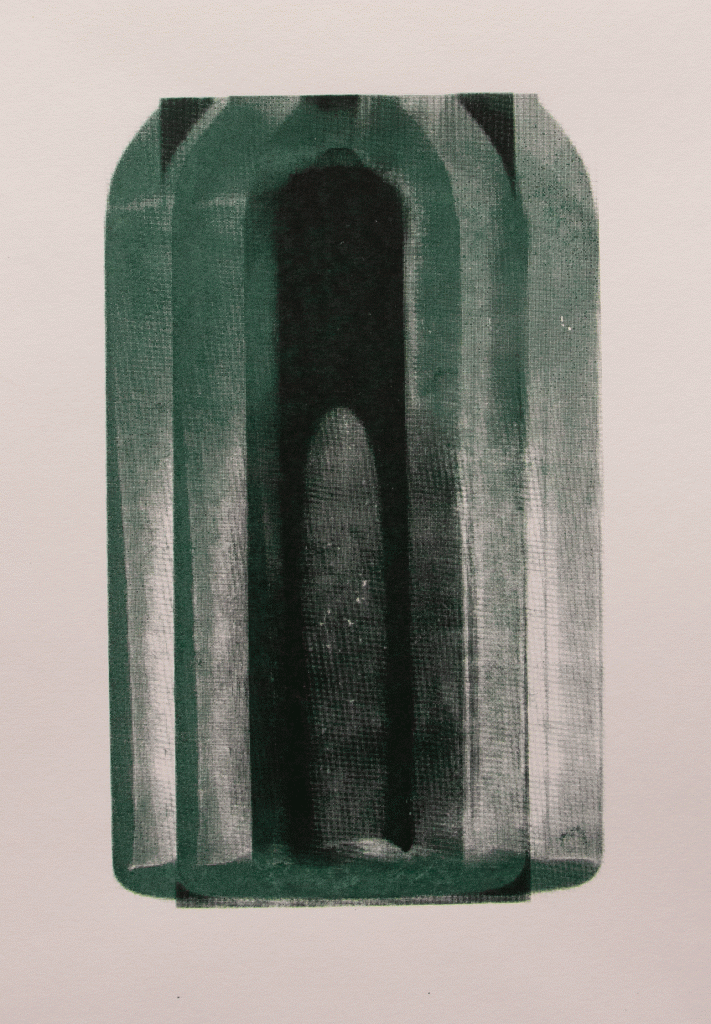
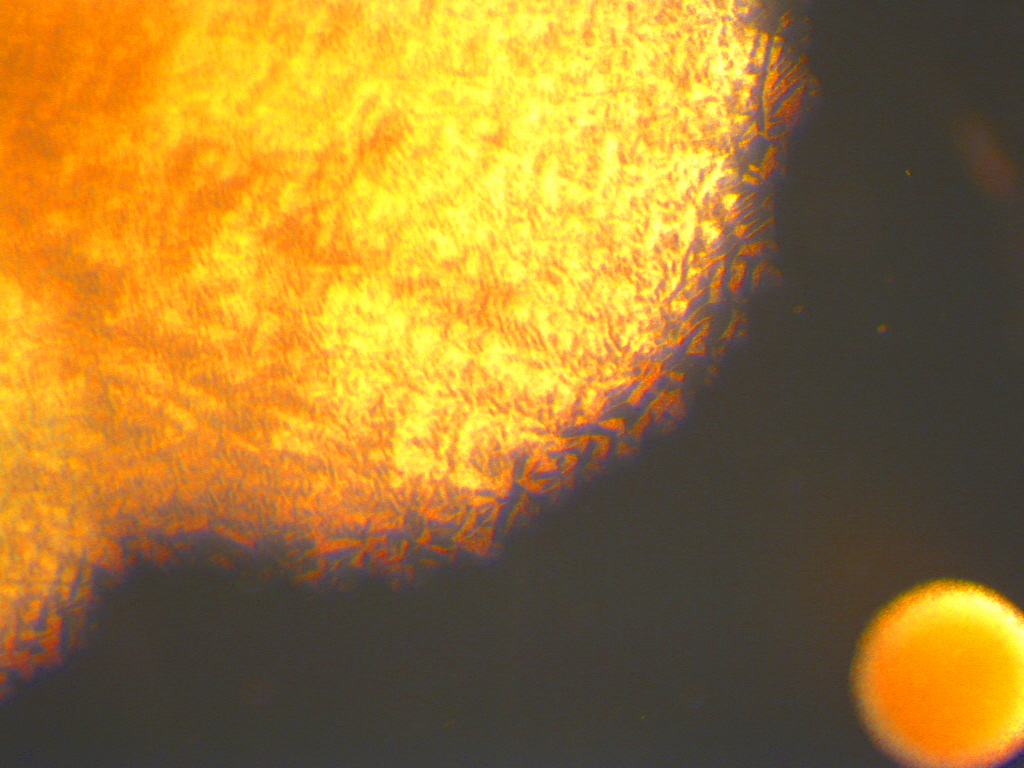
On the opposite end of the monumental scale of works which Eliasson has become known for, are the Glacial Currents made in 2018. These watercolours made from melting glacial ice feel so poignant to me. To take the essence of a global issue and capture the message in a way that prompts the viewer to consider its physical implications relative to themselves, is very powerful. This result is intrinsic to his work and is being achieved on a large and small scale. My work has been influenced by this artist, this is evident in the project Acqua Alta, concerned with the devastating rising tides in Venice which I experienced first hand during a trip to the Biennale. I collected flood water as it flowed to the door of my hostel and went on to make prints which used a photogram of the bottle. I was also able to grow the bacteria that had remained in the water and photograph it creating an array of beautiful images not unlike alien universes. There are metaphors for the destruction of the religious relics and the effect on the people within my work. These resources will continue to fuel other projects for me as we as artists play an increasingly key role in raising awareness and creating dialogue in global issues.
 Babs Smith Multidisciplinary Artist