7 Stories is a project for a proposed piece of work for the Autism Criminal Justice Service at Salford University. It began with the brief to produce work for an interview room which houses many people who are involved in the criminal system from students to people with autism who are involved in crime. It was a difficult brief as so much of art is open to interpretation and could be too distracting or misunderstood.
After research some of which took place at Venture Arts, I was able to identify the subject of story telling as a common thread and a relatable subject to all possible users of the room.
Theories of 7 stories have existed for some time and are recognisable in culture, seen in film and books. They are: overcoming the monster, rags to riches, comedy, journey, quest and rebirth.
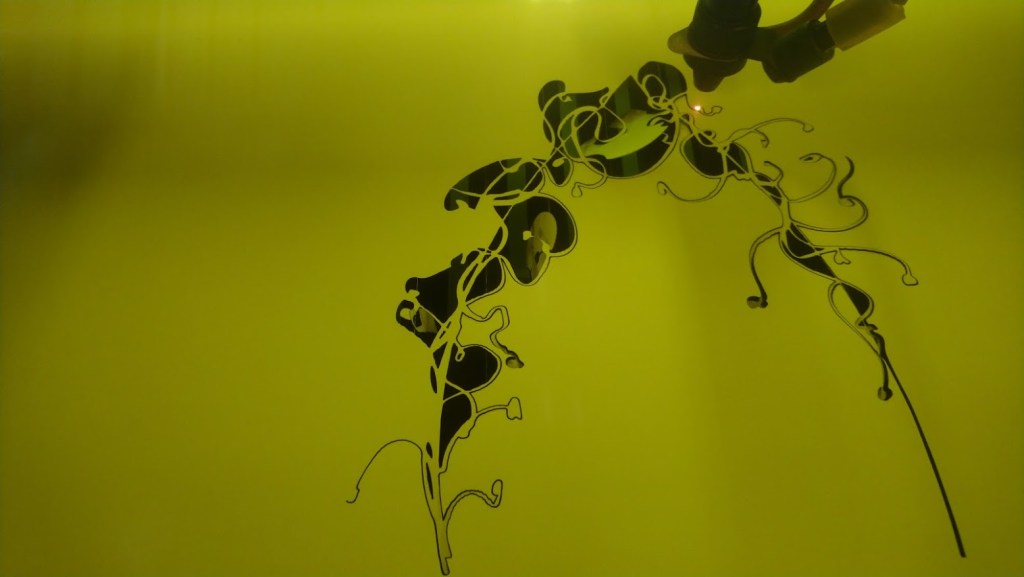
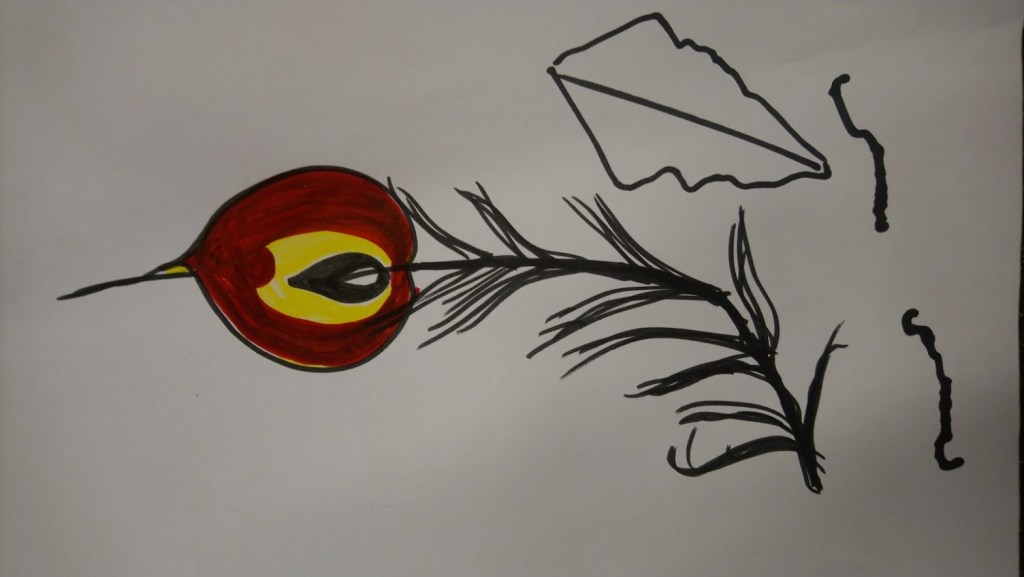
I decided to explore flat images firstly in sketches and then cut out of paper to test their construction as some shapes do not translate on the laser cutter and perspex is expensive to make too many mistakes.
I have chosen Persex as it may be necessary to move the work should the rooms use change in the future and it is sturdy once fixed. I considered images printed on large paper that would adhere to a panel but the cost was prohibitive. This method gives me the opportunity to mix the images and consider the timeline as one story changes into another and the effects of one story on another in life as time passes.
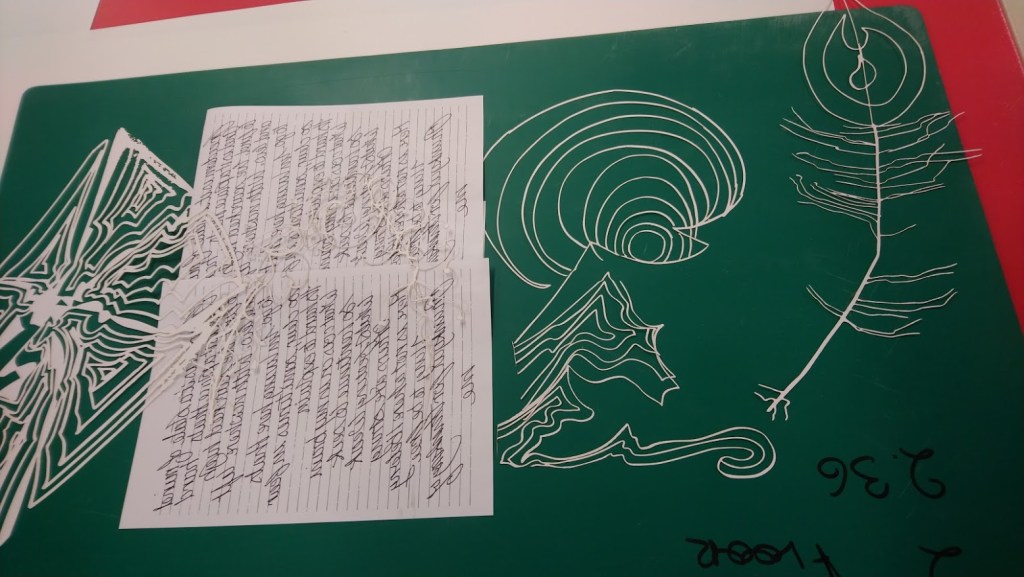
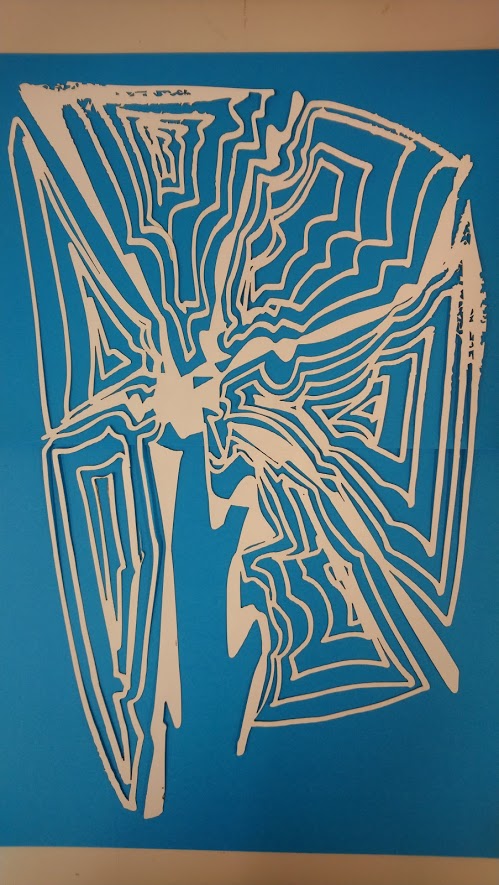


The laser cutter is a useful tool to explore shapes and although some of the images prove too delicate to stand up to much manipulation, I was able to test the combinations with a view to creating something that is moving towards abstraction. I feel that this is important as the viewer will make their own interpretation of the work and see their own stories within it. I hope that the process of abstraction will develop as the work progresses and certain elements contrast and compliment others. This is evident in the mirror perspex – reflection and the clear perspex that can be layered.
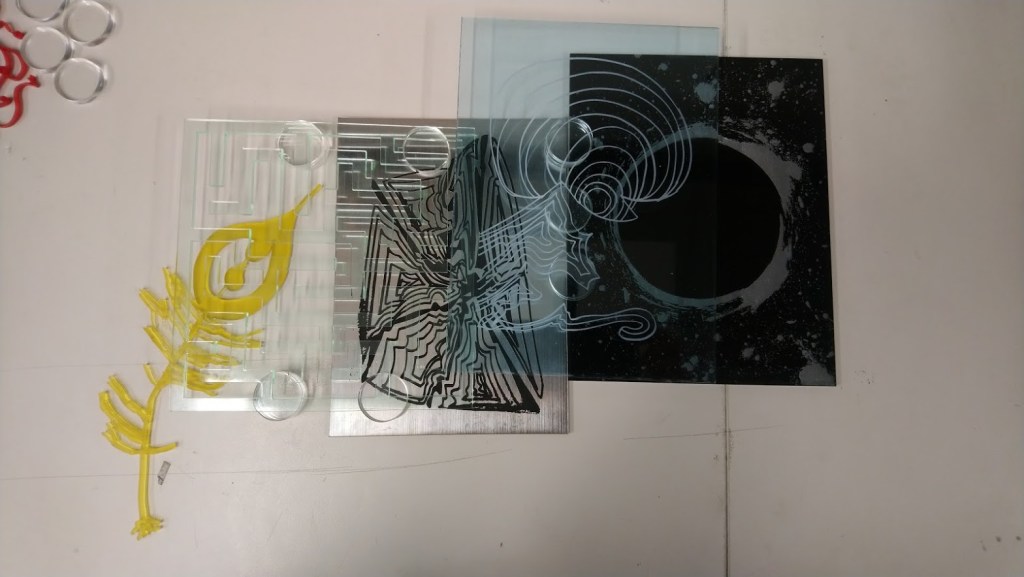
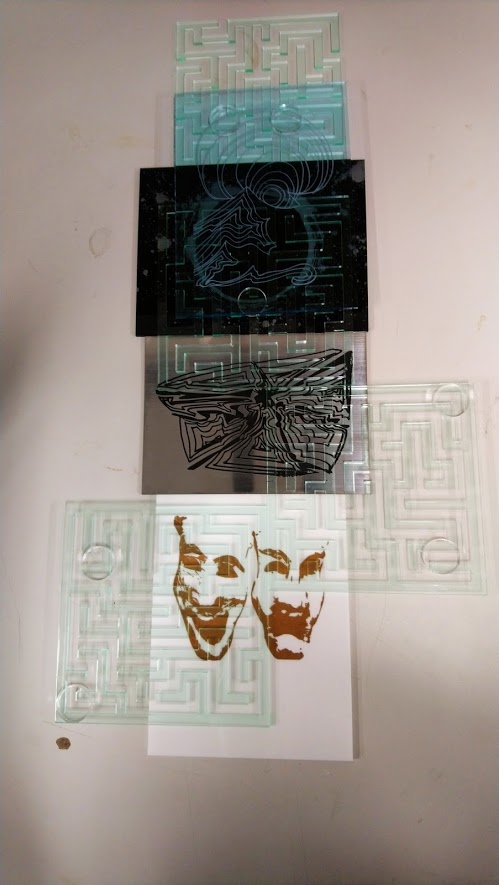
Deciding on the images has taken some time. Some are obvious and others have come from discussion with peers. All are open to interpretation. I will also consider the effect of layering and repetition. The shape of the final piece. The possibility of encasing more delicate images in two layer and the choice of colour as a tool to bring it all together. The use of mirrored perspex is an interesting concept as it creates an opportunity for the viewer to be a part of the story. I do have to return to the position of the work however and will of course check this with the ACJS before I proceed.
The nest step is to secure the funding to buy the perspex and other materials for the final piece. On reflection I have a long way to go before I have an image that will fit the brief. I hope that the process of making and considering the narrative will produce the work. It may be possible to simplify and reduce this to a more succinct image. I believe that the concept will be better served with an explanation. I hope that it can form a talking point that will be useful as well as an image to contemplate.
 Babs Smith Multidisciplinary Artist