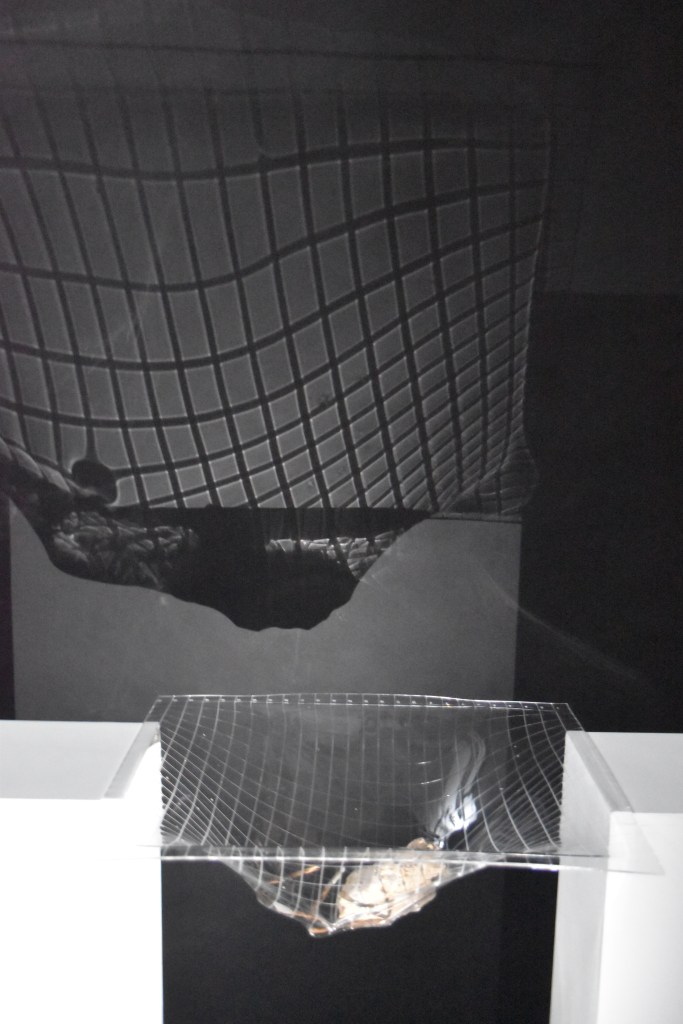
I considered concrete blocks with using clay but wanted to expand on this without encasing the objects permanently. I am trying to combine my research such as the work of Mathew Ritchie, MIT and the Broad artists who make art work driven by science and scientific research. I am considering the possible narrative and energy remaining in the objects. The Perspex is flexible and to force the object as it was when it was hit by the wrecking ball. I etched the graph paper on a laser cutter in a basic form with squares and numbers on the edge and sat this in the vac form oven without the extractor on so that the only thing affecting it was pushing down action. The benefit over the oven was the lop that held the square in place.
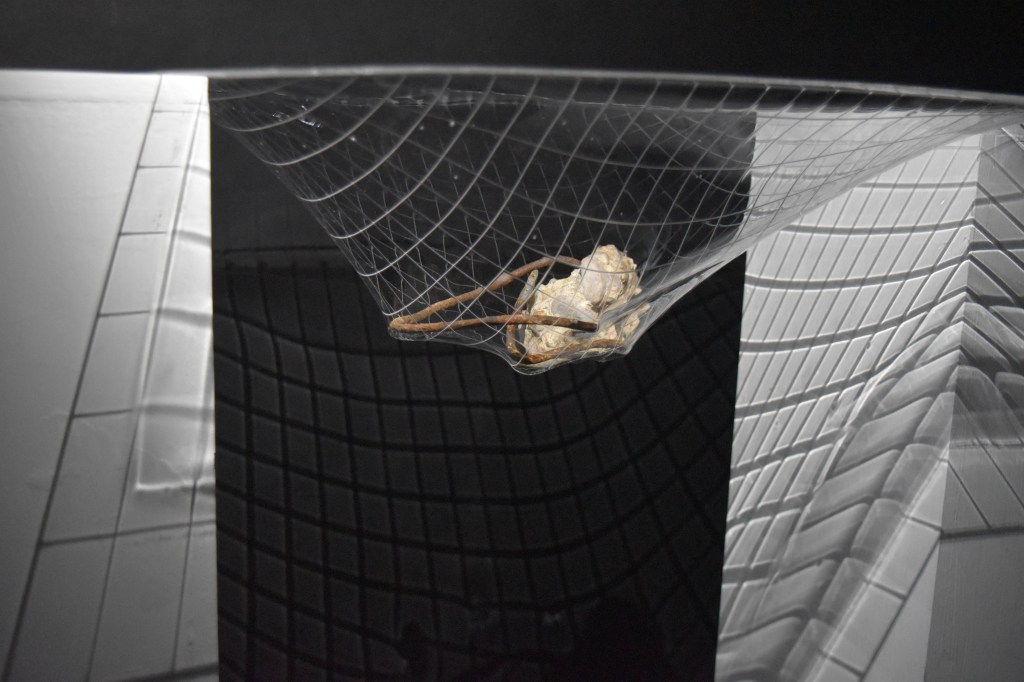
This worked really well, the Perspex bent as in scientific diagrams illustrating time bending around an object and the force was just enough to create the shape without breaking it. This creates lots of possibilities for me to develop further ideas and metaphors for the energy around the objects. The light reflects around in interesting ways. I intend to try some colour light filters and experiment further.
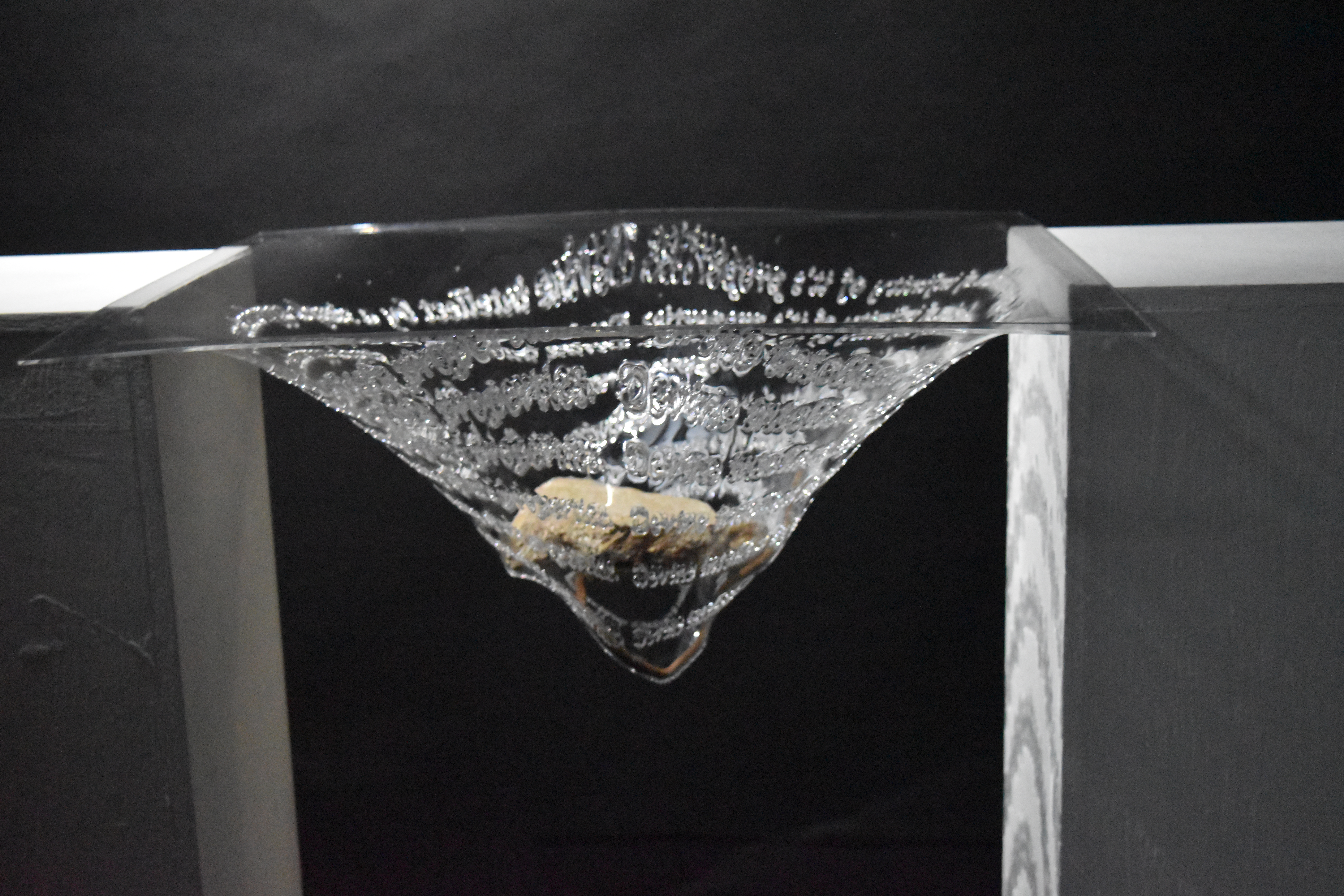
I repeated the process with a larger object and scribed text on the Perspex with the laser cutter. This stretched the words to breaking point but left them legible and I wondered about making holes in the original shape to see how they change. Pushing the object to breaking point feels like something I should try.

The text is a line from a 17th Century book by Galileo – Divine intellect, by a simple apprehension of the circle’s essence, knows without time ‹consuming reasoning all the infinity of its properties.

Two objects pushed to different levels made an interesting shape relationship that an be investigated further. Acetate is a cheaper option too than the Perspex. However I am aware of the environmental cost and would like to explore recycled possibilities.
 Babs Smith Multidisciplinary Artist